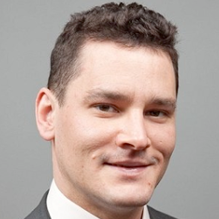
When: Friday, April 10, 3:00 PMWhere: Tyler 055 AbstractEnvironmental epidemiologists are increasingly interested in establishing causality between exposures and health outcomes. A popular model for causal inference is the Rubin Causal Model (RCM). An important assumption under RCM is no interference, that is, the potential outcomes of one unit in the study are not affected […]
Continue reading "[Talk] Anny-Claude Joseph: Causal Inference under Spatial Interference"Category: News
[Talk] Data and Discussion DS event: Academic and Professional Opportunities
When: Friday, April 3, 12-2 pm Where: LIB 166 Join us for an engaging Data Science event co-hosted with the Women in Data Science club. Our featured speaker is Alena Korshunova (MBA), a Principal Business Intelligence Analyst in Innovation, Analytics & AI at FM Global. She will share insights into her career path and experience […]
Continue reading "[Talk] Data and Discussion DS event: Academic and Professional Opportunities"[Talk] Ryan Fox-Tyler: AI Agents in Production: The Gap Between What’s Possible and What’s Deployable
When: Friday, April 3, 3:00 PMWhere: Tyler 055 AbstractEvery generation of developer infrastructure faces the same core tension: how do you give increasingly powerful systems the ability to act autonomously while maintaining the safety and governance guarantees that organizations require? For decades, this played out in distributed systems — microservices, data pipelines, and platform engineering […]
Continue reading "[Talk] Ryan Fox-Tyler: AI Agents in Production: The Gap Between What’s Possible and What’s Deployable"[Talk] LicketySPLIT: Near-Optimal Decision Trees in a SPLIT Second
When: Tuesday, March 31, 11:00 AMWhere: Bliss Hall 190 AbstractDecision tree optimization is fundamental to interpretable machine learning. The most popular approach is to greedily search for the best feature at every decision point, which is fast but provably suboptimal. Recent approaches find the global optimum using branch and bound with dynamic programming, showing substantial […]
Continue reading "[Talk] LicketySPLIT: Near-Optimal Decision Trees in a SPLIT Second"[Talk] Laura Forastiere: Maximizing effectiveness under constrained resources through policy targeting under heterogeneous spillover effects
When: Friday, March 27, 3:00 PMWhere: Tyler 055 AbstractIn many empirical settings, individuals are interconnected, and an individual’s outcome may depend on the treatment of others, leading to interference. When interference is heterogeneous, treating individuals with specific characteristics can influence the population average outcome differently, either through their direct response or their impact on others. […]
Continue reading "[Talk] Laura Forastiere: Maximizing effectiveness under constrained resources through policy targeting under heterogeneous spillover effects"[Talk] Alina Jade Barnett: Inherently Interpretable Deep Learning Models
When: Friday, March 13, 3:00 PM Where: Tyler 055 Abstract AI models now perform high-stakes tasks traditionally reserved for skilled professionals, often surpassing human expert performance. Despite these advances, the “black box” (i.e., uninterpretable) nature of many machine learning algorithms poses significant challenges. Opaque models resist troubleshooting, cannot justify their decisions, and lack accountability—limitations that […]
Continue reading "[Talk] Alina Jade Barnett: Inherently Interpretable Deep Learning Models"[Talk] Chenyang Zhong: Faithful and Efficient Synthetic Data Generation via Penalized Optimal Transport Network
When: Wednesday, March 4, 3:00 PM Where: Pharmacy 240 Abstract The generation of synthetic data whose distributions faithfully emulate the true data-generating mechanism is of critical importance in modern statistics and data science, with applications ranging from systematic model evaluation to augmenting limited datasets. While Wasserstein Generative Adversarial Networks have shown promise in this area, […]
Continue reading "[Talk] Chenyang Zhong: Faithful and Efficient Synthetic Data Generation via Penalized Optimal Transport Network"[Talk] Ruyu Zhou: Differential Privacy and Statistics: Privatized Inference and the Inherent Privacy of Sampling
When: Friday, March 6, 3:00 PM Where: Tyler 055 Abstract Privacy-preserving data analysis has become a central challenge in modern statistics, with Differential Privacy (DP) emerging as the gold standard for protecting individual-level information. In this talk, I will present two projects at the intersection of DP and statistics. First, focusing on privatized inference, I […]
Continue reading "[Talk] Ruyu Zhou: Differential Privacy and Statistics: Privatized Inference and the Inherent Privacy of Sampling"[Talk] Mike Conti: Analysis of Early Interventions to Retain Underrepresented Students in Computer Science
When: Friday, February 27, 3:00 PM Where: Changed to Zoom Abstract Computer science, like many STEM disciplines, faces persistent challenges in recruiting and retaining women and individuals from racially and ethnically minoritized backgrounds. This study examines whether targeted interventions can produce sustained improvements in academic performance and sense of belonging among these underrepresented groups. By […]
Continue reading "[Talk] Mike Conti: Analysis of Early Interventions to Retain Underrepresented Students in Computer Science"[Talk] Efficient Gaussian Process Surrogates for Blackbox Optimization and Posterior Approximation
When: Friday, February 20, 11:00 AM Where: Pharmacy 240 Abstract In this talk, we explore efficient Gaussian process surrogate modeling in two distinct contexts: bandit optimization and blackbox posterior approximation. For optimization, we propose novel noise-free Bayesian optimization strategies that incorporate a random exploration step to enhance the accuracy of Gaussian process surrogate models. The […]
Continue reading "[Talk] Efficient Gaussian Process Surrogates for Blackbox Optimization and Posterior Approximation"