
University of Rhode Island College of Pharmacy professors and George and Anne Ryan Institute for Neuroscience faculty members William Van Nostrand and Joseph Schrader are uncovering how vascular and protein biology drive neurodegenerative disease.
Alzheimer’s disease and related dementias affect millions of people worldwide and remain among the most urgent challenges in biomedical research. While scientists have identified many of the molecular features associated with these conditions, researchers increasingly recognize that brain health depends not only on neurons but also on the blood vessels and biological systems that support them.
At the University of Rhode Island College of Pharmacy, Van Nostrand and Schrader are leading research that explores these connections. Their collaborative work focuses on how interactions between proteins, blood vessels, and brain clearance systems contribute to neurodegenerative disease.
Through new experimental models, international collaborations and recent scientific discoveries, the researchers are helping scientists better understand how Alzheimer’s disease and related disorders develop and how they might one day be prevented or treated.
“Their collaborative work focuses on how interactions between proteins, blood vessels, and brain clearance systems contribute to neurodegeneration.”William E. Van Nostrand, Ph.D., and Joe Schrader
Understanding protein accumulation in the brain
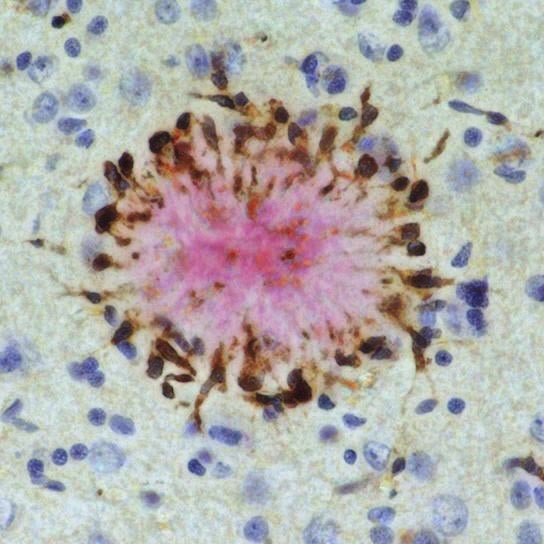
For decades, scientists have studied the role of amyloid beta, a protein fragment that accumulates in the brains of people with Alzheimer’s disease. Van Nostrand, Herrmann Professor of Neuroscience at URI and co-director of the George and Anne Ryan Institute for Neuroscience, has been a leading figure in this field.
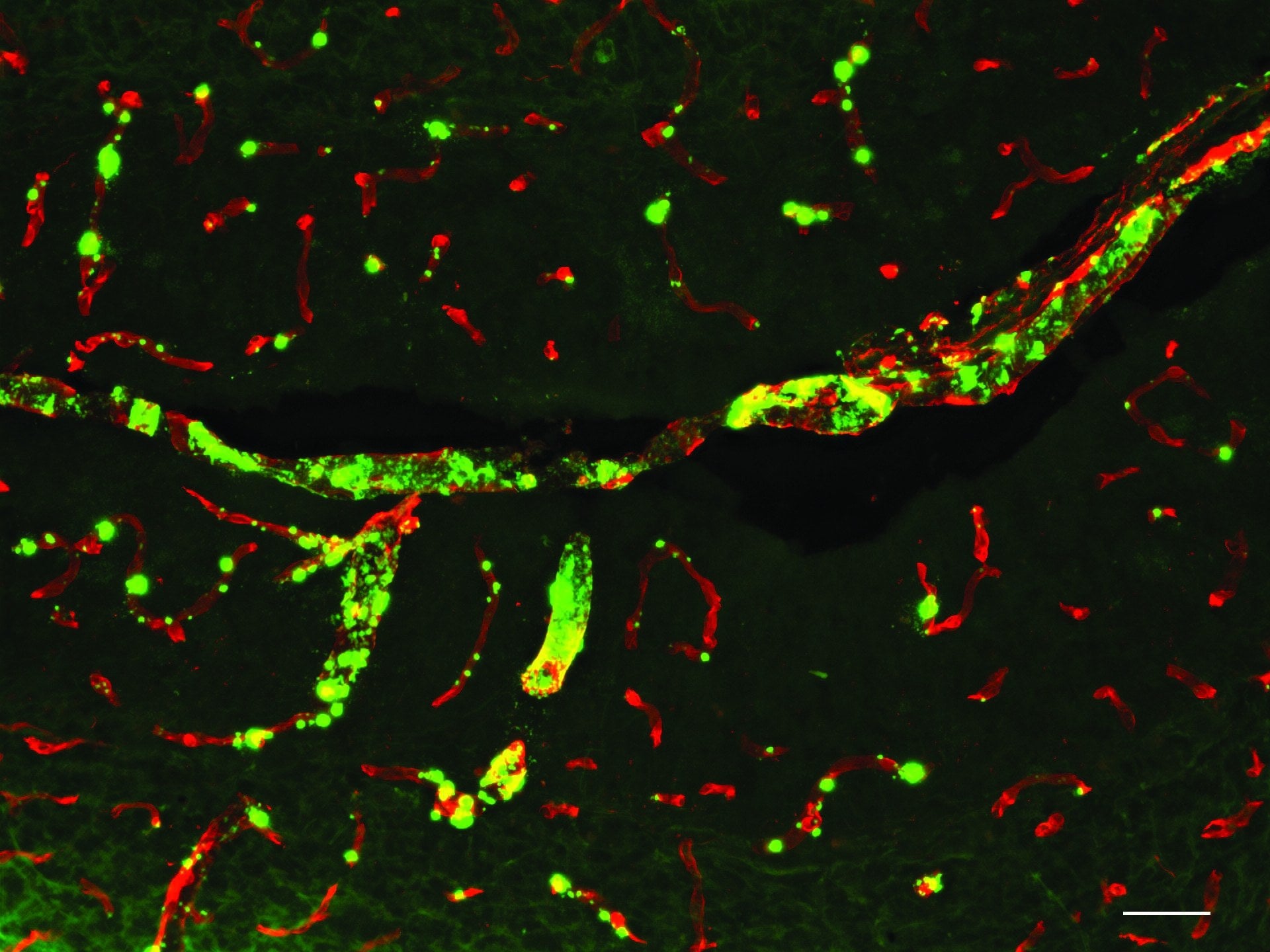
His research focuses on how amyloid proteins build up not only in brain tissue but also within the walls of blood vessels, a condition known as cerebral amyloid angiopathy, or CAA. This disorder weakens blood vessels and can cause microbleeds and hemorrhagic stroke. CAA is commonly found in individuals with Alzheimer’s disease.
Van Nostrand’s laboratory has developed specialized transgenic animal models that allow researchers to study how amyloid proteins accumulate in the brain and how they damage blood vessels over time. These models have become powerful tools for understanding the biological processes behind dementia and vascular brain disease.
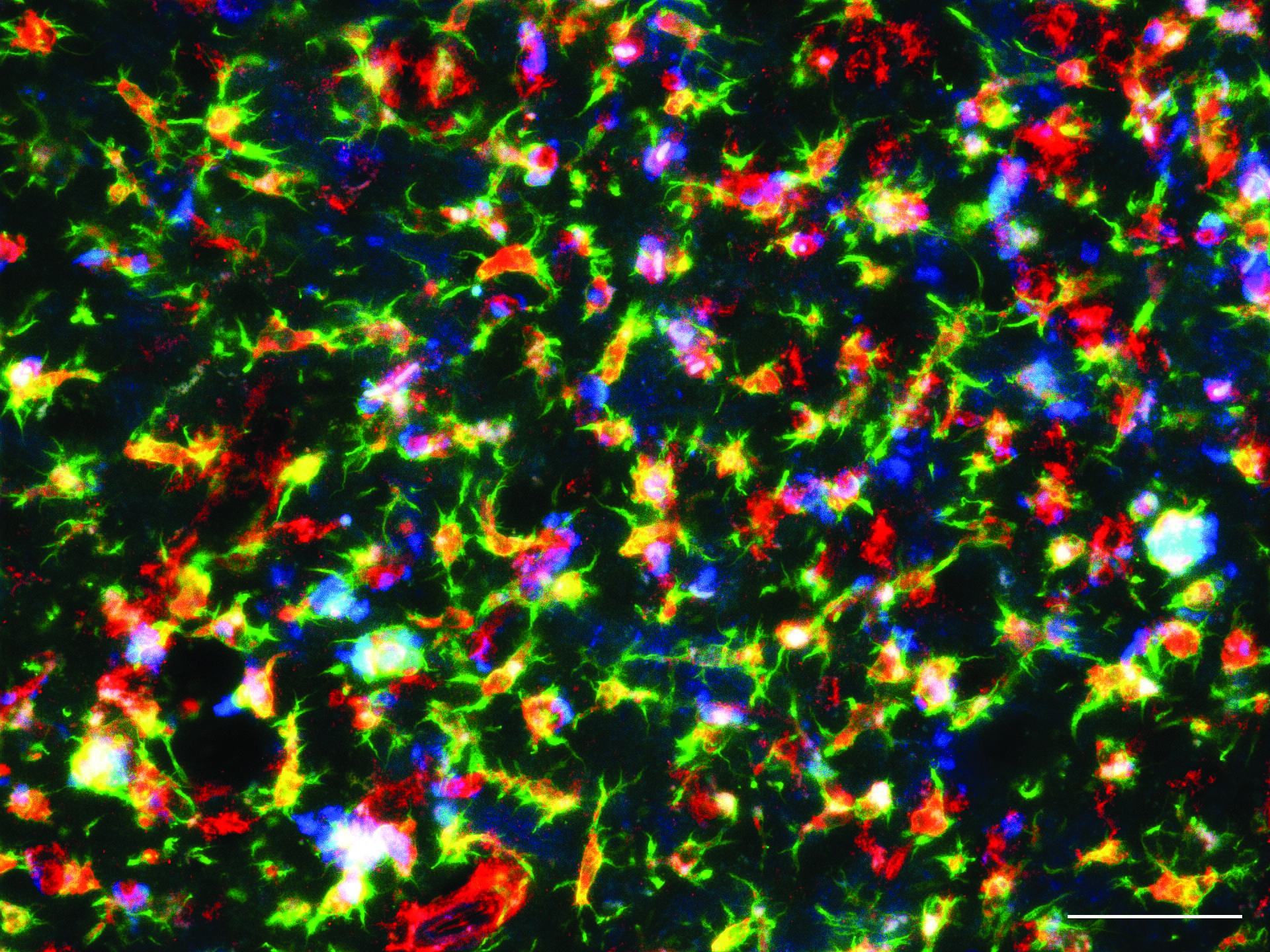
Recent research from the team has examined how amyloid accumulation alters brain protein networks and disrupts normal biological pathways involved in cognition and vascular stability. Their studies continue to reveal new insights into how these protein deposits contribute to disease progression.
Studying the brain’s waste-clearing system
One of the most important recent developments in Alzheimer’s research involves the discovery of the brain’s waste-clearing system, sometimes called the glymphatic or perivascular clearance system. This system helps remove toxins and metabolic waste from brain tissue.
Van Nostrand is part of an international research consortium investigating how failures in this clearance system may contribute to cerebral amyloid angiopathy CAA and other forms of dementia. The collaboration, supported by a five-year, $8 million grant from the Leducq Foundation, brings together scientists from the United States and Europe to study how the brain clears harmful substances such as amyloid proteins.
Researchers believe that when this clearance process becomes impaired, toxic proteins may accumulate in brain tissue and blood vessels, accelerating neurodegenerative disease. Understanding how this system works could help scientists develop therapies aimed at improving the brain’s ability to remove these harmful molecules.

Linking vascular health and neurodegeneration
Schrader, an assistant professor in the Department of Pharmacy Practice and Clinical Research and a member of the Ryan Institute, works closely with Van Nostrand, contributing expertise in vascular biology and molecular neuroscience.
Recent collaborative studies from the team have explored how vascular dysfunction and protein accumulation interact in the brain. In 2024, the team published work examining proteomic changes in a transgenic rat model of cerebral amyloid angiopathy, identifying molecular pathways associated with vascular damage and cognitive impairment.
These studies help scientists understand how changes in brain blood vessels influence the progression of neurodegenerative disease. Reduced vascular integrity and impaired circulation may worsen the effects of amyloid buildup, creating a cycle that accelerates neurological decline.
By combining molecular neuroscience with vascular biology, the team is helping clarify how these interconnected systems contribute to dementia.
Evaluating new Alzheimer’s therapies
The research has taken on new urgency as recently developed Alzheimer’s immunotherapies begin to reach patients. These treatments are designed to remove amyloid plaques from the brain and slow disease progression.
While promising, these therapies may carry risks for some patients, including brain swelling or bleeding. Van Nostrand’s group is using its experimental models to study why these complications occur and how they might be prevented.
Collaborations with pharmaceutical researchers are examining how amyloid removal affects blood vessels in the brain and whether certain patients may be more vulnerable to treatment-related complications. This work could help guide safer and more effective use of emerging Alzheimer’s therapies.
Advancing collaborative neuroscience
The work of Van Nostrand and Schrader illustrates how modern neuroscience increasingly relies on interdisciplinary collaboration. Understanding diseases such as Alzheimer’s requires expertise in molecular biology, vascular physiology, genetics and pharmacology.
At the University of Rhode Island College of Pharmacy and the George and Anne Ryan Institute for Neuroscience, these collaborations are helping researchers examine brain disease from multiple scientific perspectives.
Recent publications from the team continue to shed light on how amyloid proteins, vascular health and brain clearance systems interact in neurodegenerative disease.
Toward new strategies for dementia
As populations age worldwide, the number of individuals affected by Alzheimer’s disease is expected to grow dramatically in the coming decades. Addressing this challenge will require new scientific insights into the biological mechanisms that drive dementia.
Through cutting-edge experimental models, international collaborations and translational research, Van Nostrand and Schrader are helping move the field closer to that goal.
By uncovering how the brain clears harmful proteins and how vascular health influences neurological function, their work is opening new avenues for understanding and potentially treating one of the most complex diseases of our time.
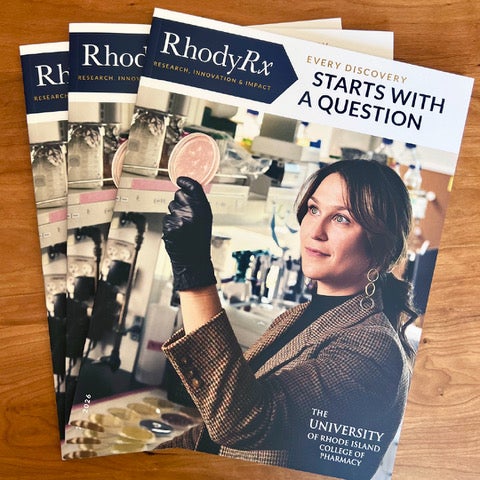
RhodyRx – Research, Innovation & Impact
We have some exciting news… the newest issue of RhodyRx is here!
VIew the Full report