
The discovery of antibiotics transformed modern medicine, turning once-deadly infections into treatable conditions and saving millions of lives. But decades of overuse and misuse have accelerated antibiotic resistance, allowing certain bacteria to evolve into dangerous “superbugs” that evade even our most powerful drugs.
As multidrug-resistant infections become increasingly difficult to treat, researchers are urgently working to develop new strategies to combat these evolving pathogens.
“Training the next generation of scientists while advancing solutions to urgent public health threats is one of the most meaningful parts of this work,”Callan Bleick, Pharm.D.
At the University of Rhode Island, Callan Bleick, Pharm.D., assistant professor, is leading efforts to improve treatment for drug-resistant bacterial infections, particularly those caused by methicillin-resistant Staphylococcus aureus (MRSA), one of the most prevalent and challenging superbugs in health care settings.
“What motivates me most as a scientist is the growing public health threat of antibiotic resistance and the increasingly limited treatment options for patients with persistent infections,” Bleick said. “I am especially interested in how novel antimicrobial agents interact with existing antibiotics and behave during active infection.”
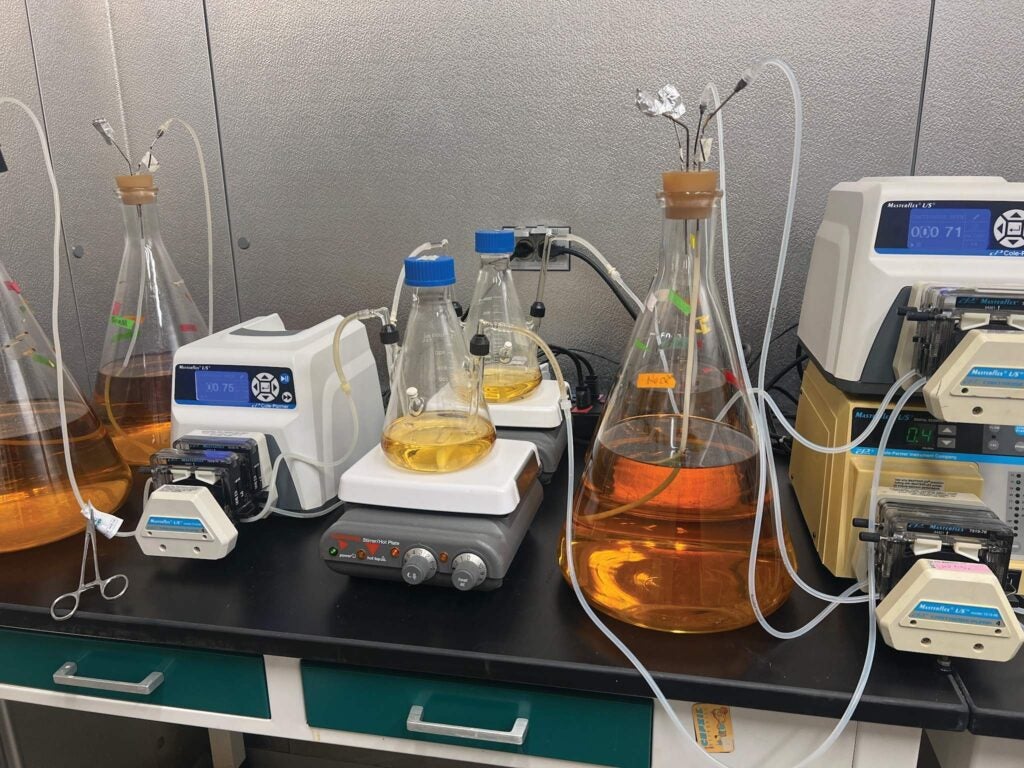
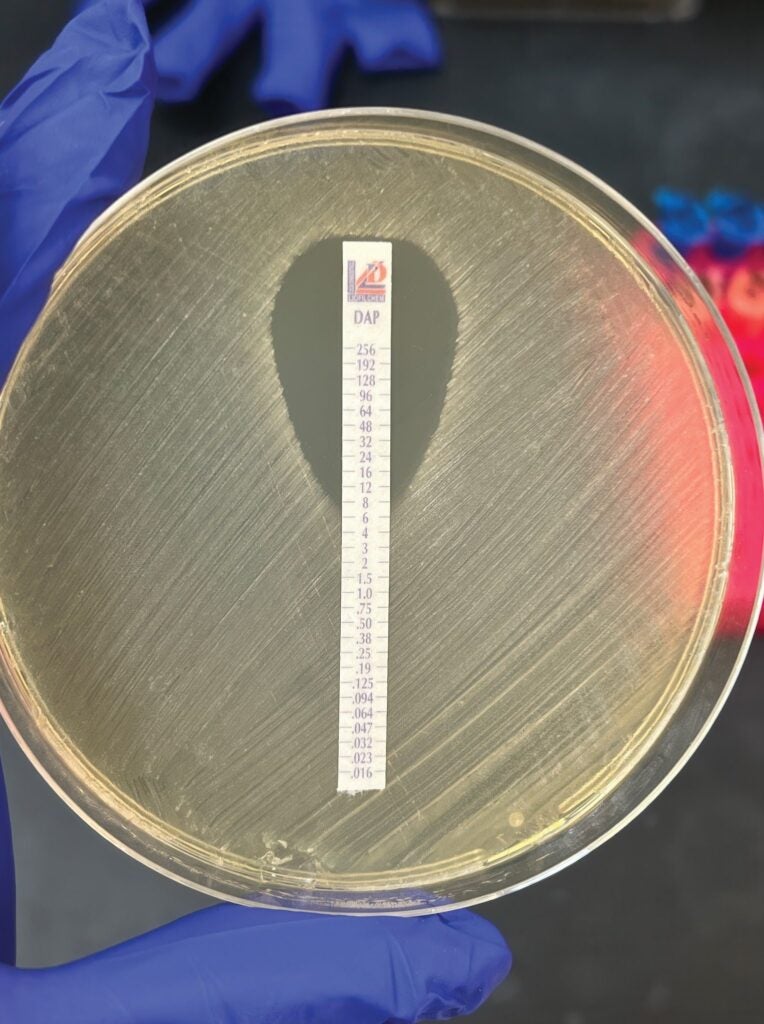
Bleick’s research focuses on how bacteria adapt during treatment and how combining antibiotics with emerging therapies, including antimicrobial peptides, bacteriophages and natural products, may improve infection control and reduce resistance.
A central focus of her laboratory is the study of bacteriophages, viruses that naturally infect and destroy specific bacteria. Bleick and her team have collected phages from soil and water sources across Rhode Island and the broader New England region, identifying strains that effectively target MRSA.
The goal is to develop a customized “Rhody Phage Cocktail,” a combination of bacteriophages paired with antibiotics to enhance treatment effectiveness and durability.
“I am driven by the question of why today’s treatments often fail to clear drug-resistant infections and what we can do to make them work better,” Bleick said. “Although phages are increasingly used in compassionate-use cases, there is still limited guidance on how to optimally combine them with antibiotics.”
By studying the dynamics of these therapies, her research aims to generate data that support more effective treatment strategies, improving success rates while reducing resistance, side effects and infection recurrence.
Bleick has been building this research program for five years, beginning as a Doctor of Pharmacy student at URI and continuing through her postdoctoral training before launching her independent lab. Today, her research team includes undergraduate and graduate students who help design experiments and analyze data.
“What motivates me most as a scientist is the growing public health threat of antibiotic resistance and the increasingly limited treatment options for patients with persistent infections” -Callan Bleick, Pharm.D.
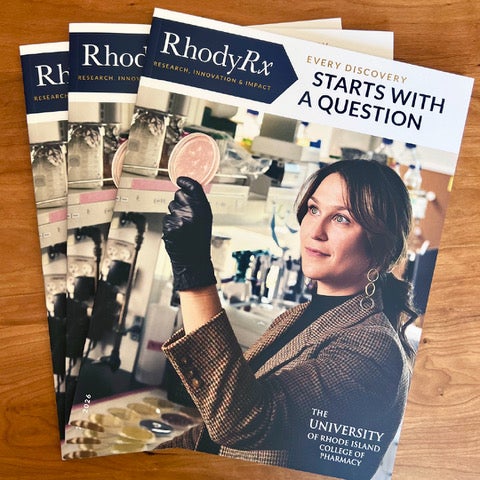
RhodyRx – Research, Innovation & Impact
We have some exciting news… the newest issue of RhodyRx is here!
VIew the Full report