
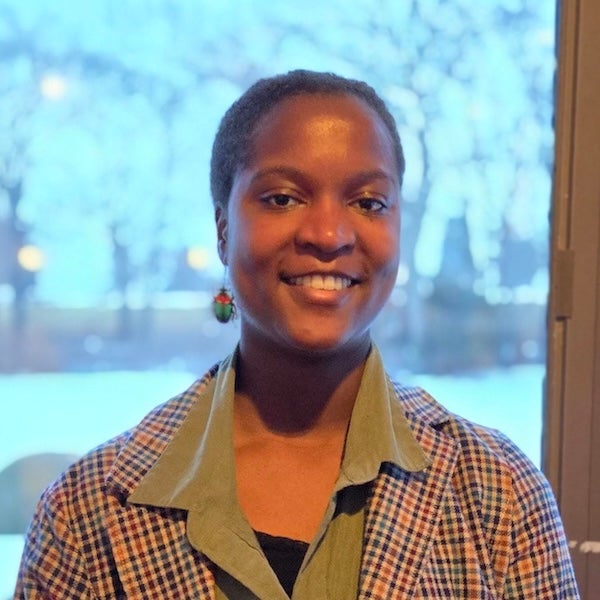
Sharday Johnson, a plant sciences major at the University of Rhode Island (URI), was recently awarded the 2026 Undergraduate Student Inclusive Excellence Award for her efforts advancing inclusion across disciplines, student organizations, and local history projects.
Across campus and in the community, Johnson’s work spans advocacy for first-generation students, interdisciplinary collaboration between the humanities and STEM, and research recovering overlooked narratives in Rhode Island’s history.
For Johnson, advocacy is rooted in lived experience and early observation. “Growing up, my parents were the ones modeling the idea of advocacy,” she says. She recalls watching her brother, who is neurodivergent and visually impaired, navigate systems that were not designed with his needs in mind.
“I observed just how many barriers were put in place that prevented him from connecting with others and navigating spaces,” she says, “and how many chose to speak over him, rather than learning directly from him what his needs were. That inspired me to focus on using the tools at my disposal to help others have their voices heard.”
Building Support for First-Generation Students
Today, that commitment shapes her leadership with Rhody F1rst at URI, where she works to support students who may arrive at college without a clear roadmap for navigating academic and social systems.
“From speaking with many first generation students, one of the biggest problems in college is not having a roadmap or a direct way of navigating college life,” Johnson says. “This is what many first generation students struggle with, especially since they might not know where to access resources.”
She also points to the importance of networks, something many students are still learning to build. Gaps in access to professional and academic connections can have long-term effects. “This is why Rhody F1rst is here for students,” she says, “because we want to see others thrive and graduate college feeling as if they have connections, support, and ample resources.”
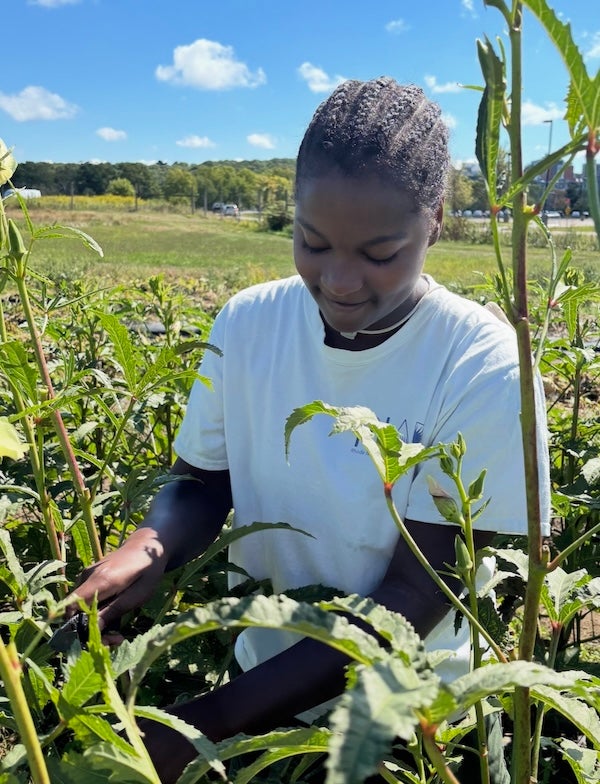
Johnson says her interest in advocacy also connects closely to her academic work in plant sciences and entomology. “I’ve always been interested in the natural world, and the more overlooked aspects of it,” she says. “Plant Science and Entomology sparked my interest because I was simply curious and felt like I was missing out on an essential part of enjoying nature.”
She says the field helped her better understand both local environments and the importance of making scientific knowledge accessible to broader communities. “Working in plant sciences and learning more about our agricultural and land management system has shown me how important it is to share knowledge with, inform, and include the general public and those directly impacted by any decisions we make,” she says. “That is one of the aspects I love most about this major — inclusion is built in.”
Connecting Inclusion, Science, and History
Johnson’s vision for inclusion also extends beyond student support. Through the South Kingstown Companion Monument Project, she is helping lead an effort to recognize Black and Indigenous soldiers who fought in the Revolutionary War but were largely forgotten from public memory. The proposed monument will stand near the 1932 Flagstaff Memorial at South Kingstown Hazard School.
“I hope this monument serves as a resource for the descendants of the Black and Indigenous soldiers who fought for South Kingstown,” she says, “for those– especially students– who are curious about the abundant history of the local area that surrounds the university, and I would like this project to serve as a hub for future research.”
Across her work, Johnson emphasizes breaking down perceived divides between fields. “Many people say they are not artists and bar themselves from creativity, and many artists could not see themselves as scientific,” she says. “This can lead to a disconnect between the two disciplines, rather than partnership.”
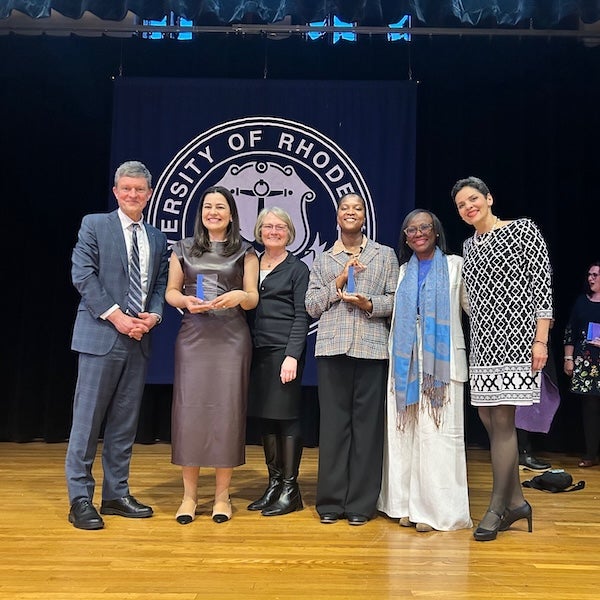
For her, inclusive excellence is as much about mindset as it is action. “It means being of service to others, listening to diverse perspectives, and surrounding yourself with people of many different communities and backgrounds,” she says. “I also believe inclusivity takes intention – to be sincere in wanting to see more diverse communities around you.”
As she looks ahead, Johnson hopes others will feel empowered to begin wherever they are. “As a student, all I’ve done is examine the positions or roles I’m serving in, learn more about those whose voices are not being heard, and work to bring others into a position where they are being heard and seen directly,” she says. “Be curious about other people, especially those who do not have the same experiences as you.”