
In Rhode Island, it’s possible to travel from an oyster farm on the coast to a 1,000-acre silvopasture in the woods in less than an hour. That diversity makes the nation’s smallest state an ideal place to explore how farmers, researchers, regulatory agencies, non-profit organizations, and communities can work together to build a more sustainable food system.
This month, the University of Rhode Island welcomed agricultural leaders from across the Northeast for the annual Northeast Sustainable Agriculture Research and Education (SARE) farm tour, showcasing partnerships and research driving agricultural innovation across the region.
Hosted in partnership with URI Cooperative Extension, the tour brought together farmers, Extension professionals, researchers, nonprofit leaders, and policymakers to visit farms, exchange ideas, and learn from projects supported by Northeast SARE, a USDA-funded grant and education program that advances sustainable agriculture through farmer-driven research.
“Our goals are to visit projects we’ve funded and learn from them,” says Katie Campbell-Nelson, professional development coordinator for Northeast SARE. “And, also importantly to ask: ‘What does Rhode Island need to advance sustainable agriculture?'”
Supporting Farmer-Led Research
As Rhode Island’s land-grant university, URI serves as home to the state’s Northeast SARE coordinator, Keiddy Urrea-Morawicki, who connects local farmers and service providers with a regional network that supports research, education, and innovation. “Helping to organize this tour exposed me to so many parts of agriculture in this state that I didn’t know about before,” she says. “This experience has brought together partners who alone could not achieve what we can do together.”
That partnership reflects the heart of URI’s land-grant mission: advancing knowledge through research, sharing it through education, and applying it beyond campus by working alongside communities to address real-world challenges.
That same collaborative approach is central to Northeast SARE, which places farmers at the center of the research process by supporting on-farm experiments that test new ideas under real-world conditions. Recognizing that farmers are often the first to identify emerging challenges and develop practical innovations, the program generates knowledge that benefits producers, researchers, and Extension educators alike.
“Northeast SARE is the only USDA program that truly puts farmers in the role of researchers,” says Campbell-Nelson. “SARE takes the land‑grant mission and lets farmers carry it out. They’re not just receiving information from universities—they’re co‑creating it.”
From Coast to Forest
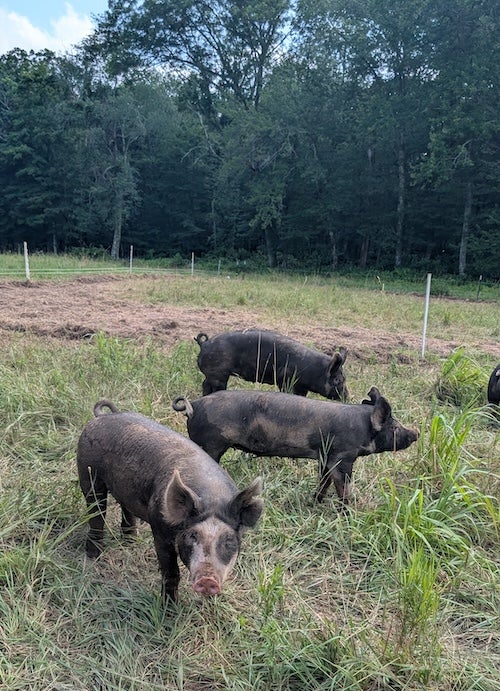
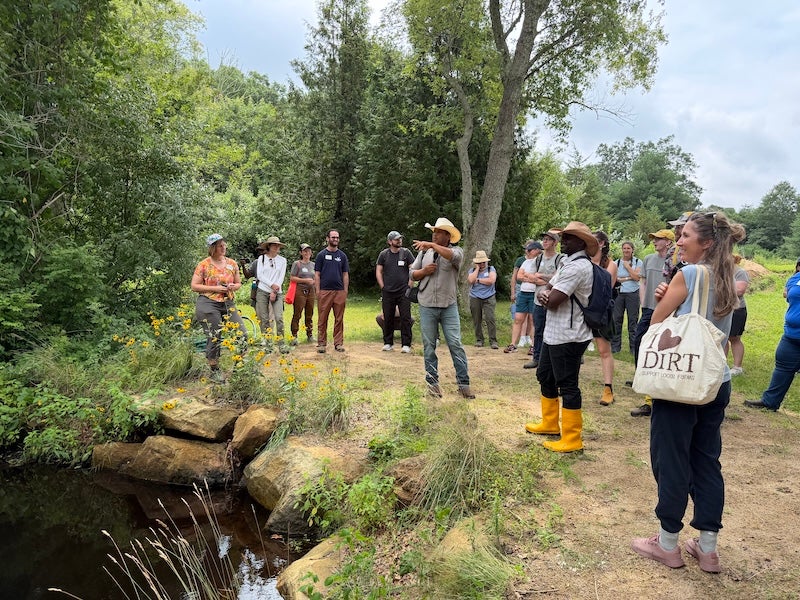
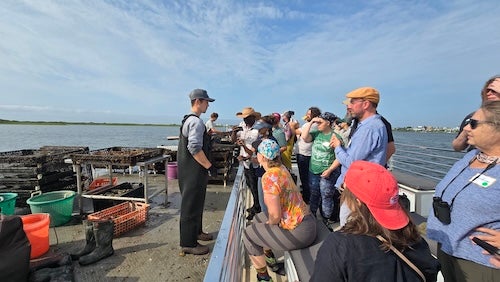
Throughout the tour, participants visited farms that showcased Rhode Island’s agricultural diversity—from aquaculture operations at Matunuck Oyster Farm to Indigenous food sovereignty initiatives at Ashawaug Farm and innovative livestock operations practicing silvopasture, the integration of trees, forage, and grazing animals, at Wild Harmony Farm.
At Wild Harmony Farm, participants also saw the long-term impact of a SARE-funded project that began years ago by testing alternative livestock feed. Although the original approach proved unsuccessful, the farm’s continued use of cover crops dramatically improved soil health while providing fodder, illustrating how research can yield valuable discoveries even when results differ from expectations.
Each stop demonstrated how local knowledge and applied research can work together to address complex agricultural challenges. Together, the farms showed that the future of agricultural innovation depends not only on university research, but also on the experience, creativity, and leadership of the farmers and communities putting new ideas into practice every day.