
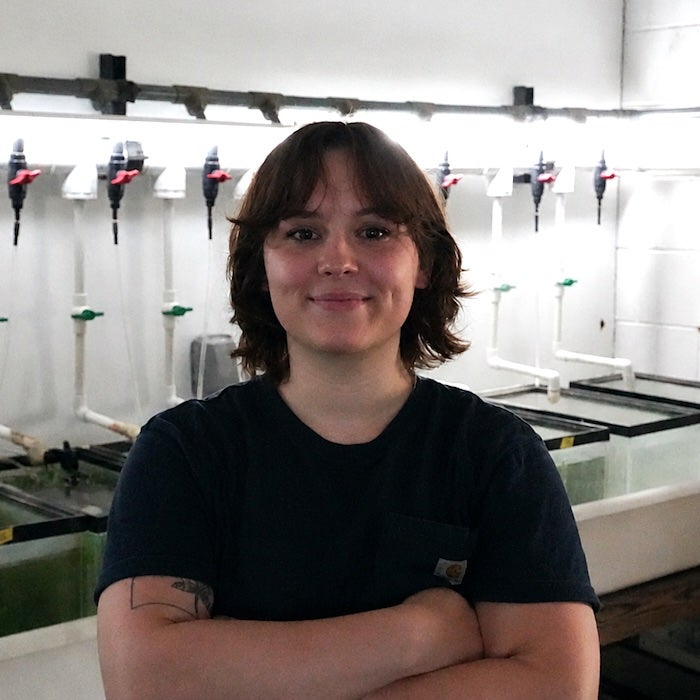
KINGSTON, R.I. – August 27, 2026 – For Erin Sweeney, finding her field of study was less a straight line than a series of discoveries.
At the Community College of Rhode Island, she started in general studies. She considered anthropology, explored environmental science, and pursued photography as a passion. Then she took an oceanography class and fell in love with it.
Soon, she was looking into potential majors at the University of Rhode Island and stumbled across aquaculture and fisheries science. “I started taking classes, and I realized how interdisciplinary it is,” Sweeney says. “It’s way beyond just fish.”
Learning by doing
Since transferring to URI, Sweeney has explored aquaculture and fisheries science through coursework, hands-on research, internships, and experiences beyond the classroom.
In a fisheries science course, she explored fishing methods, conservation practices, and current research around the world, including a case study of fisheries in Ghana. The experience helped her understand fisheries and aquaculture not only as scientific fields, but also as sources of food, livelihoods, and cultural identity.
The course also challenged her to think about sustainability through the lens of the communities whose livelihoods depend on these practices. “One of the biggest things I took away was that we’re not trying to control people or tell them to change their ways,” Sweeney says. “It’s about understanding what these practices mean to communities and then working together on more sustainable options.”
“That’s what aquaculture should be about,” she adds. “It’s meeting each other in the middle, understanding cultures.”
In a finfish aquaculture course, Sweeney worked at URI’s East Farm, caring for rainbow trout in recirculating aquaculture systems, monitoring water quality, and collecting data alongside classmates. “It was so cool. I had so much fun with that,” she says.
The experience led to another opportunity: Sweeney now works part time at East Farm caring for the fish.
She has also completed internships in sustainability and conservation, including a marine and community conservation storytelling project for which she created a digital story map about aquaculture in Rhode Island and interviewed URI faculty about the industry’s future and the effects of climate change.
“The classes are very hands-on, and the professors clearly want their students to succeed,” Sweeney says of the department.
Learning to dive
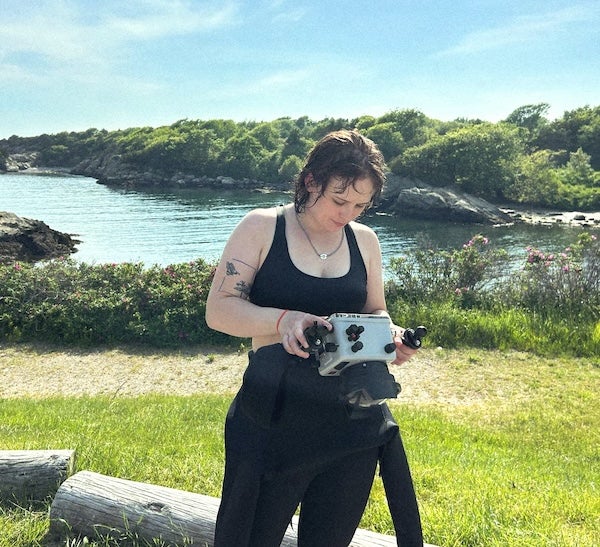
Perhaps the clearest example of Sweeney’s willingness to explore new things came outside the classroom. “I’ve always had an intense fear of going out in the ocean,” she says. “And then I was learning about the opportunities for underwater photography, and thought, ‘’I want to try this out.’”
At URI’s Tootell Aquatic Center, Sweeney spent evenings learning to swim, working toward the swim test required for scuba certification. She passed, earned her certification, and enrolled in a selective URI course in underwater photography and video.
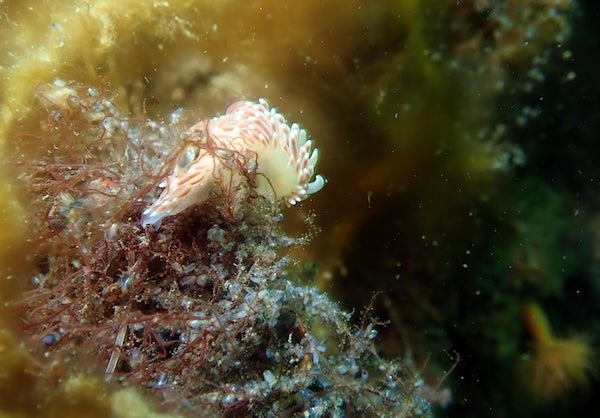
The course brought together her newfound diving skills and longtime passion for photography. She eventually saved up for her own underwater camera housing and now photographs marine life while snorkeling and diving.
“It was a big leap for me,” she says. “I went from being afraid to even swim in the ocean to breathing underwater and taking photos of fish. It felt like proof that I could do hard things if I gave myself the chance.”
A path that keeps expanding
Sweeney’s experience at URI has allowed her to bring together interests she once considered separately. Her interest in anthropology informs how she thinks about the cultural dimensions of fisheries and aquaculture. Her scientific training gives her a foundation for understanding aquatic systems. And her background in photography has taken her beneath the surface, where she now captures images of the marine life she studies.
“I couldn’t imagine doing anything else,” she says of aquaculture and fisheries science. “It brings together everything I care about.”