
Hack@URI will hold a Hackathon Weekend on Saturday, February 21 and Sunday, February 22. Hack@URI says its mission is to bridge the gap between classroom learning and real-world experience, and organizers say they hope to inspire innovation and problem-solving and connect participants with the Rhode Island tech and creative community. The event will start at […]
Continue reading "[News] Hack@URI to hold Hackathon Weekend"Category: News
[Talk] Travess Smalley: Generative Systems in Art & Design
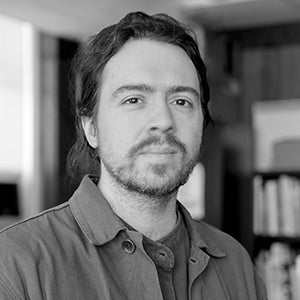
When: Friday, February 20, 3:00 PM Where: Tyler 055 Abstract Generative Systems in Art and Design is an artist talk that surveys Travess Smalley’s generative practice, including scripting in Adobe Photoshop, creative coding, and building small creative software. It also looks at ways software-based systems can be translated into physical prints and exhibition work. The […]
Continue reading "[Talk] Travess Smalley: Generative Systems in Art & Design"[Award] Faculty publication awarded IEEE Editor’s Choice
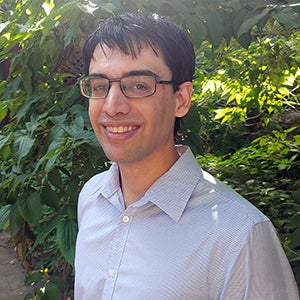
IEEE Access designated Game Theoretic Mixed Experts for Combinational Adversarial Machine Learning by Kaleel Mahmood, Ethan Rathbun, Ronak Sahu, Marten Van Dijk, Sohaib Ahmad, and Caiwen Ding as an Editor’s Choice article. The publication is currently listed on the Featured Articles page.
Continue reading "[Award] Faculty publication awarded IEEE Editor’s Choice"[Talk] Lesia Semenova: Which Model Should You Trust When Many Models Fit?
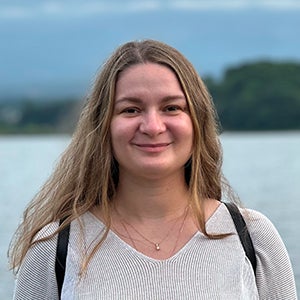
When: Thursday, February 12, 12:00 PM Where: Bliss 190 Abstract In practice, there is rarely a single “golden” answer. In this talk, I argue that trustworthy ML should be set-valued: instead of validating a single model, we should reason over the Rashomon set (the set of models that meet a performance criterion). I’ll present a […]
Continue reading "[Talk] Lesia Semenova: Which Model Should You Trust When Many Models Fit?"[Talk] Xiaomeng Ju: Bayesian Modeling for Functional and Matrix Data with Applications to Neuroimaging Analysis
When: Wednesday, February 18, 12:00 PM Where: Avedisian 105 Abstract Neuroimaging data present fundamental statistical challenges: they are high-dimensional and exhibit complex structures. In this talk, I present Bayesian methods developed for functional data and matrix-valued data motivated by neuroimaging applications, emphasizing interpretability, scalability, and uncertainty quantification. I first introduce Bayesian methods developed for two […]
Continue reading "[Talk] Xiaomeng Ju: Bayesian Modeling for Functional and Matrix Data with Applications to Neuroimaging Analysis"[Talk] Jinghao Sun: Panel Data Meets Unmeasured Confounding: A Nonlinear Difference-in-Differences Framework
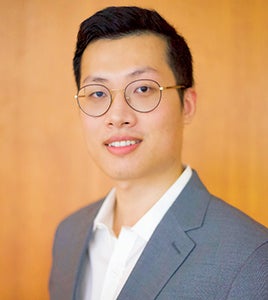
When: Friday, February 13, 3:00 PM Where: Tyler 055 Abstract Difference-in-differences (DiD) is a foundational tool for causal inference in panel data, widely used in policy, economics, and health research. Its appeal lies in its intuitive design and robustness to time-invariant unmeasured confounding. However, standard DiD relies on strong assumptions—particularly parallel trends—that are often violated […]
Continue reading "[Talk] Jinghao Sun: Panel Data Meets Unmeasured Confounding: A Nonlinear Difference-in-Differences Framework"[Talk] Tian Wang: Modeling of Complex Data
When: Friday, February 6, 3:00 PM Where: Tyler 055 Abstract In this talk, we will first discuss the proposed α-separability for functional data. Functional data consist of random samples observed over a continuum, such as curves over a time range. These data often exhibit two kinds of variation: amplitude variation in the vertical direction and […]
Continue reading "[Talk] Tian Wang: Modeling of Complex Data"[Talk] Jiajun Tang: Network Goodness-of-Fit for the Block-Model Family
When: Wednesday, February 4, 10:00 AM Where: Tyler 053 Abstract The block-model family has four popular network models (SBM, DCBM, MMSBM, and DCMM). A fundamental problem is how well each of these models fits with real networks. We propose GoF-MSCORE as a new Goodness-of-Fit (GoF) metric for DCMM (the broadest one among the four), with […]
Continue reading "[Talk] Jiajun Tang: Network Goodness-of-Fit for the Block-Model Family"[Talk] Harini Suresh: From universal models to local agency: opportunities for more community-controlled AI
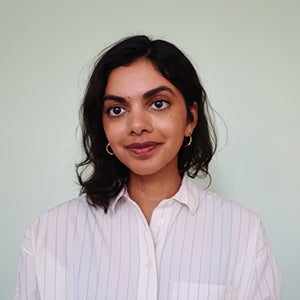
When: Friday, January 30, 3:00 PM Where: Tyler 055 Abstract As AI systems are increasingly introduced into our everyday lives and high-stakes domains, it’s critical that decisions around their use, design, and governance center the specific contexts and communities they affect. My research explores participatory approaches that support community control, domain specificity, and local agency […]
Continue reading "[Talk] Harini Suresh: From universal models to local agency: opportunities for more community-controlled AI"[Talk] Krishna Venkatasubramanian: Designing for accessibility for adults with intellectual and developmental disabilities around traumatic contexts
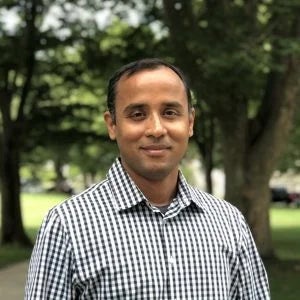
When: Friday, December 5, 3:00 PM Where: Tyler 055 Abstract There are over 7 million people with intellectual and developmental disabilities (I/DD) in the US. I/DD (e.g., Down syndrome, Williams syndrome, Autism, Smith-Magenis syndrome, etc.) are a set of disabilities that negatively affect the trajectory of an individual’s intellectual, emotional, and/or physical development. The abuse […]
Continue reading "[Talk] Krishna Venkatasubramanian: Designing for accessibility for adults with intellectual and developmental disabilities around traumatic contexts"