At EDI, we are passionate about outreach, especially with local schools and communities, to inspire the next generation about civics and industrial engineering. Elections offer an excellent opportunity to demonstrate how engineering influences daily life, from voter wait times and polling station design to the roles of election officials and workers to the voting experience itself. Our K-12 programs transform these real-world questions into hands-on learning experiences suitable for both STEM and social studies classes.
This section features three sets of free, ready-to-use resources, created in collaboration with leading national partners. Collectively, these resources invite curiosity, teamwork, and a deeper appreciation for the engineering that shapes our world and how we vote.
Civics + Industrial Engineering
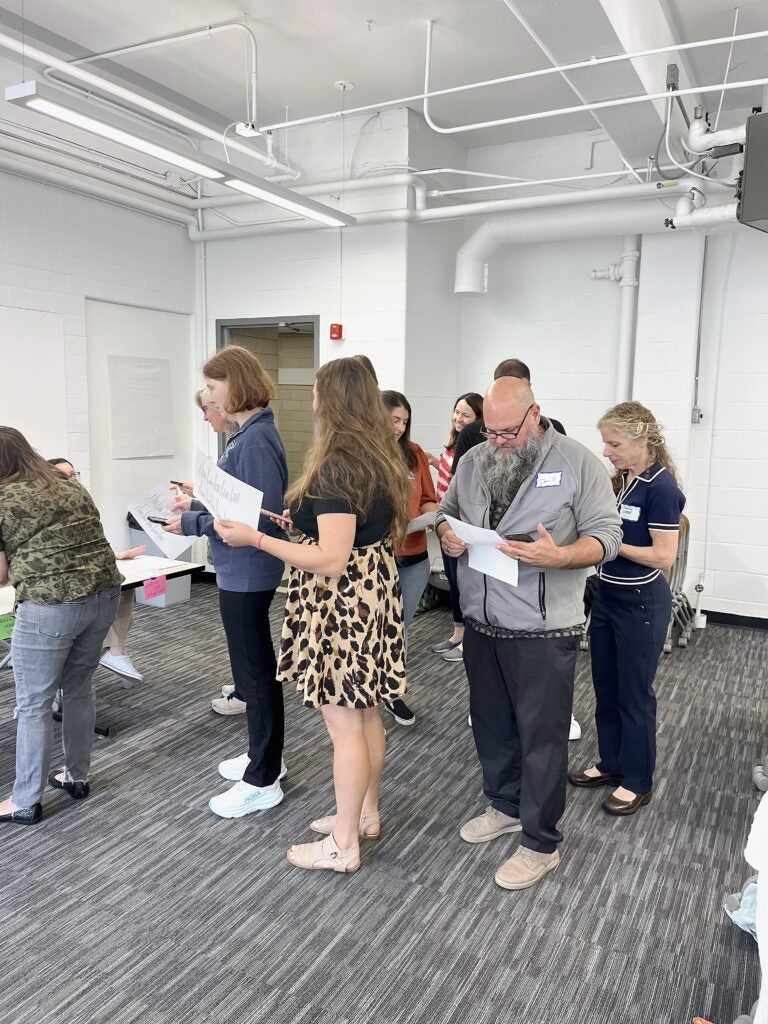
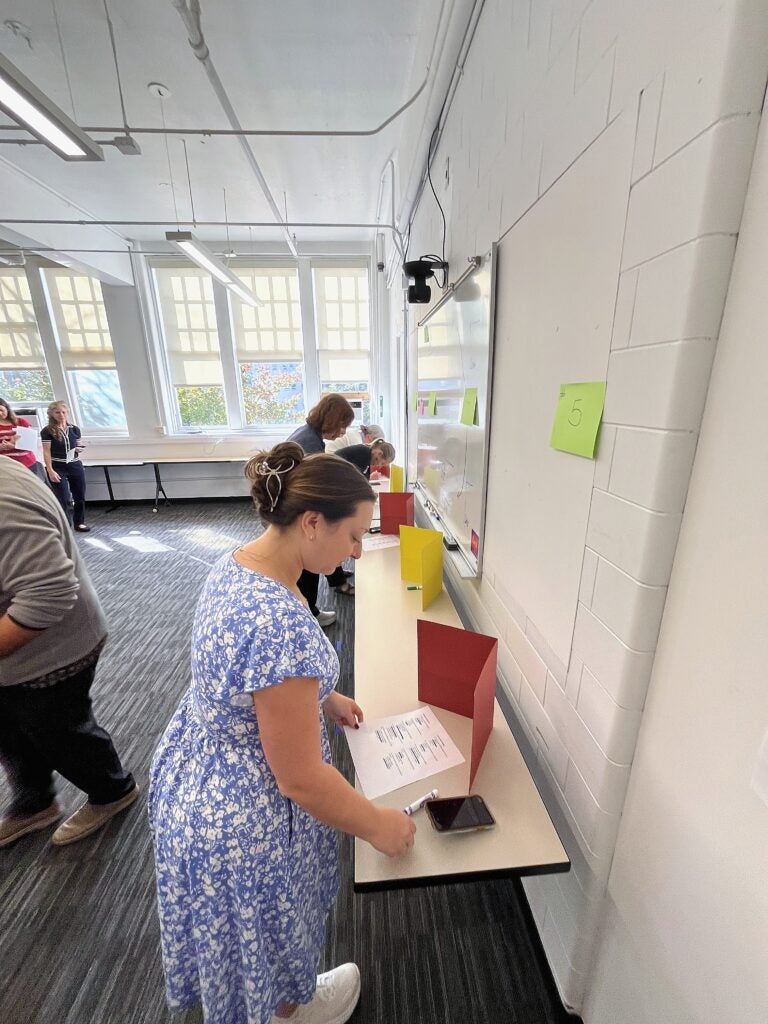
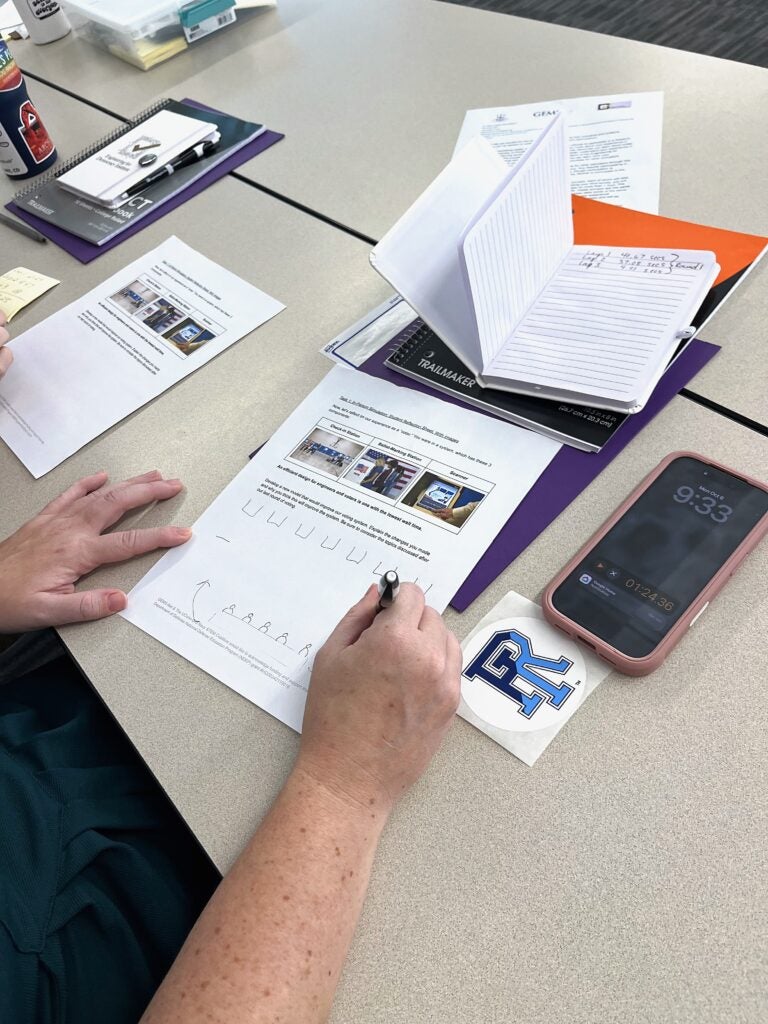
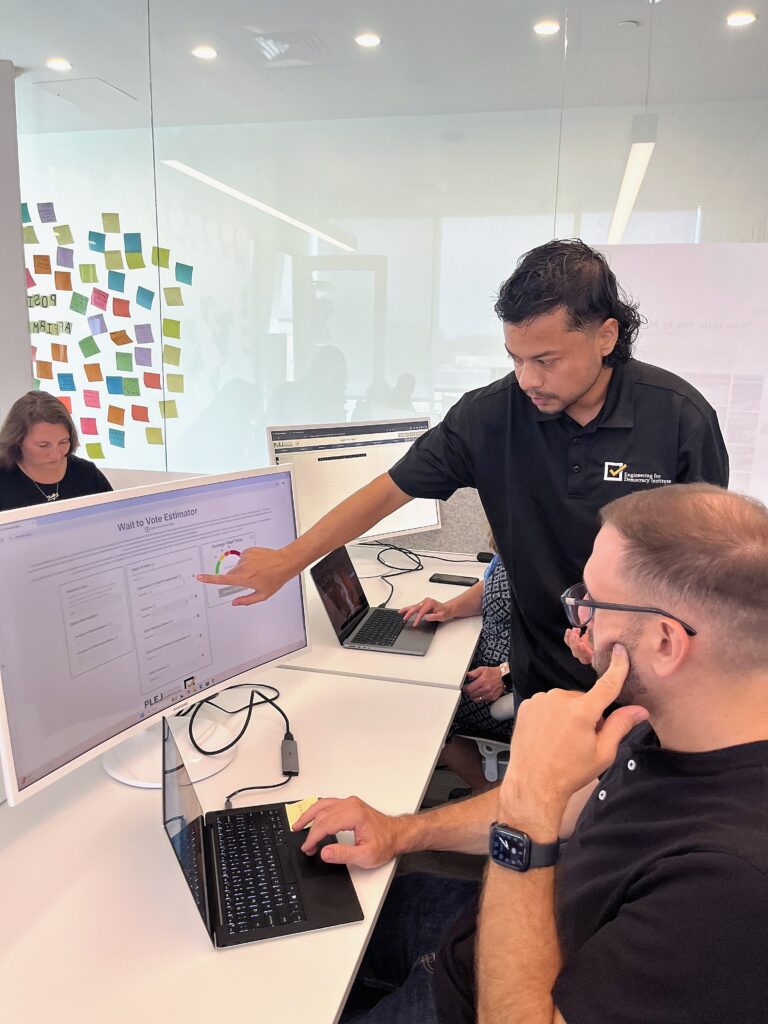
Our Civics and Industrial Systems Engineering modules originated from the project “The Impact of Industrial and Systems Engineering on In-Person Voting,” illustrating how core engineering principles influence election processes. Students tackle real challenges such as minimizing wait times and designing polling place layouts, applying small-scale “optimization” and systematic layout planning techniques. Since the modules link problem-solving to civic engagement, they naturally fit into both STEM and social studies classes.
Created in collaboration with the URI Navy STEM Coalition and the Guiding Education in Math and Science Network (GEMS-Net), these free K-12 modules make engineering accessible and demonstrate how thoughtful design shapes how we all vote.
Grades K-2
Potential Standards Alignment
- Next-Generation Science Standards (NGSS) Engineering Design: K-2-ETS1-1, K-2-ETS1-2, K-2-ETS1-3
- Connecticut Social Studies Standards: 3.Civ.2.a
- Rhode Island Social Studies Standards: SS3.1.4, SS4.6.4, SS5.3.4 + Anchor Standards: K-12: Civics and Government
Grades 3-5
Potential Standards Alignment
- Next-Generation Science Standards (NGSS) Engineering Design: 3-5-ETS 1-2
- Connecticut Social Studies Standards: 3.Civ.2.a
- Rhode Island Social Studies Standards: SS3.1.4, SS4.6.4, SS5.3.4 + Anchor Standards: K-12: Civics and Government
Grades 5-8
Potential Standards Alignment
- Next-Generation Science Standards (NGSS) Engineering Design: MS-ETS1-3
- Connecticut Social Studies Standards: CG.Civ.8.a, CG.Civ.8.b + Math: Model with Mathematics CCSS.MATH.PRACTICE.MP4
- Rhode Island Social Studies Standards: SS8.6 + Anchor Standards: K-12: Civics and Government
Grades 9-12
Potential Standards Alignment
- Next-Generation Science Standards (NGSS) Engineering Design: HS-ETS1-3: Evaluate Solutions, Data Analysis, Engineering Design, HS-LS2-1: Carrying Capacity
- Connecticut Social Studies Standards: HS.CG.Civ.1.b, HS.CG.Civ.3.a
- Rhode Island Social Studies Standards: HS.CVC.1.2, HS.CVS.1.3 + Anchor Standards: K-12: Civics and Government
Partners