
Expanding the Impact of Cancer Innovation
Ami Vyas studies how access, affordability and real-world use influence cancer outcomes
Over the past two decades, advances in cancer biology have transformed how many cancers are treated. Breakthroughs in targeted therapies and immunotherapies have opened new possibilities, allowing physicians to harness the body’s immune system to attack cancer at the molecular level.
Yet even the most promising therapies cannot improve outcomes if patients cannot access them, afford them or maintain treatment over time.
At the University of Rhode Island, Ami Vyas, Pharm.D., Ph.D., associate professor, studies the critical links between innovation, access, and patient outcomes. Her research focuses on how cancer therapies are used in real-world settings and how clinical, economic, and social factors influence whether patients benefit from these advances.
Through large-scale data analysis, systematic reviews and population health research, Vyas is helping researchers and policymakers better understand how cancer care is delivered, accessed, and improved.
Understanding treatment beyond clinical trials
Clinical trials remain the gold standard for evaluating whether new therapies are safe and effective, but they are conducted under controlled conditions with carefully selected patient populations.
Vyas studies what happens when these therapies reach patients in everyday healthcare settings.
Using national health databases, including insurance claims and cancer registry data, she examines treatment patterns, healthcare utilization and patient outcomes. This type of research, often referred to as real-world evidence research, helps bridge important gaps between clinical trials and clinical practice.
Her research provides insights into how treatments perform across broader and more diverse patient populations and identifies barriers that may prevent patients from receiving or continuing therapies.
“Through her work, Vyas is helping ensure that the promise of cancer innovation reaches the people it is intended to help.”Ami Vyas, Pharm.D., Ph.D.
The challenge of oral anticancer medications
One key area of focus involves oral anticancer medications. As oncology has evolved, many treatments once administered intravenously in hospitals are now available as pills patients can take at home.
While this shift offers greater convenience, it also introduces new challenges. Oral therapies rely heavily on patients’ ability to access, afford and consistently take their medications. Out-of-pocket costs, insurance coverage limitations and complex treatment regimens can all affect adherence.
Vyas studies how these factors influence whether patients begin and continue treatment as recommended. Understanding these patterns is essential to improving both effectiveness and outcomes.
Examining treatment patterns and quality of care
Vyas also investigates how cancer treatments are used across health care systems and whether patients receive therapies aligned with clinical guidelines.
Her research has explored treatment patterns among patients with conditions such as metastatic breast cancer, comparing real-world care with recommended treatment strategies.
These analyses provide insight into how clinical decisions affect patient outcomes, costs and overall quality of care. By identifying gaps between guidelines and practice, her work helps inform strategies to improve care delivery.
Evaluating emerging cancer therapies
As cancer treatment continues to evolve, understanding how new therapies perform across diverse populations is increasingly important.
Vyas has contributed to systematic reviews and meta-analyses examining modern treatments, including immunotherapies such as immune checkpoint inhibitors, which stimulate the immune system to attack cancer cells.
By synthesizing data across studies, her work helps clinicians and researchers better understand how these therapies perform in different patient groups and clinical settings.
From discovery to patient impact
Cancer research spans disciplines from molecular biology and immunology to clinical medicine and population health. Vyas’ work represents a critical link in this continuum.
While scientists develop new therapies in laboratories and clinical trials, health outcomes researchers evaluate how those therapies function once they reach patients.
By examining access, adherence, disparities and real-world outcomes, Vyas helps ensure that advances in cancer science translate into meaningful improvements in patient health.
Her research underscores a central reality in modern medicine: Scientific breakthroughs are only part of the solution. How those discoveries are delivered, adopted and experienced by patients is equally important.
Through her work, Vyas is helping ensure that the promise of cancer innovation reaches the people it is intended to help.
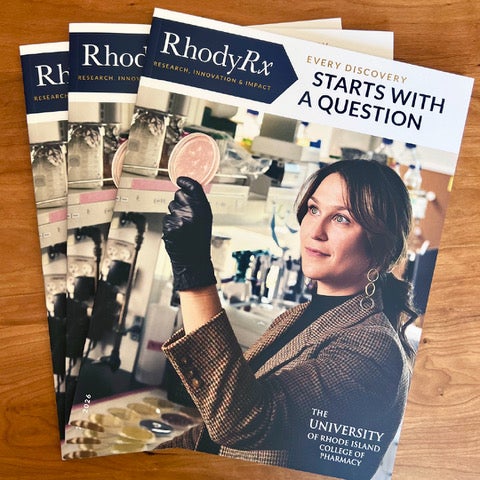
RhodyRx – Research, Innovation & Impact
We have some exciting news… the newest issue of RhodyRx is here!
VIew the Full report