
Continuous glucose monitoring, or CGM, is an increasingly used technology that provides real-time glucose data to help manage diabetes. Despite its growing use, insurance coverage and cost remain barriers for some patients.
In a study involving researchers from the University of Rhode Island College of Pharmacy, clinic-based professional CGM (proCGM) was evaluated in a care model in which ambulatory care pharmacists used short-term CGM data to assess blood sugar patterns and make medication and lifestyle adjustments.
The findings showed that pharmacist-led proCGM services were associated with meaningful short-term A1C reductions, particularly among patients with poorer baseline blood sugar control who were not using insulin.
“Laboratory A1C testing remains an important measure of overall glucose control. What CGM adds is insight into daily patterns, how glucose changes throughout the day, how patients respond to meals, activity, or medications. That additional information supports more precise and timely treatment decisions.”Stephen Kogut, Ph.D.
This project was conducted in partnership with the Care Transformation Collaborative of Rhode Island (CTC-RI), a consortium of medical practices focused on improving access, affordability, and equity in health care. In 2022, the URI College of Pharmacy, CTC-RI, and the Rhode Island Department of Health launched a quality improvement initiative to implement pharmacist-led proCGM services in six primary care practices.
Stephen Kogut, Ph.D., professor and an expert in medication outcomes research and pharmacoepidemiology, led the evaluation. Doctoral student Natalya Salganik, Pharm.D., assisted with data analysis, and adjunct clinical professor Kelly Doherty Sanzen, Pharm.D., PAHM, CDOE, provided clinical direction and served as practice facilitator.
Ambulatory care pharmacists at each site recruited patients, placed sensors, reviewed CGM data and recommended or implemented treatment adjustments.
More than 400 patients across six primary care sites participated, wearing a glucose sensor for up to 14 days. Patients were eligible if they had suboptimal glucose control, discrepancies between lab results and home readings, a risk of hypoglycemia or a referral from a healthcare provider.
The sensor, about the size of a quarter, is worn on the back of the upper arm. A small filament beneath the skin measures glucose levels throughout the day, with data transmitted electronically for review. Pharmacists then met with each patient to discuss the results and adjust treatment plans.
The study showed improvements within weeks. Mean hemoglobin A1C levels, a standard measure of longer-term blood glucose control, decreased from 9.36% to 8.25%, and nearly half of all patients achieved a reduction of more than one percentage point. Statistical analysis found that baseline A1C was the strongest predictor of improvement, suggesting that patients with the poorest initial control may benefit most.
“It worked great. Many people had dramatic improvements in their blood sugar control,” Kogut said. “Pharmacist-led proCGM services were associated with meaningful short-term A1C reductions, especially in patients not using insulin. This suggests that many patients who are not currently using a personal CGM device may benefit from periodic professional monitoring.”
In addition to improved outcomes, the study examined patient and provider experiences. More than half of participants chose to continue using CGM devices after the program, recognizing the value of the data.
The care model was also well-received by healthcare teams. Among 51 care team members surveyed, 94% agreed or strongly agreed that the service had positively impacted patients and staff, and a majority believed the model could be sustained in primary care.
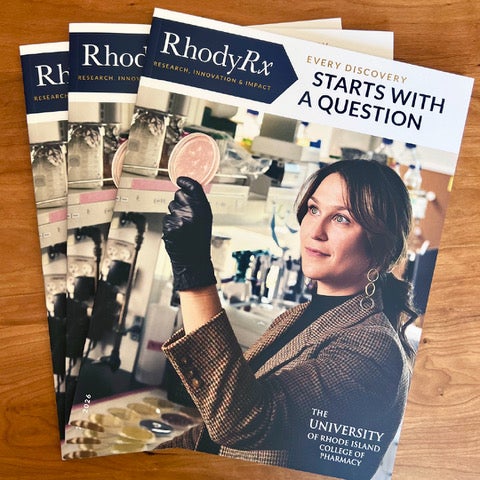
RhodyRx – Research, Innovation & Impact
We have some exciting news… the newest issue of RhodyRx is here!
VIew the Full report