
Multidrug-resistant gram-negative bacteria, including carbapenem-resistant Enterobacterales and Acinetobacter baumannii, are among the most difficult pathogens to treat and are considered urgent global health threats.
At the University of Rhode Island, Tom Lavoie, Pharm.D., assistant professor, is working to improve how these infections are treated by identifying the most effective antimicrobial regimens and optimizing how they are used in clinical care.
Lavoie’s research focuses on translational pharmacotherapy, bridging laboratory discoveries with real-world treatment strategies. Through advanced pharmacokinetic and pharmacodynamic studies, his work evaluates how antibiotics behave in the body and how dosing strategies can be refined to maximize bacterial killing while limiting the emergence of resistance.
During his postdoctoral fellowship under infectious diseases researcher Kerry LaPlante, Lavoie developed expertise in in-vitro pharmacodynamic modeling, antimicrobial synergy testing, and PK/PD integration. These approaches allow researchers to simulate human drug exposures in laboratory models to evaluate how different antibiotic regimens perform against resistant pathogens.
“His ongoing work aims to develop precision dosing strategies that help clinicians select the right antibiotic, at the right dose, for the right infection.”Thomas Lavoie, Pharm.D.
In recent studies, Lavoie examined the activity of several advanced antibiotic combinations, including meropenem-vaborbactam and ceftazidime-avibactam, against carbapenem-resistant Enterobacterales. Using simulated human drug concentrations, his research demonstrated the superior durability of meropenem-vaborbactam and a lower likelihood of resistance development compared with alternative therapies.
His research is also exploring how antibiotic effectiveness varies depending on where infections occur in the body. By simulating drug concentrations in epithelial lining fluid, a key site for respiratory infections, Lavoie showed that site-specific drug exposure can significantly influence antimicrobial effectiveness.
In complementary studies, Lavoie investigated treatments for Acinetobacter baumannii, another high-priority resistant pathogen. His research found that sulbactam-durlobactam combinations demonstrated greater antimicrobial activity and reduced resistance compared with traditional therapies.
As both a researcher and a clinical infectious disease pharmacotherapy specialist at the Providence VA Medical Center, Lavoie brings a perspective that integrates laboratory science with patient care.
His ongoing work aims to develop precision dosing strategies that help clinicians select the right antibiotic, at the right dose, for the right infection. By combining clinical insight with advanced pharmacometric tools, his research is advancing new approaches to combat antimicrobial resistance and improve patient outcomes.
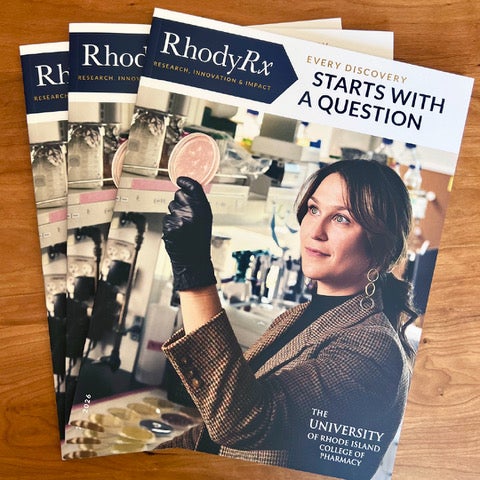
RhodyRx – Research, Innovation & Impact
We have some exciting news… the newest issue of RhodyRx is here!
VIew the Full report