
Expecting Protection: Evaluating Vaccinations in Pregnancy
Virginia Lemay studies vaccine hesitancy and maternal health education
Despite recommendations from leading public health organizations that many vaccines are safe and effective for pregnant women, vaccine hesitancy among this population remains high throughout the United States.
Virginia Lemay, Pharm.D., clinical professor at the University of Rhode Island, is working to understand why many pregnant women decline vaccines and how education can improve confidence in immunization as a key tool in preventing infectious disease.
The Centers for Disease Control and Prevention recommends vaccination against influenza, Tdap and RSV during pregnancy, while the American College of Obstetricians and Gynecologists advises vaccination against COVID-19. Despite these recommendations, national data show that about 60% of pregnant women report hesitancy toward the influenza vaccine and 43% toward Tdap. Approximately half report hesitancy toward the COVID-19 vaccine, according to the National Institutes of Health.
“I am an advocate for vaccination as preventative healthcare. I am equally passionate about teaching and research, particularly when it involves collaborating with pharmacist colleagues and mentoring student researchers.”Virginia Lemay, Pharm.D.
Working with third-year professional students Emma Brouillette and Kayla Aquilante, as well as pharmacist colleagues Elizabeth Brilhante and Lisa Cohen, Lemay is studying knowledge and attitudes related to vaccination during pregnancy. Common barriers include misinformation, concerns about fetal safety and limited awareness of vaccine recommendations. Prior studies demonstrate persistent knowledge gaps, both in the U.S. and internationally, regarding which vaccines are recommended and why they are critical for maternal and infant protection.
To better understand these gaps, the team designed a 30-question cross-sectional survey of women aged 18 and older, assessing vaccine knowledge and attitudes across pregnancy stages (including childbearing age, preconception planning, pregnancy and postpartum). Their findings aim to identify key drivers of hesitancy and inform pharmacist-led education strategies to improve maternal vaccination rates.
“This research evolved from my commitment to preventive medicine and the role vaccines play in public health,” Lemay said. “We need to invest in taking care of patients before things are broken, instead of fixing things when people already feel sick, sad or defeated.”
Findings from the study will be presented at the American Pharmacists Association Annual Meeting in March in Los Angeles, with a manuscript in preparation.
Lemay has been a leader in vaccine education and outreach. It’s a mission Lemay has held since her early career as a community pharmacist, one she continues with organizations including Walgreens and Visiting Nurse Home and Hospice.
Lemay also organizes annual immunization clinics at URI and across the Kingston campus, providing vaccines for influenza, COVID-19, RSV, pneumococcal disease, shingles, Tdap, mpox, meningitis B and HPV.
Her approach to care emphasizes prevention and whole-person health, integrating traditional medical care with wellness practices such as yoga, meditation and other supportive therapies.
Lemay’s work has earned recognition both within the college and the broader community. A former president of the Rhode Island Pharmacists Association, she was named a Healthcare Hero by the Providence Business News. She was also selected by graduating students as Faculty Member of the Year.
“I started my career as a pharmacist and wanted to share the joy I have of pharmacy and caring for people with the students and hope to inspire them to embrace that same dedication and compassion,” Lemay said.
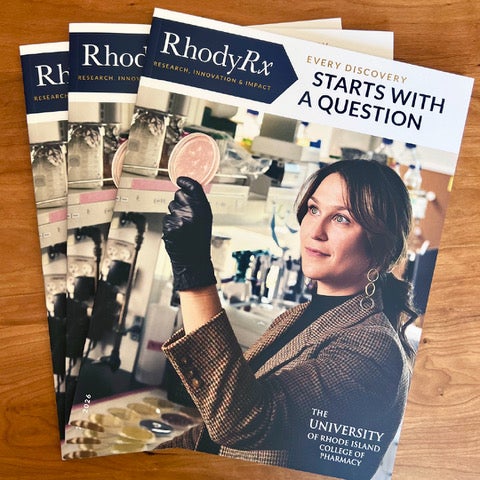
RhodyRx – Research, Innovation & Impact
We have some exciting news… the newest issue of RhodyRx is here!
VIew the Full report