
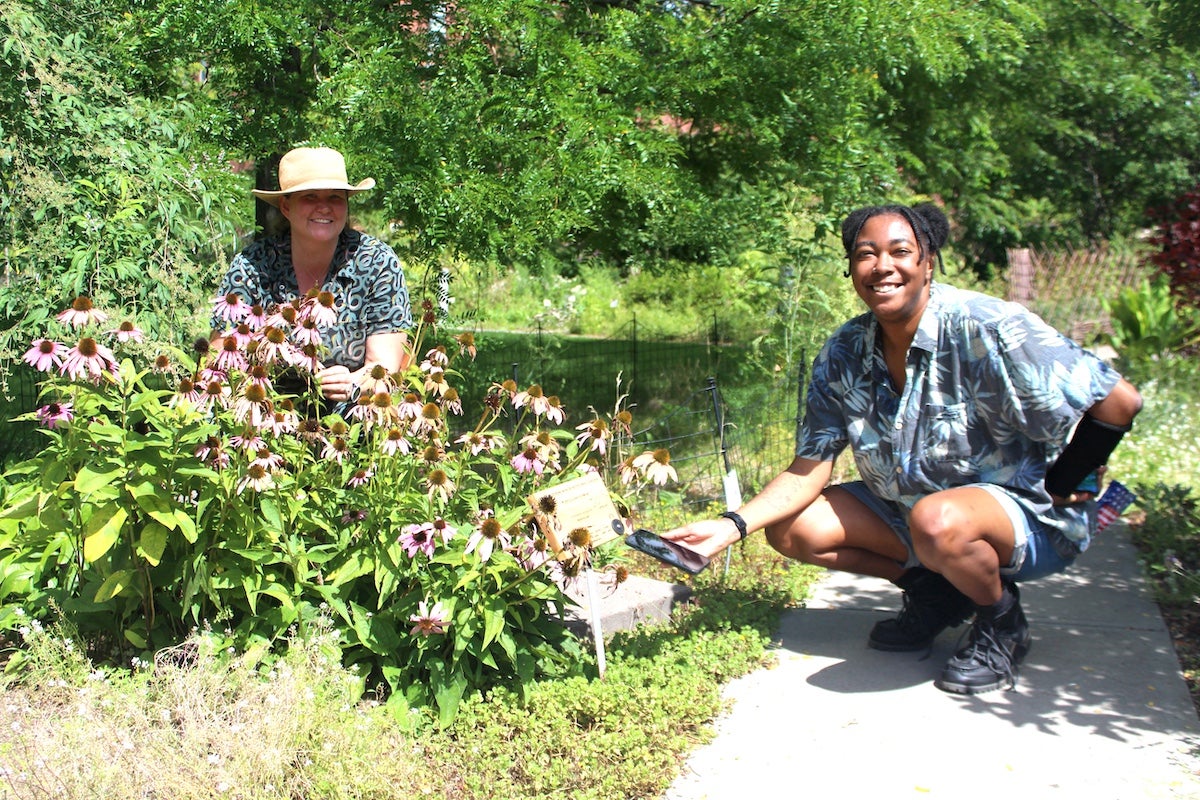
Visitors also learn medicinal uses of therapeutic plants during immersive experience in the tranquil space
The Heber W. Youngken Jr. Medicinal Garden at the University of Rhode Island offers visitors a quiet, tranquil environment within the bustling Kingston Campus, as well as an education in more than 300 species of medicinal plants used for both traditional healing and modern medicine.
Visitors can now learn more about some of the therapeutic plants in the garden, and their traditional cultural uses among the Narragansett people, thanks to a new self-guided audio tour that turns a stroll through the peaceful space into an educational opportunity. The audio tour takes visitors through some of the medicinal plants in the garden, sharing details and descriptions of the many plants and their uses, and offers traditional Indigenous knowledge of some of the plants that have long inhabited Rhode Island. Silvermoon Mars LaRose, a member of the Narragansett Tribe and assistant director of the Tomaquag Museum, voices the stories the plants and their medicinal uses, as well as their cultural significance throughout the history of the state and the Narragansett community, for a truly immersive experience.
“Indigenous knowledge of medicinal plants often gets left out in the topic of Western medicine,” said Yvonne Wingard, a URI College of the Environment and Life Sciences graduate and communications fellow, who is coordinating the audio tour along with Garden Coordinator Elizabeth Leibovitch. “There are a lot of ways the European colonists who came here learned of the medicinal uses from Native Americans, such as the Narragansett here in Rhode Island. It’s important to give credit to those groups and highlight their stories, as opposed to making it a footnote under the Western medicine perspective.”
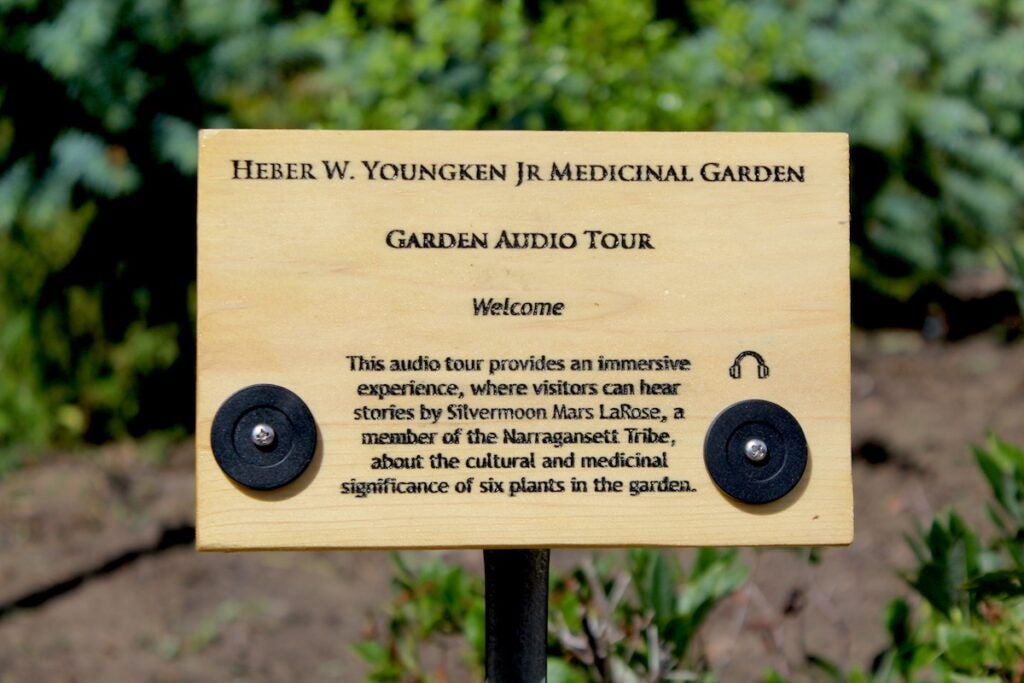
While the tour begins at the head of the medicinal garden on East Alumni Avenue, visitors are welcome to start and stop at any point along the garden tour. They can simply tap their phones to the black circular NFC chips on signs throughout the space to listen to the audio about each therapeutic plant. Each audio clip is five minutes or less, allowing time to stop and observe the plant, read the descriptions, and connect the plant to the story they hear. The audio tours, as well as photos of the plants and a transcript of each description, are available on the garden tour website.
“For a lot of people, I feel like we go through our everyday lives not really noticing the plants around us,” Wingard said. “With this tour, the immersion adds that extra element. Rather than you just walk up and see a plant, you can hear a story with it. It’s an accessible tour that hits all the senses.”
The Tomaquag Museum was instrumental in the creation of the audio tour, Leibovitz said. Located in Exeter, it is Rhode Island’s only Indigenous museum, providing a space where visitors can learn about Indigenous history and culture, specifically around Southern New England tribal communities. The inter-tribal museum highlights the different traditions of various native tribes that have inhabited the region. Likewise, the medicinal garden highlights culturally significant plants that were used in a variety of ways by different tribes.
“Plants have hundreds of compounds with rich histories, with different uses for tribes,” Leibovitz said. “This could expand to include other Native American perspectives and uses of the plants. There is a lot of interest in Native American medicines, and this gives people access to learn about them.” Named for the URI College of Pharmacy’s founding dean, a pioneer in the study of medicinal plants, the Youngken garden is located outside of Avedisian Hall, home of the College of Pharmacy. It offers lawns, walkways, benches shaped in the form of birch leaves and a translucent sculptural frieze featuring panels that depict plant life in laboratory slides. The new audio tour joins one already in existence which takes visitors through the North Woods, on the north end of campus.