
KINGSTON, R.I. – Oct 20 – In new work recently accepted at the American Journal of Health Economics, Michael DiNardi, associate professor of economics and director of the Social Science Institute for Research, Education, and Policy (SSIREP), examines how the substance use disorder treatment system responded to the opioid epidemic.
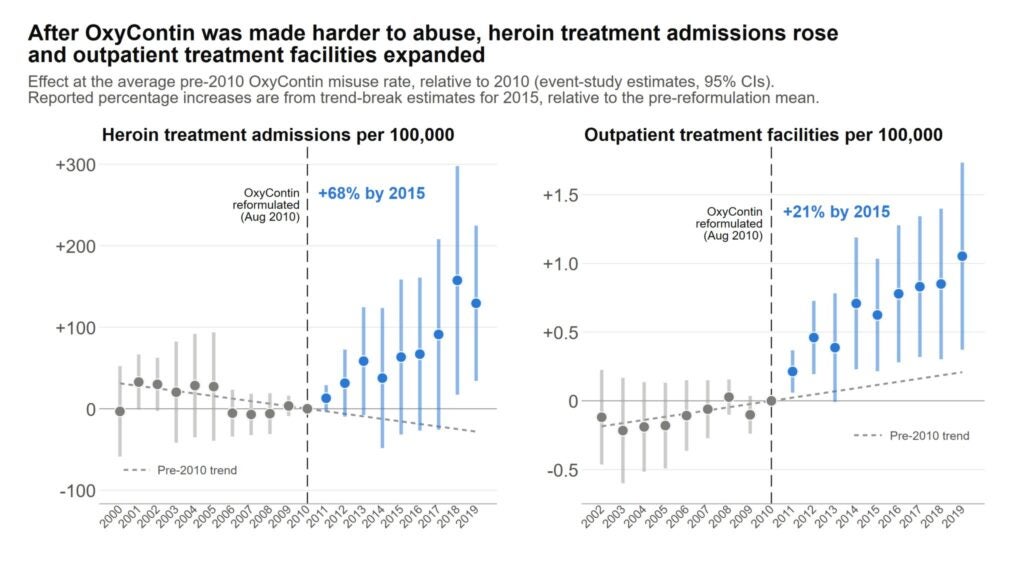
In 2010, OxyContin was reformulated to make it harder to snort or inject. The change was meant to curb prescription opioid misuse, but many people switched to heroin instead, starting a new and deadlier phase of the opioid crisis. Rhode Island had the highest rate of OxyContin misuse in the country before the change. Using nearly two decades of national data on treatment admissions and facilities, DiNardi finds that in states with more misuse, heroin treatment admissions rose sharply while prescription opioid admissions fell. Treatment providers responded by opening new facilities, almost entirely outpatient clinics, while inpatient capacity didn’t grow and medication-based treatment was slow to follow.
The expansion of outpatient clinics may have saved 9,000 lives during the second wave of the opioid epidemic. But once fentanyl entered the drug supply, keeping pace with overdose deaths would have required roughly doubling the nation’s treatment facilities. The findings suggest that expanding treatment capacity is important but not enough on its own.