
Faculty Spotlight: Laura Hamman-Ortiz

Meet ATL’s Faculty Spotlight for October 2026, Laura Hamman-Ortiz. Dr. Laura Hamman-Ortiz is an Associate Professor of TESOL and Bilingual Education and the Director of the Translanguaging Lab at the University of Rhode Island. She is bilingual (English/Spanish) and has nearly 20 years of experience supporting multilingual learners and their teachers, both across the United States (Texas, Illinois, Indiana, Wisconsin, Colorado, Rhode Island) and internationally (Chile, Spain). Read her full interview below.


What course(s) do you teach, or have you taught, at URI?

At URI, I primarily teach courses in our TESOL / Bilingual Education master’s program, including Second Language Acquisition and Assessment, Methods for Teaching Bi/Multilingual Learners, and Translanguaging Pedagogy. I also teach qualitative research methods and a seminar on language and education in our Ph.D. in Education program. Finally, I teach an undergraduate course entitled Introduction to Multilingual Learner Education, a foundational course that introduces students to language education policies, program models, and instructional strategies. 

What is your proudest teaching moment of the last year?

One of my proudest teaching moments of the last year occurred during my Translanguaging Pedagogy class. One of the projects for this course is a “schoolscape,” in which students take pictures of the ways they see language being used around their school – on classroom walls, in the hallway, on bulletin boards, etc. The aim is for students to consider where multilingualism is present (or absent) and what the environmental print communicates about how and which languages are valued in school spaces. This project always leads to many “aha” moments from students, particularly around the dominance of English in U.S. schools, even in schools serving large multilingual student populations. This year, one of my students shared her presentation with her school principal, which led to their shared commitment to make their school a more welcoming and inclusive multilingual space. This kind of advocacy – taking learning beyond the university classroom – is what makes my teaching feel the most meaningful.

What are the 3 qualities that you think make for a great teacher?

I think one important quality of a great teacher is that they take a humanizing approach to teaching and learning. Meaning, teachers view their students as unique, whole people with valuable life experiences to share and are also unafraid of bringing their full self into the classroom. Over the years, I have found that even small relational moves – like beginning every class with open announcements, school-related or personal – can help cultivate a classroom community, often motivating students to invest more in their learning experiences. Great teachers also make course content engaging and applicable to real-life contexts. Making clear the connections between course content and the world around us helps students see why the knowledge/skills are so valuable. And, finally, great teachers are constantly adapting, refining, and innovating. This means not only learning from what has or hasn’t worked the previous time the course was taught, but also recognizing that every group of students is unique and that the world around us continues to evolve – our courses, thus, should continue to evolve and change as well.

What do you hope students look back on in ten years and say about your class(es)?

I hope my students will look back on my classes and feel that they are better teachers, researchers, and advocates as a result of my classes. I hope they will remember the ways they were supported and the ways they were challenged to grow – and I hope they will say they think about multilingualism and multilingual learners differently, more expansively, and from an asset-oriented mindset.

How have you seen teaching evolve over your career? And/or where do you see teaching going?

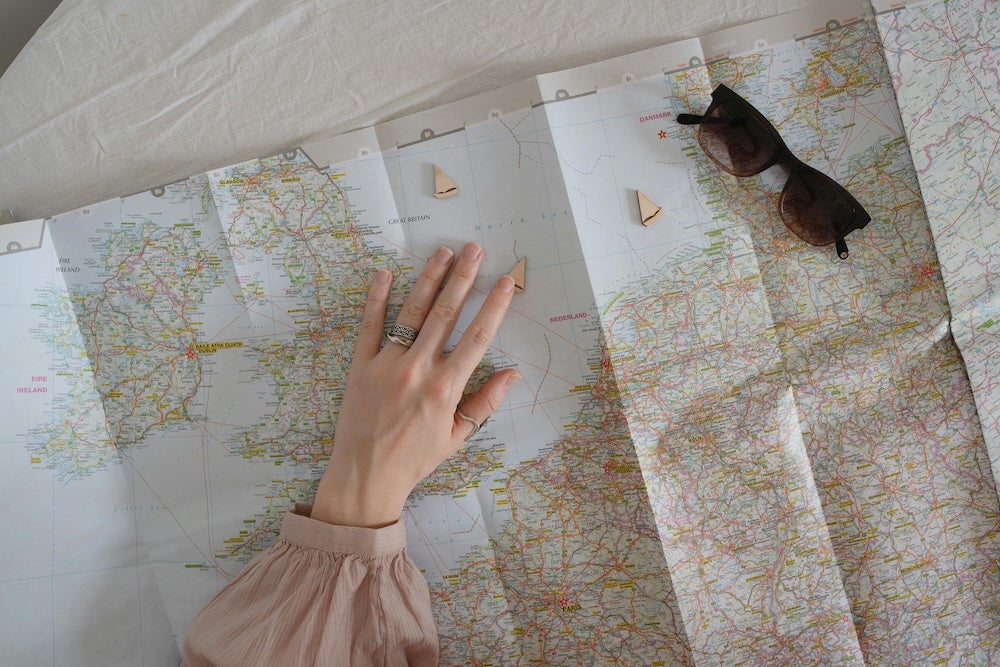
Over the course of my teaching career, I have increasingly worked to find ways to bring the outside world into my classroom, whether through projects that require students to visit bilingual schools, interview language learners, or engage with multilingual families. More recently, I have been working to extend my teaching beyond the United States by finding ways to bring more global perspectives into my classroom. Throughout my life, I have had many opportunities to study and work abroad in places around the globe – Chile, Ecuador, Spain, Uganda, Brazil, Mexico, Bahrain, Poland – and I want my students to develop an understanding of language and education that extends beyond Rhode Island and the U.S. In the upcoming semester, I will be teaching my first COIL class – Collaborative Online International Learning – in which my URI students will partner with undergraduates in Hidalgo, Mexico around a series of projects designed to deepen their understanding of language learning across contexts. I am excited to see how this goes and am hopeful that I will continue to find ways to internationalize my teaching.

Share your favorite place to go in Rhode Island? Why is this your favorite place?

My favorite place in Rhode Island is probably Roger Williams Park in Providence. I live close to the park and run the trails around the lakes several times a week. I love seeing how the trees change with the seasons and the feeling of “getting away from it all” when I’m running along the trails just a few blocks from my home.

What do you like to do for fun?

I love hiking, catching up with a friend over a cup of coffee, and traveling to a new city or country. But, beyond that, I enjoy just spending time with my husband and two daughters (ages 5 and 7) – my kids are at such a fun age, so these days, I’m finding a lot of joy in everyday activities like going for bike rides or working on a puzzle together.

Would you like to nominate a faculty member to be included in an ATL Monthly Spotlight?

Submit this form for consideration.