
A junior majoring in marine biology, Joshua Carr is conducting research through the CELS Summer Fellowship program with the Comparative Ecophysiology of Animals (CEAL) Lab, led by assistant professor of wildlife biology Sarah Kienle. Fascinated by apex predators, Carr is investigating how gray wolves interact with sea otters and marine resources near the lab’s field site in Prince of Wales, Alaska. This summer, he has analyzed more than 102,000 camera trap photos and 2,000 videos to study wolf movement, habitat use, and behavior, while also helping prepare wolf skulls for 3D modeling. The experience has given him a firsthand look at coastal ecology, apex predator research, and the collaborative nature of scientific research.
Q: What did you work on this summer?
A: I analyzed over 102,000 photos and 2,000 videos. During this process, I collected a variety of ecological, behavioral, and environmental data, including temperature, wave energy, and sea otter presence, to determine gray wolf movement patterns, habitat use, and adaptive behaviors related to aquatic resource use. One of the main goals was to document wolves hunting and consuming sea otters, a behavior that is seldom captured on camera. In addition I also processed biological samples in preparation for 3D models of wolf skulls.
What is a highlight from your summer?
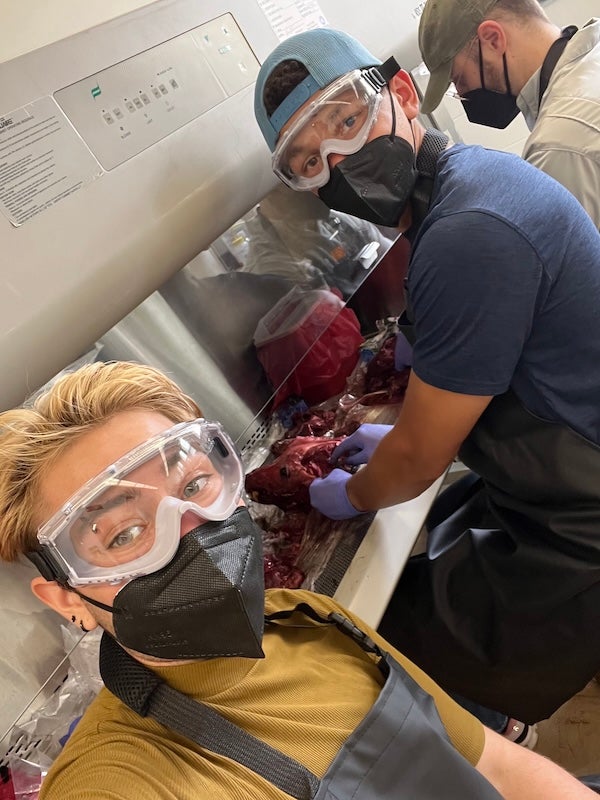
The coolest experience was dissecting two wolf heads with another summer fellow Elliot! We did this to prepare them for 3D modeling.
How has working with your mentor influenced your experience?
My mentor, Ph.D. student Patrick Bailey, works closely with a variety of partner organizations and locals for his research. Working with Patrick has given me valuable insight into the critical relationship between local communities and researchers, including how local communities can support research efforts and advance scientific progress, while research can, in turn, inform communities about current environmental issues.
What lessons will you take away from the CELS Summer Research Fellowship?
I learned about how your passions can play into the research that you do and how interconnected and supportive the scientific community is. Overall I feel blessed to have had this opportunity over the summer and I’m excited to continue my work with the CEAL Lab in the year ahead!