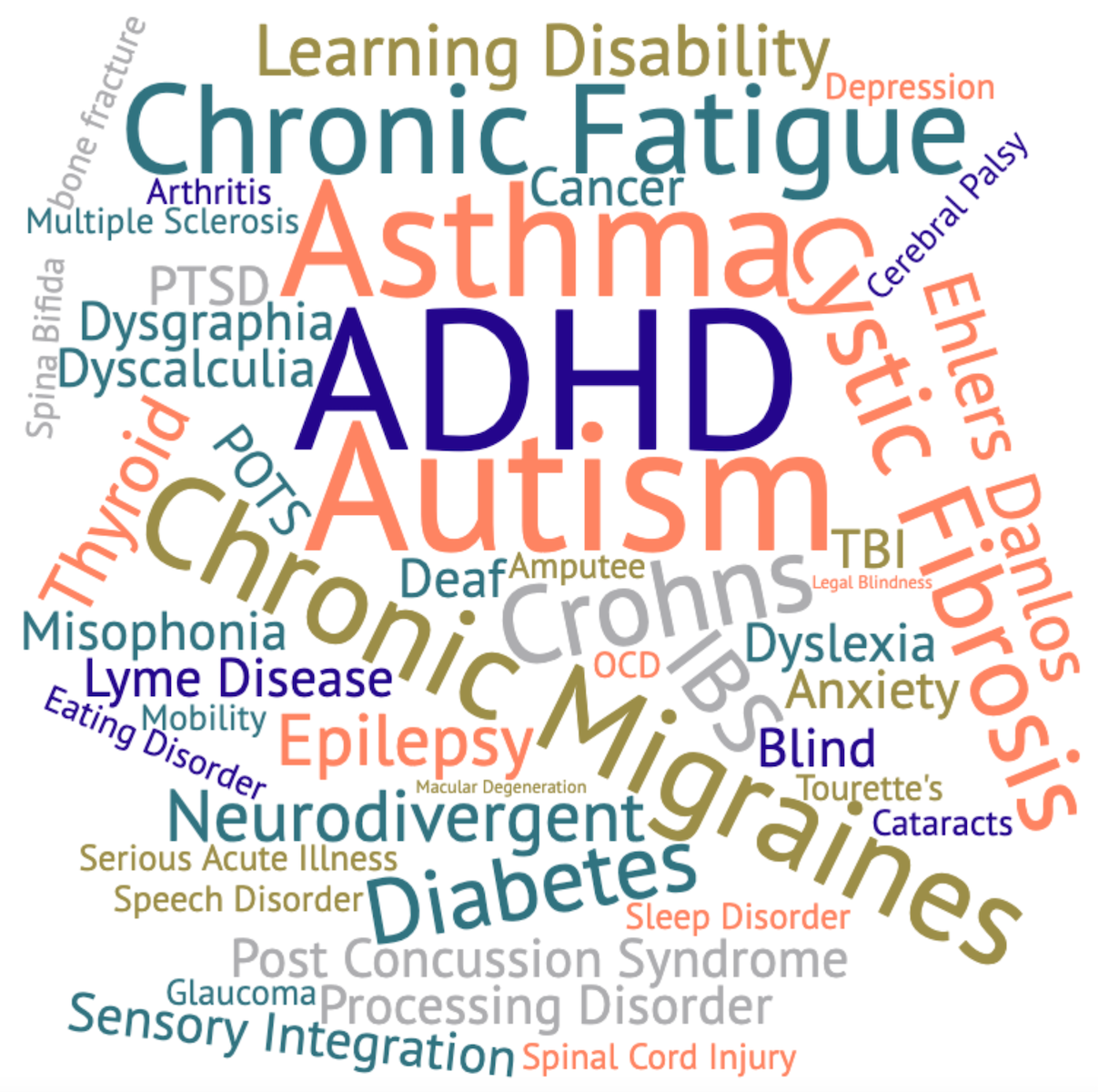
The Disability, Access, and Inclusion (DAI) office collaborates with partners across campus to provide equal access for students. Disability is a vital component of diversity on our campus, and we honor the rights of our students by actively and respectfully addressing disability related barriers in living and learning environments at URI.
We welcome collaboration and partnership with faculty and staff to improve accessible practices, promote the use of Universal Design for Learning, and cultivate an authentically inclusive campus community.

Faculty Drop-In Hours
DAI leadership hosts Faculty Drop-in Hours during the first month of the Fall and Spring semesters – Mondays from 10 AM -12 PM and Fridays 8:30 -10 AM.

Each institution of higher education interprets and follows the ADAAA a little differently. It can make navigating the accommodations eligibility and implementation processes challenging for new and adjunct faculty members alike. DAI’s practices are deliberately designed, evaluated, and evolving beyond basic compliance to dismantle the rubber-stamp mentality that often accompanies disability-related work. We take our role to educate and empower students and their faculty seriously.
Reasonable accommodations from DAI are well-supported, medically necessary, and approved for the purpose of legally and ethically upholding the student’s right to equal access. Accommodations can be initiated and approved at any time, are in place from the time a letter or form is disclosed to a staff or faculty member, and their use must be requested by the student in advance, as accommodations are not retroactive by law. Accommodations that are not contained within an official form or letter from DAI are not legally protected at URI. It is important for faculty to note that it is legally inadvisable for students to be forced into a position of indirectly disclosing a disability due to inaccessible course policies, such as no computer access in the classroom.
Rights and Responsibilities
Please review the information below to learn about the rights and responsibilities of faculty and how this role intersects with providing accommodations to students.. The accommodations that DAI approves contain no expectation of altering fundamental course objectives or requirements. We issue separate letters for each course because the approved accommodations may vary class to class, and are carefully considered to ensure equal access for the individual student in the context of that course.
Helpful Tools & Guides

Teaching Tools
- Sample Syllabus Statements
- Policies on foreign language course exemption requirements for students.
- Alternate Attendance Agreement
- Lecture Slides Agreement
- Recording Lecture Agreement
If you have a concern about a student for whom you have an accommodation letter, please contact them first if appropriate, then their case manager via email.
Accessibility Guides
- ITS ADA Compliance in EdTech
- Captioning in URI Systems
- Brightspace | Microsoft 365 | Google | Adobe Accessibility
- Related Resources and Tools

Review this comprehensive, regularly updated list of ableist terms to avoid.
These are the most common questions faculty ask us.

How do I verify an accommodation letter?
Accommodation letters are issued directly by Disability, Access, and Inclusion (DAI). Students should provide you with a copy (email or hard copy).
If you have questions about what the accommodations mean in practice, contact DAI for clarification.
👉 Tip: Never ask students for medical documentation. It is private and protected information.
What if I disagree with a requested accommodation?
Reasonable accommodations are determined on a case-by-case basis using documentation from licensed providers, in compliance with the Americans with Disabilities Act (ADAAA), Section 504 of the Rehabilitation Act, and URI policy. They are designed to balance student access with academic integrity. During the eligibility process, we gather and assess as complete a picture as possible of the individual student’s strengths, skills, diagnostic profile, and functional needs through a comprehensive, collaborative three-step accommodations eligibility process. It includes self-disclosure, primary and secondary documentation review, as well as collaborative discussion and determination.
If you believe an accommodation would fundamentally alter your course requirements:
- Contact DAI first. Do not deny or modify the request.
- Share your concerns, and DAI will work with you to explore alternatives that protect both the student’s legal access and course objectives.
👉 Reminder: You are not expected to make these decisions on your own. DAI is your partner in this process.
👉 Note for faculty: It is legally inadvisable for students to be forced into indirectly disclosing a disability because of inaccessible course policies (for example, prohibiting computers in the classroom). If you would like to explore ways to design your course more accessibly, DAI is available to meet with you.
What if a student discloses a disability but has no letter?
Some students may share personal information before they are formally connected with DAI. In this case:
- Acknowledge the disclosure respectfully.
- Refer the student to DAI so that they can begin the formal accommodation process.
- You may choose to offer informal flexibility, but remember: reasonable accommodations from DAI are well-supported, medically necessary, and approved to legally and ethically uphold the student’s right to equal access.
Accommodations that are not part of an official DAI letter are not legally protected at URI.
👉 Language you can use: “Thank you for sharing this with me. To make sure you have the right support, I encourage you to connect with DAI.”
I am concerned about a student. What should I do?
If a student is struggling or showing signs of disengagement, whether related to mobility, communication, mental health, or other factors, you can play an important role in connecting them to support.
- Reach out with care. A simple check-in can help a student feel seen and supported.
- Do not diagnose. Faculty and staff are not responsible for determining a student’s disability. Similarly, DAI does not diagnose; our role is to coordinate accommodations based on documentation from licensed providers.
- Refer to DAI. Encourage the student to connect with Disability, Access, and Inclusion (DAI), where accommodations and success strategies can be discussed.
- Partner with us. Faculty are welcome to consult with DAI about appropriate referrals, success planning, or coordinated care while maintaining student privacy.
- Use campus resources. If you believe the student’s needs extend beyond academic accommodations, you can also refer them to other URI support offices or submit a referral through Report It.
👉 Remember: You are not alone in responding to student concerns. DAI and other campus resources are here to partner with you in supporting student well-being and success.