
Understanding Cancer Through DNA Damage and Repair
Bongsup Cho and Deyu Li study how DNA damage and repair shape cancer risk and mutation patterns
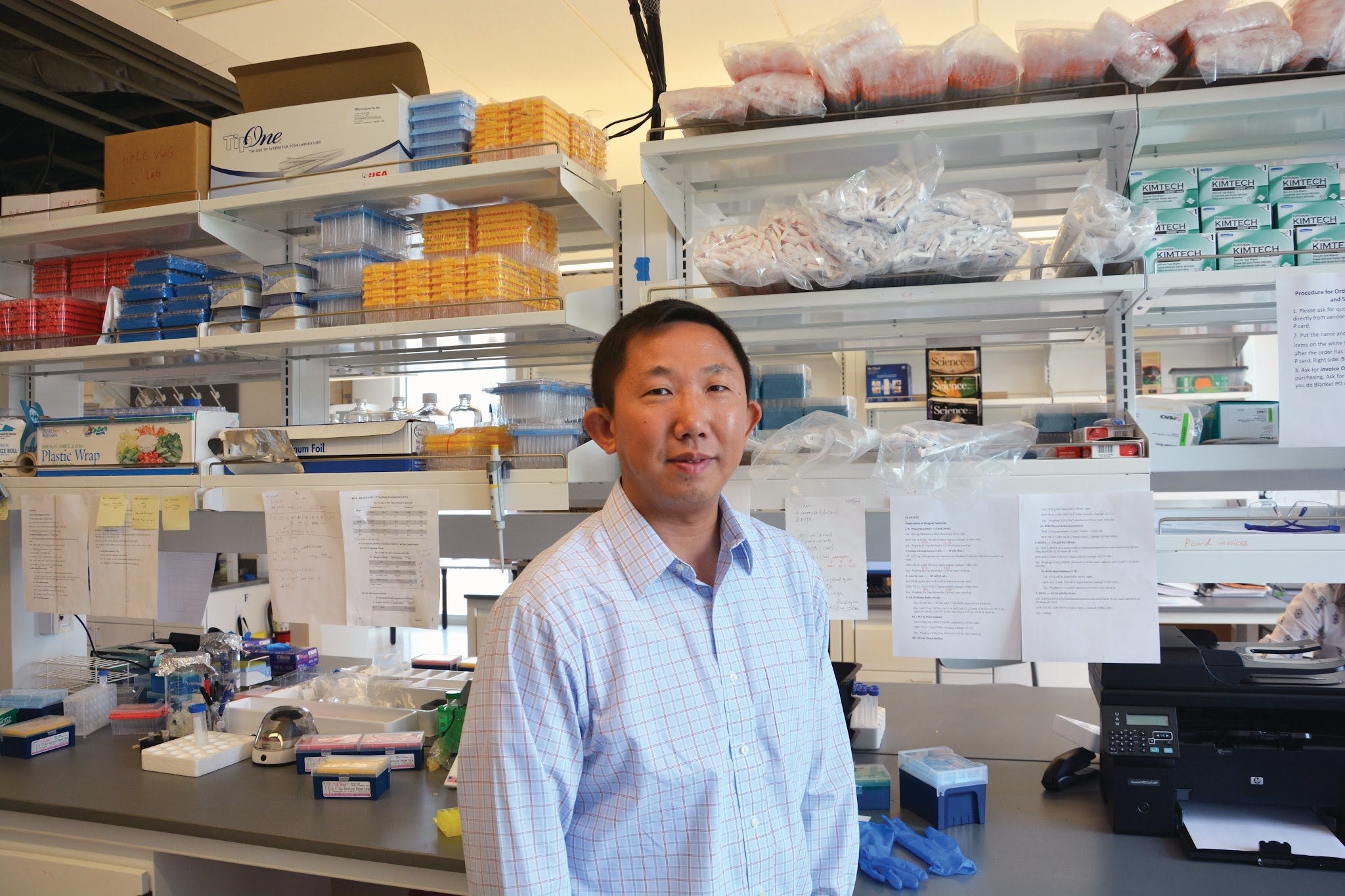
At the University of Rhode Island, Bongsup Cho, Ph.D., professor, and Deyu Li, Ph.D., associate professor, lead a collaborative research program focused on how chemical damage to DNA contributes to cancer. Their work examines how environmental toxins, therapeutic drugs and naturally occurring reactive molecules modify DNA.
By integrating organic synthesis, high-resolution structural biology, analytical chemistry and cell-based mutagenesis assays, their laboratories bridge chemistry and biology to uncover how subtle changes in molecular structure can lead to profound biological consequences. Their research helps explain why certain regions of the genome become hotspots for cancer-associated mutations.
Their collaboration is supported by strong institutional support from the University of Rhode Island and the College of Pharmacy. Through sustained investment in research infrastructure, shared instrumentation, graduate education, and interdisciplinary collaboration, the College provides an environment where fundamental chemical biology can directly intersect with biomedical and translational sciences. Competitive internal programs, statewide research initiatives, and a collaborative academic culture enable the Cho and Li laboratories to pursue high-impact, externally funded research while training the next generation of scientists in cancer biology, toxicology, and medicinal chemistry.
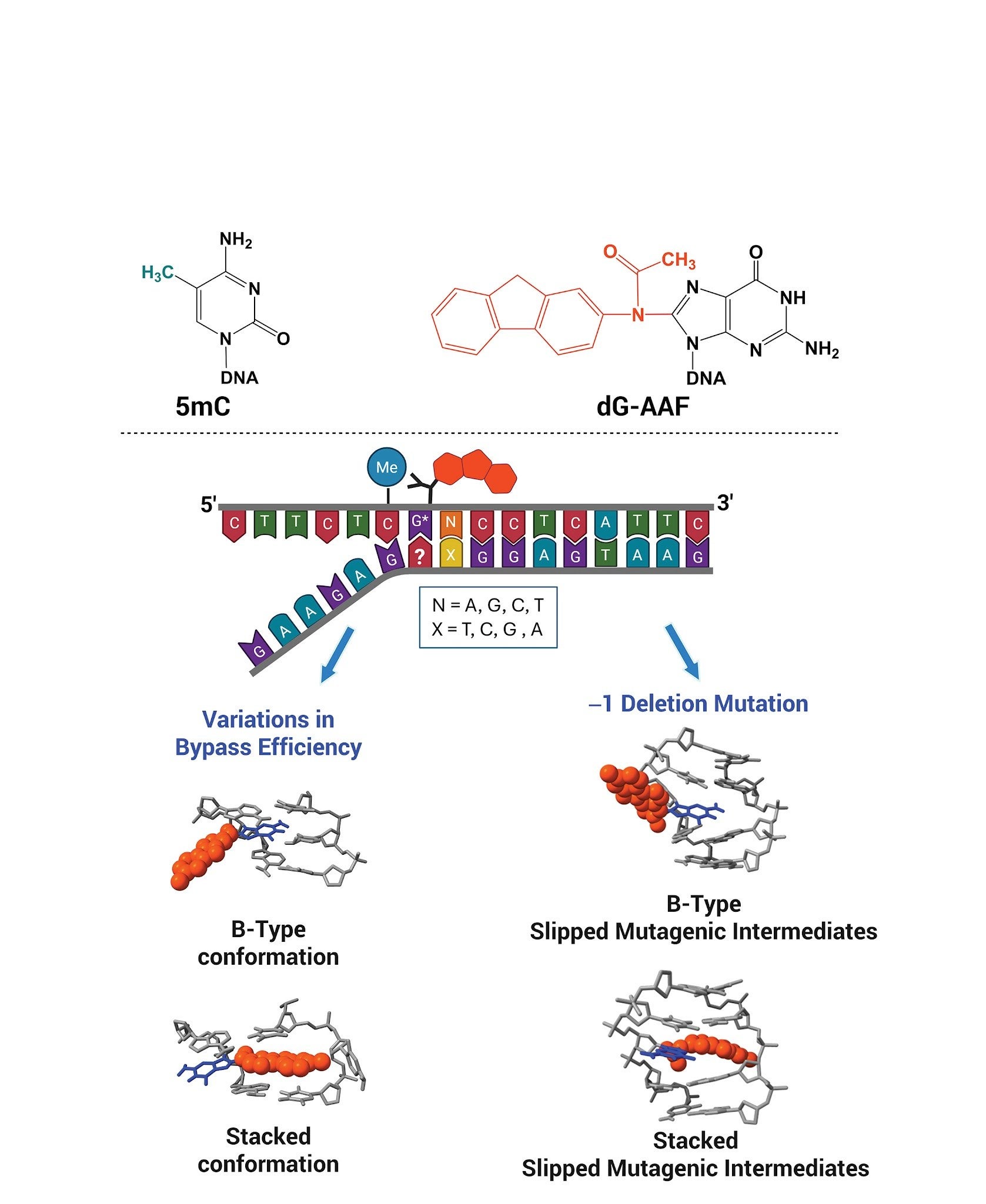
Cho is internationally recognized as a pioneer in the field of chemical carcinogenesis and DNA structural biology. For more than three decades, his research has reshaped our understanding of how bulky DNA lesions adopt multiple conformations within the double helix and how those conformations dictate DNA repair efficiency and mutational outcomes. His work introduced high-resolution 19F NMR spectroscopy and other biophysical techniques as powerful tools to quantify lesion-induced conformational heterogeneity, establishing a new paradigm in DNA damage research.
He has published more than 90 peer-reviewed articles, many in prestigious journals, and has received continuous support from the National Institutes of Health and the American Cancer Society. His research has provided fundamental insight into how DNA damage recognition and nucleotide excision repair operate in a structure-dependent manner.
Li complements this work with expertise in chemical synthesis, DNA adduct biology, and cellular mutagenesis. Since joining URI in 2014, he has developed a nationally recognized research program in DNA and RNA damage and repair, securing multiple NIH grants.
“By combining chemical precision with genomic and cellular approaches, Cho and Li are working to connect small-molecule structure to large-scale biological outcomes.”Bongsup Cho, Ph.D., and Deyu Li, Ph.D.
His laboratory develops chemical and biological tools to synthesize site-specific DNA adducts, characterize their structures, and determine how they are processed by DNA polymerases and repair enzymes. Li has published extensively in high-impact journals, including the Journal of the American Chemical Society and Nucleic Acids Research, contributing to advances in understanding DNA repair mechanisms and mutation patterns linked to carcinogenic exposures.
Together, the Cho and Li laboratories form a uniquely integrated research team linking molecular structure to cellular function.
Recent collaborative papers highlight this integration. In these studies, they examined bulky DNA adducts derived from environmental carcinogens and determined how their three-dimensional conformations influence replication bypass and mutation formation. Their findings show that epigenetic methylation, specifically 5-methylcytosine at CpG sites, can dramatically alter lesion processing.
Depending on lesion size and sequence context, methylation either enhances or suppresses replication bypass and can promote distinctive frameshift mutations.
These findings reveal a previously unexplored interplay among DNA damage, mutagenesis, and epigenetic regulation, offering new insight into how environmental exposures contribute to cancer development.
Looking ahead, the team aims to expand this work from defined chemical structures to complex human disease models. Their future research will explore how DNA and RNA modifications, including environmentally induced adducts and endogenous lesions, shape mutation patterns in human cells and influence stress-responsive and repair pathways.
By combining chemical precision with genomic and cellular approaches, Cho and Li are working to connect small-molecule structure to large-scale biological outcomes, advancing our understanding of how nucleic acid modification drives cancer initiation and progression. Their goal is to translate these insights into improved strategies for cancer prevention, risk assessment and therapeutic intervention.
RhodyRx – Research, Innovation & Impact
We have some exciting news… the newest issue of RhodyRx is here!
VIew the Full report