
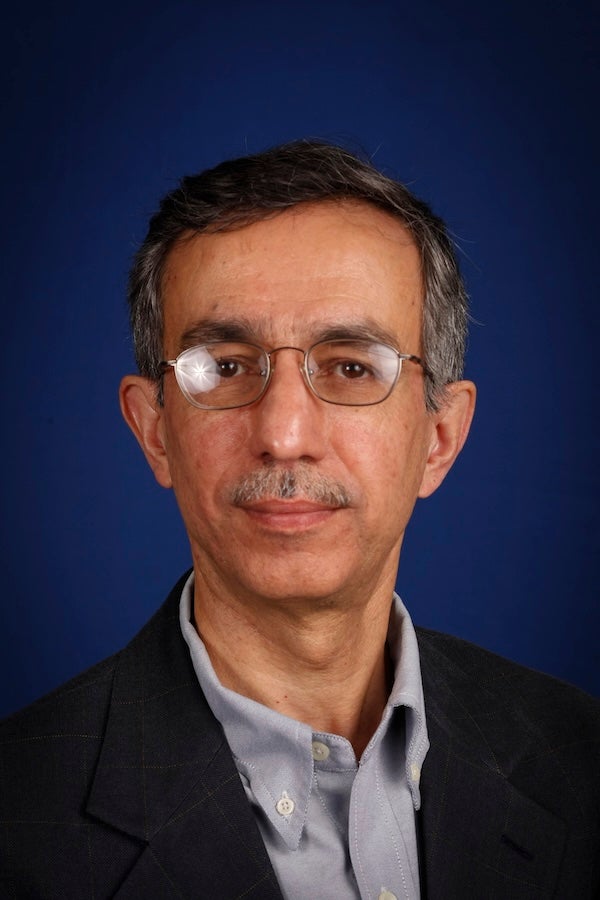
When Farhad Atash arrived at the University of Rhode Island in 1985, he brought with him the belief that thoughtful planning and design can improve the lives of everyone who calls a community home.
As he prepares to retire after 41 years as a professor of planning in URI’s Department of Landscape Architecture, that philosophy has left a lasting mark on communities across Rhode Island and on generations of students who have gone on to become planning professionals themselves.
Building a Foundation
Originally from Esfahan, Iran, Atash joined URI in 1985 as an assistant professor in what was then the Department of Community Planning and Area Development. At the time, it offered a single degree: the Master of Community Planning. From the beginning, the work was grounded in real communities. The department’s planning studio program immersed students in hands-on projects throughout Rhode Island, culminating in public presentations and comprehensive planning reports delivered to local officials and residents.
“I still have in my office some of the planning reports we produced back then,” he says. “It was a remarkable professional experience for our graduate students and me as well.”
One project captures the lasting reach of that work. Beginning in the fall of 2004 and continuing into early 2005, Atash and graduate students studied plans for an intermodal transportation hub at T.F. Green Airport — evaluating the proposed train station, rental car facility, and transit connections intended to link air, rail, bus, and automobile travel. After researching similar projects around the world, presenting findings to stakeholders, and refining their recommendations, they helped advance a project that had been discussed for years.
Today, thousands of Rhode Islanders pass through the InterLink station and skywalk without giving much thought to the years of planning behind it. For Atash, it exemplified what planning education at its best could do: students solving real-world problems while shaping infrastructure that would serve the state for generations.
Those commitments — to community impact, to student development, and to translating research into practical benefits for people’s lives — would define his career.
Building More Livable Communities
Atash’s scholarship focused on two connected areas. The first was sustainable land-use and transportation planning – that is, the question of how to make urban and suburban communities more walkable, more compact, and more oriented around public transit rather than the car.
“I have been interested in redesigning urban and suburban areas to be more compact with higher densities and a mix of land uses,” he says, “while offering alternative modes of transportation such as walking and biking. This will make our urban and suburban communities more livable, walkable, and public transit oriented.”
The second focus drew on his own background: planning and development in the Middle East and the developing world, particularly the process of building entirely new communities from the ground up. This interest was reinforced by the department’s large population of international students, which led Atash to develop a graduate course comparing urban and regional planning systems around the world. The course brought together students from different countries and academic disciplines in ways that enriched the classroom considerably. His work also took him abroad to present at conferences in Taiwan, Singapore, and Indonesia.
Mentoring Future Planners
Whatever the scale of his research, Atash remained equally invested in the students in front of him. Many of his graduates now serve communities throughout Rhode Island and beyond, shaping public policy, land-use decisions, and community development. “Our URI community planning alumni working in Rhode Island have done a great job,” he says. “I am very proud of all their professional accomplishments.”
Susan Mara (MCP ’00), President of the Rhode Island Chapter of the American Planning Association, and Roberta Groch (MCP ’96), APA-RI Past President, described his influence plainly: “Those of us who have had Dr. Atash as a professor, mentor, or advisor know that he is an unfailingly considerate, caring, and thoughtful person who goes out of his way to help students understand and thrive. He was a kind and calm presence, and his advice and concern were always appreciated.”
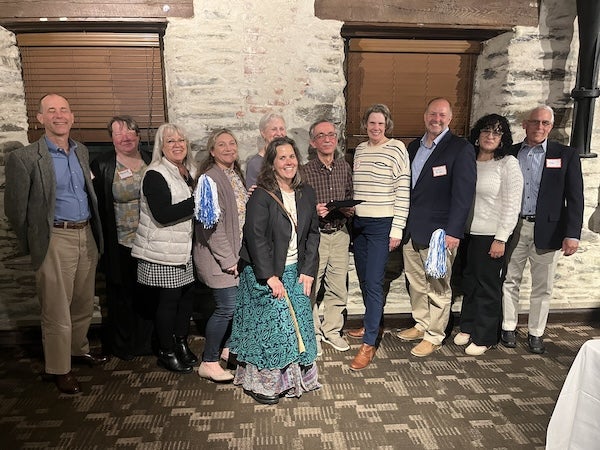
In April 2026, APA-RI honored Atash for his legacy of developing planners and his contributions to the profession in Rhode Island. A number of his former students were in attendance to celebrate. That recognition, along with the College of the Environment and Life Sciences Teaching Excellence Award he received in 2012, speaks to an influence that extended well beyond any single course or project.
A Lasting Impact
For all of his accomplishments in research, teaching and professional service, Atash says it is the relationships he built with colleagues and students that stand out most.
Jane Buxton, program director of Landscape Architecture, describes a colleague whose generosity shaped the department itself: “Throughout my career here, I have frequently turned to him for advice, perspective, and encouragement. He has an exceptional ability to listen carefully, offer thoughtful guidance, and make even the most challenging situations seem manageable. His unwavering commitment to helping others succeed has helped create a stronger, more supportive academic community.”
That quality — the gift for making people feel capable — is reflected in the students whose lives he impacted. “When I was first debating applying to the Landscape Architecture program, I wanted to take an intro-level course to see if it was the right path,” says Brianna O’Connor ’12, who now owns Brie O’Connor Garden Design, an ecological gardening and design company specializing in native and coastal plants. “Professor Atash’s teaching style and kindness not only engaged me and changed the way I saw the built environment around me, but made me know that I could succeed and thrive in the program. He later became my advisor and helped me graduate with a degree I am truly passionate about.”
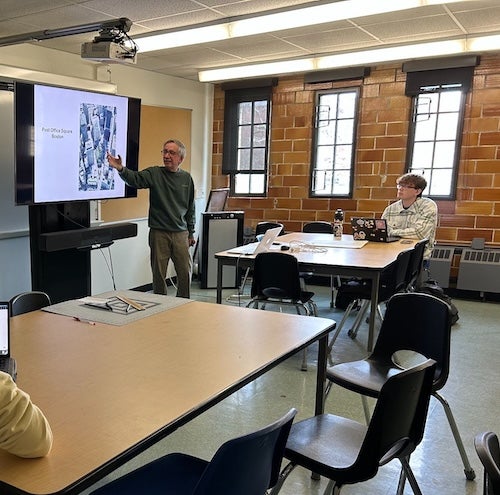
That kind of connection is what Atash says he will remember most from his time at URI. “Having the opportunity to listen to the students, work with them, help them and calm them down when needed made my day every day for the past four decades,” he says.
“I never thought getting a Ph.D. degree and being a university professor would give me such a rewarding work experience for four decades,” he adds. “The opportunity to work with an awesome group of faculty and many undergraduate and graduate students from our department as well as other departments at URI has been an amazing experience for me.”
Though his teaching career at URI is coming to a close, the influence of his work will continue through the students he mentored, the communities he helped shape, and the planning professionals carrying those lessons forward.