
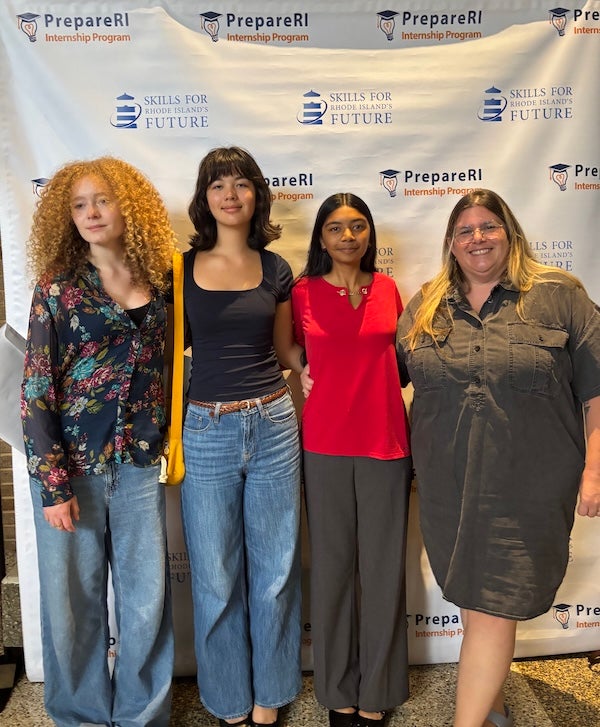
KINGSTON, R.I. – Aug. 19, 2026 – This summer, Maisie Wynn researched how redlining still shapes public health, Anjali Ramdass studied how medicinal herbs interact with prescription drugs, and Greta Kobayashi worked to correct misconceptions about wind energy.
The work was part of PrepareRI, a Rhode Island Department of Labor and Training workforce development program through Skills for Rhode Island’s Future. This summer marked the first year of the partnership between PrepareRI and URI Cooperative Extension, which plans to continue offering students opportunities to gain hands-on experience with Cooperative Extension programs in the future.
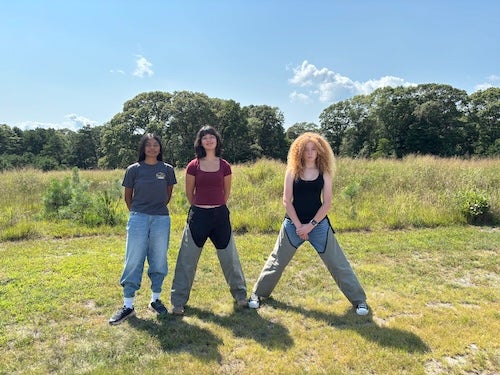
Over seven weeks, the three rising high school seniors participated in hands-on projects, field trips, community outreach, and conversations with University of Rhode Island Cooperative Extension educators and volunteers.
Kate Hardesty, who championed the establishment of the PrepareRI placements with Cooperative Extension, including two additional positions supporting Watershed Watch and the Expanded Food and Nutrition Education Program, helped oversee the internships.
Giving the students room to explore topics they chose was central to the experience, she said, because each student arrived with different interests and expectations. The goal was to expose them to the breadth of Cooperative Extension while giving them the freedom to pursue a question that mattered to them.
That freedom led to three very different projects.
Wynn, a rising senior at The Greene School, built on a prior school project to examine how historic redlining continues to shape environmental conditions and public health, particularly in communities of color. She created an accessible educational resource explaining redlining, its historical roots, and its continued effects on communities, along with a Spanish-language version to make the information more accessible.
“I think that information from research can be used to help people,” Wynn said. “Because when people are educated about a topic, they might feel the need to do something about it.”
Ramdass, a rising senior at Portsmouth High School interested in pharmacology and pharmaceuticals, found inspiration in the Master Gardener program. After visiting Border Farm in Foster, demonstration gardens and the URI medicinal gardens, she developed a resource about 11 medicinal herbs, covering potential benefits and side effects, interactions with medications, safe consumption, and cultivation.
Her research was partly inspired by her grandmother’s experience with ginger tea and medication, prompting her to investigate how homegrown herbs can interact with modern medicine. One of her key takeaways: “Medicinal herbs don’t replace modern medicine,” Ramdass said. “It’s really important to understand how they can interact with the medications people already take.”
The experience also changed how Ramdass thinks about her future. “I realized I do want to be talking to people in my daily life,” Ramdass said, after seeing how much she enjoyed working directly with gardeners and community members.
Kobayashi, a rising senior at East Greenwich High School, initially explored several Cooperative Extension topics before settling on wind energy. “When I first started, I was overwhelmed by how much information there is,” Kobayashi said. “I wanted to create something that helps people understand wind energy and where to start if they want to be part of clean energy solutions.”
Her project introduces readers to the benefits of wind energy, addresses common concerns about its development, and points them to resources if they want to learn more or get involved.
Field experiences broadened her interests even further. Working at URI’s farms, visiting agricultural operations, and learning about local food systems sparked a new interest in sustainable agriculture.
For Hardesty, one of the most valuable outcomes was watching the students become more confident and self-directed. The internships also gave them an opportunity to practice presenting their ideas publicly and to build skills they can carry into college and future careers.
For the students, the summer offered more than a first look at potential careers. It gave them the freedom to follow their curiosity, the experience of working alongside professionals, and a chance to discover options they might not have considered when they arrived.