
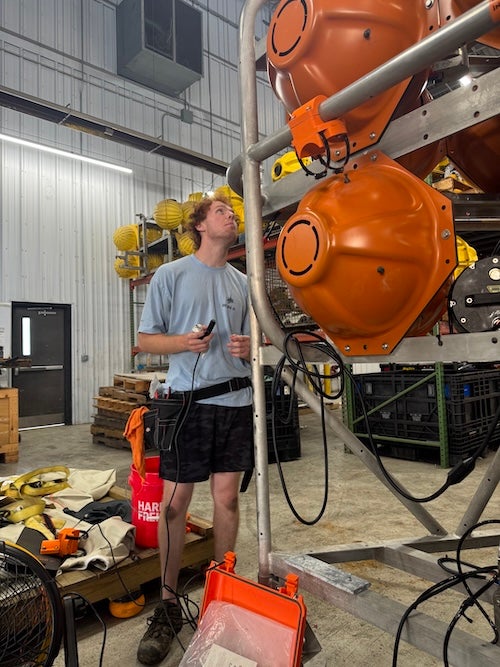
This summer, 53 University of Rhode Island College of the Environment and Life Sciences (CELS) students gained hands-on research experience through the CELS Summer Research Fellowship Program, working alongside faculty mentors, industry professionals, and community partners on projects that range from coral reef restoration and wildlife conservation to sustainable agriculture and public health.
Now in its fourth decade, the program has provided more than 1,500 URI students with immersive research, extension, and outreach experiences that prepare them for careers in science and beyond.
A Few of This Summer’s Stories
Noah Antonellis studied whether infrared-blocking greenhouse film can lower energy use without reducing crop growth, research that could make greenhouse production more sustainable.
Ava Backes helped restore the American chestnut, breeding blight-resistant trees that could one day return a lost keystone species to its native range.
By tagging summer flounder off Rhode Island’s coast, Zuzanna Bajer helped researchers better understand the state’s population, supporting fisheries management and conservation efforts.
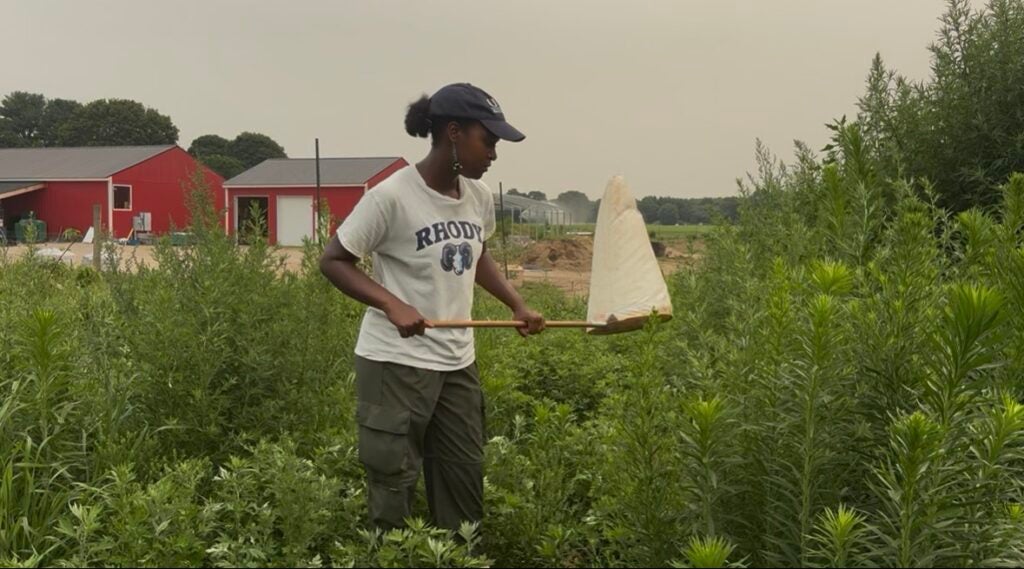
Studying native planthoppers and the parasitoid wasps that attack them, Alyssa Clark helped researchers explore whether native insects might play a role in managing the invasive spotted lanternfly.
Anthony Cordova worked with Rhode Island communities to develop conceptual park designs shaped by community input, site history, culture, ecology, and topography.
Tiahnna Dalpezzo investigated how different algae diets affect oysters’ nutrient uptake and growth, helping researchers better understand how coastal stressors affect marine life.
Makenzie Denzler analyzed camera-trap data to better understand Rhode Island’s elusive flying squirrel population.
Fiona Dell’Antonio studied whether artificial nest boxes can provide effective nesting sites for wild bumblebees with the goal of reducing growers’ reliance on commercially raised bumblebees.
In the URI Biocontrol Laboratory, Sharday Johnson evaluated whether a decades-old biological control program continues to protect Rhode Island growers from an invasive agricultural pest, research that could reduce pesticide use while supporting local farms.
Alyssa Kruger studied the pollination patterns of one of the Northeast’s most common—yet surprisingly understudied—trees.
Wild ducks provided the subjects for Miranda Lin’s research into immune responses, work that could improve scientists’ understanding of avian influenza.
Megan Malone studied genes involved in plant cell wall development, research that could eventually help scientists develop more resilient and productive crops.
Faye Santaniello used computational tools to investigate where horseshoe crabs fit on the evolutionary tree of arachnids.
Ashley Sauer investigated how young oysters respond when they sense a predator nearby, helping researchers better understand the behaviors that may influence oyster survival.
Beyond Rhode Island, students are also conducting research internationally. Led by Professor Graham Forrester, fellows participated in coral restoration efforts in the Caribbean, transplanting vulnerable corals to protected reef sites and gaining firsthand experience with one of the world’s most pressing marine conservation challenges.
New Opportunities for Professional Growth
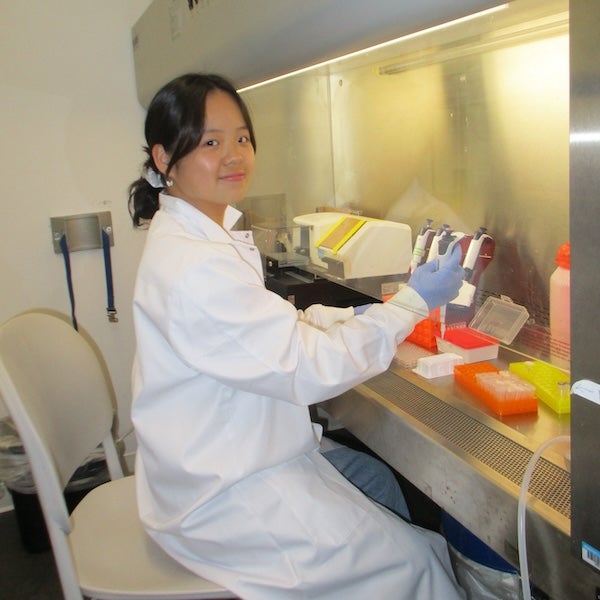
This year also marks the launch of the Kirby Fellowship, a new professional development track available to every CELS Summer Research Fellow.
In addition to their research, Kirby Fellows participate in weekly workshops, receive enhanced mentorship, and build professional skills that complement their scientific training. Fellows who complete the program earn a gold seal on their fellowship certificate recognizing their achievement.
The initiative is coordinated by Camila Quiroga and Josh Rodriguez, both former CELS Summer Research Fellows who now serve as program assistant coordinators. In addition to mentoring participants, they organize workshops, housing, recreational activities, and site visits throughout the summer.
The fellowship program also continues to grow through new partnerships. Beginning this year, a collaboration with the Rhode Island Department of Environmental Management will fund and host at least one fellow annually. The program also welcomed new faculty mentors Sarah Kienle, Patrick Sorensen, and Johanna Harvey.
Investing in Future Scientists
Many of this year’s fellowships are made possible through the generosity of URI donors who believe in the value of experiential learning. Their support enables students to gain hands-on research experience, build professional networks, and develop the skills needed to address complex environmental and societal challenges.
More than 30 years after it began, the CELS Summer Research Fellowship Program continues to demonstrate the power of experiential learning, preparing students for meaningful careers while advancing research that benefits Rhode Island and communities around the world.