
The film will make its Rhode Island premiere at URI on Jan. 28
Jan. 13, 2026
During the International Coastal Cleanup in Rhode Island from September to November 2025, cigarette butts made up 17.8% of all trash collected. In all, 20,908 cigarette butts were picked up from Rhode Island’s beaches—making up the largest single category of trash items collected.
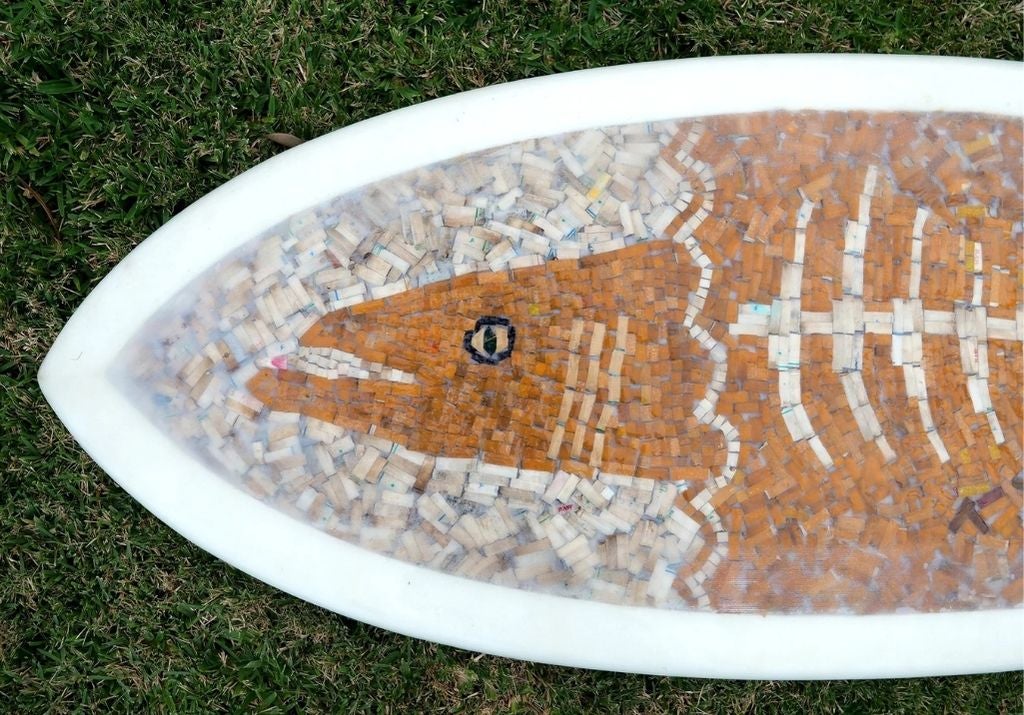
The documentary “The Cigarette Surfboard,” which will make its Rhode Island premiere at URI’s Graduate School of Oceanography on Wednesday, Jan. 28 at 6:30 p.m. in Corless Auditorium on the Narragansett Bay Campus, draws attention to this environmental hazard.
The film screening is free and open to the public, but reservations are required.
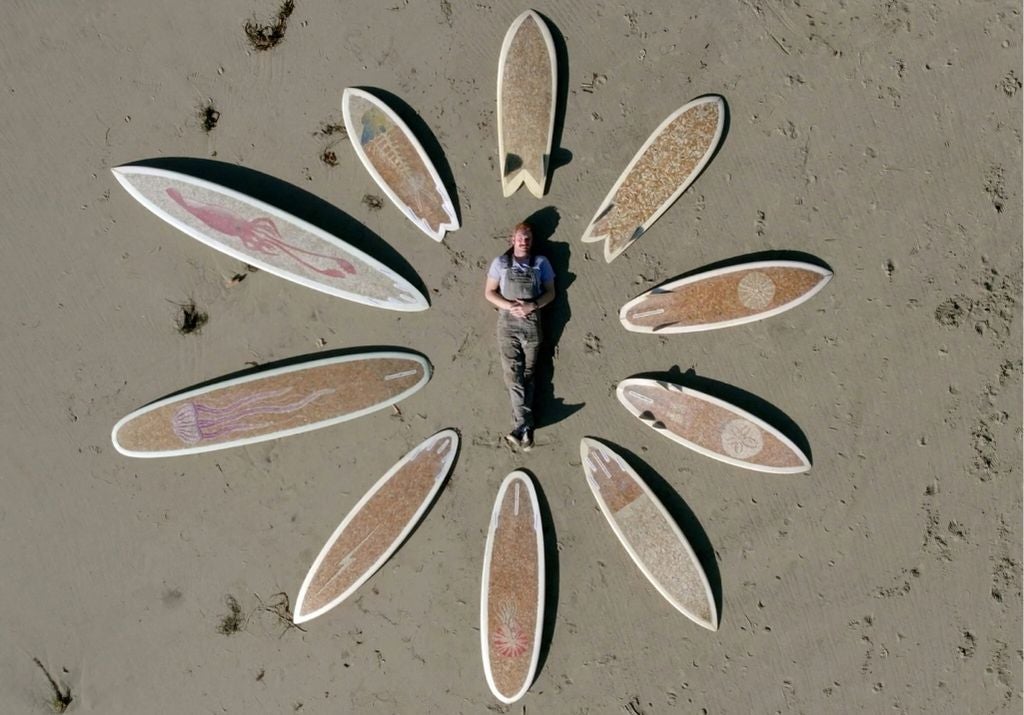
The film is a collaboration between two friends who met through California’s surfing community and had a common interest in environmental issues. Taylor Lane, who has a bachelor’s degree in industrial design, began designing and making surfboards with thousands of littered cigarette butts to inspire surfers to be good stewards of the sea. Filmmaker Ben Judkins documented the surfboard fabrication process and the impact the finished boards have had on making people aware of an ongoing environmental problem.
“Everyone has the capacity to take action in their personal lives and local communities to help protect the ocean and planet,” said Judkins. “It feels good to stand up for something you believe in. No matter how big or small, our collective actions add up, and our local efforts help catalyze global change.”
The documentary, which made its debut in May 2024, has won 16 awards at film festivals in the United States and abroad.
Judkins will attend the screening at URI and will have some of the surfboards from the film with him. Following the screening, Judkins will answer questions from the audience and take part in a panel that will include URI Professor of Oceanography J.P. Walsh and Jacqueline Rosa, an oceanography student at URI. Local surfing and environmental organizations will also be represented at the event.

Cigarette butts are a source of emerging contaminants, specifically microplastics, which is a focus of Walsh’s research.
“There is concern is about the chemicals that leach from cigarette butts,” said Walsh.
An avid surfer, Judkins had a message for Rhode Island’s vibrant surfing community.
“As surfers, we have an awesome opportunity to be leaders in protecting our coastlines and ocean,” said the film director. “We witness ocean health issues firsthand, and we can use our collective voices to help protect what we love. Utilizing art, media, and activism can truly spark tangible change for our ocean and planet.”
Save The Bay organized the International Coastal Cleanup in Rhode Island, which drew 2,971 volunteers. Following the cleanup, the organization published a report which included the types of trash picked up as well as how much was collected in each county. Judkins emphasized how much efforts like these with a strong grassroots component can make a difference.
“No matter what skills you have, or what you’re passionate about, it takes a multifaceted approach across many different disciplines to effectively create change,” said Judkins. “To create change, it’s imperative to enjoy the efforts, and even make it fun, when possible, in order to have the energy for ongoing activism.”