
A guest post from URI GSO alum Diana Fontaine, Ph.D. ’24, who recently finished her year as a NOAA Sea Grant Knauss Fellow:
April 6, 2026
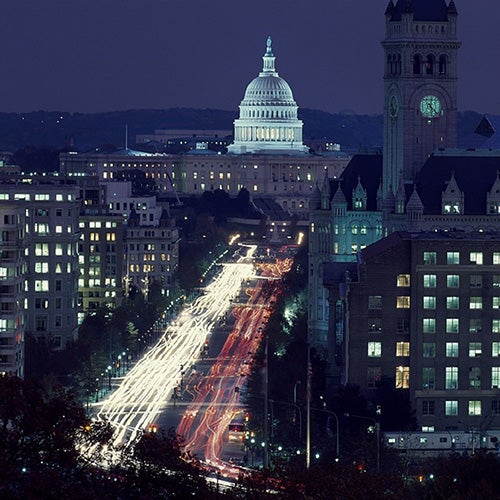
With our coordinated movements and shared common direction, the throng of commuters into Washington, D.C., is not unlike a school of fish. We spill from the train cars and neatly ascend the escalators, all heading towards the Capitol for another day of work. For an entire year, this was my rhythm, as I traded in my Extratuffs and foulies for loafers and blazers to dive into the currents of the policy world.
Upon completing my Ph.D. in oceanography at the URI Graduate School of Oceanography in the spring of 2024, I decided to pursue the John A. Knauss Marine Policy Fellowship, a prestigious NOAA-funded fellowship that places recent graduate students in offices either in the Executive or Legislative branch of government. For my doctoral research, I used field, lab, and bioinformatic approaches to study phytoplankton diversity and productivity as part of the Northeast U.S. Shelf Long-Term Ecological Research and Narragansett Bay Long-Term Plankton Time Series programs. Dedicating time to pursue policy work would certainly be a pivot, but I felt honored to be chosen and couldn’t wait to start in Washington.
Uncertain beginnings
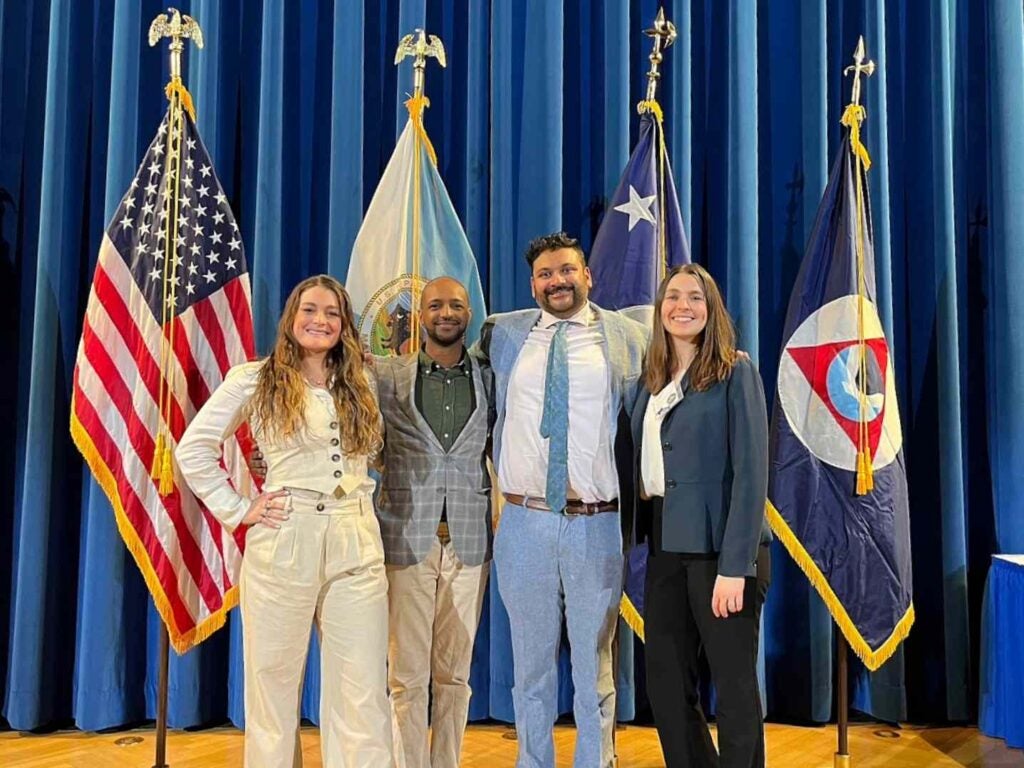
In early January 2025, my partner and I packed up our belongings and moved to the Capitol. President Trump was inaugurated two weeks later. Then executive order after executive order started coming out of the White House. Federal funding was frozen. The United States was no longer going to be a leader on climate. And we suddenly found ourselves in what the administration called an “energy emergency.” As a scientist, these changes were gut-wrenching. As a fellow, I didn’t know if my federally-funded fellowship would even happen. Luckily, I had a supportive partner and an incredible fellowship cohort—we all had each other and persevered through the uncertainty, taking one day at a time.
After an intense placement week that consisted of 22 interviews in two and a half days, I ended up in the office of Congresswoman Doris Matsui, a senior Democrat who represents Sacramento, California. Because she sits on the Energy and Commerce committee and is a co-chair of the House Sustainable Energy and Environment Coalition, I worked on topics such as clean energy, grid reliability, and energy efficiency. I never expected to learn so much about these topics in a marine policy fellowship, but the knowledge I’ve gained will be invaluable for my career, because after all, transitioning to a cleaner energy economy will have a positive impact on the ocean and the life within.
Working across the aisle
One of my goals for the fellowship year was to learn how to better communicate with people who don’t have my same political views, and because of the support of my mentor, I accomplished this goal. Throughout the year, I advanced three bipartisan efforts for the Congresswoman. In doing so, I learned one of the most important lessons in the policy world: durable, effective policy solutions require compromise. Working with partners and stakeholders in a bipartisan manner ended up being one of my favorite parts of the fellowship year. It required strong listening and negotiating skills, as well as an understanding of political tact. Now that my fellowship year is over, I have come to realize that I enjoy the policy world because it reminds me a lot of the scientific method—instead of answering a question, good policy solves a problem, and it requires a well-thought-out strategy, akin to a scientific protocol, to do so. Of course, people aren’t as predictable as test tubes, but hopefully you get the point.
During the year, I led two bipartisan Congressional letters, one urging the Department of Interior (DOI) to develop a reforestation strategy, and another asking DOI Secretary Burgum to address insufficient staffing levels at the National Parks Service.
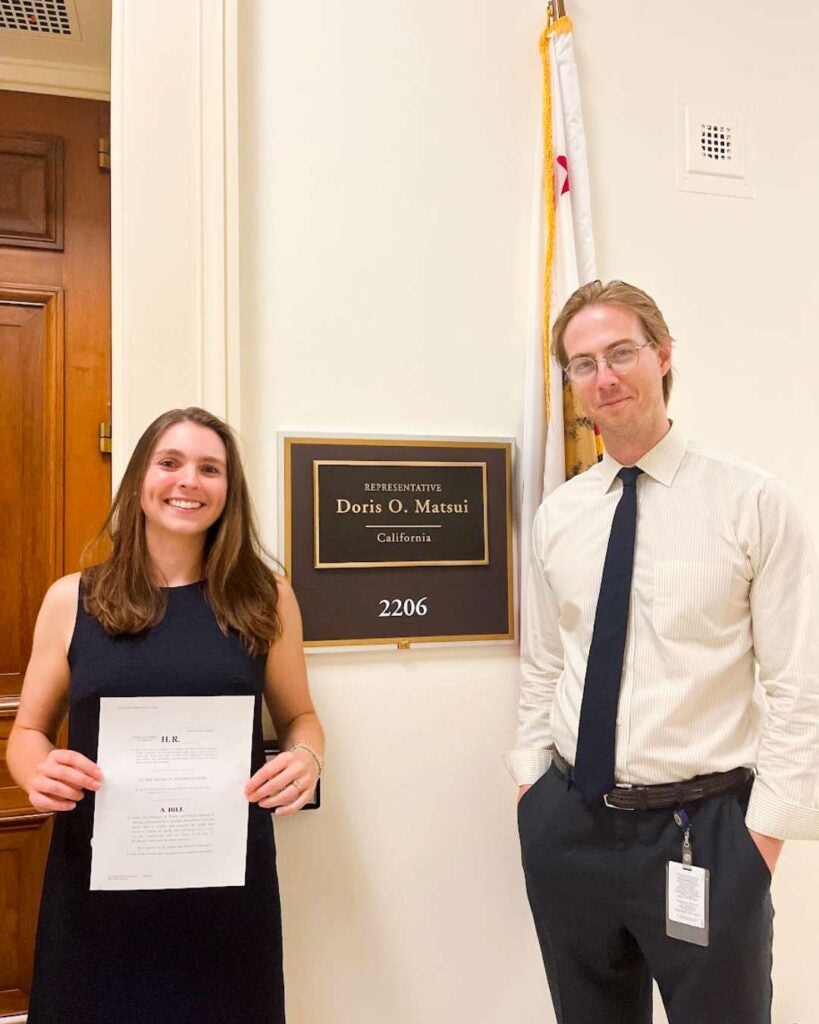
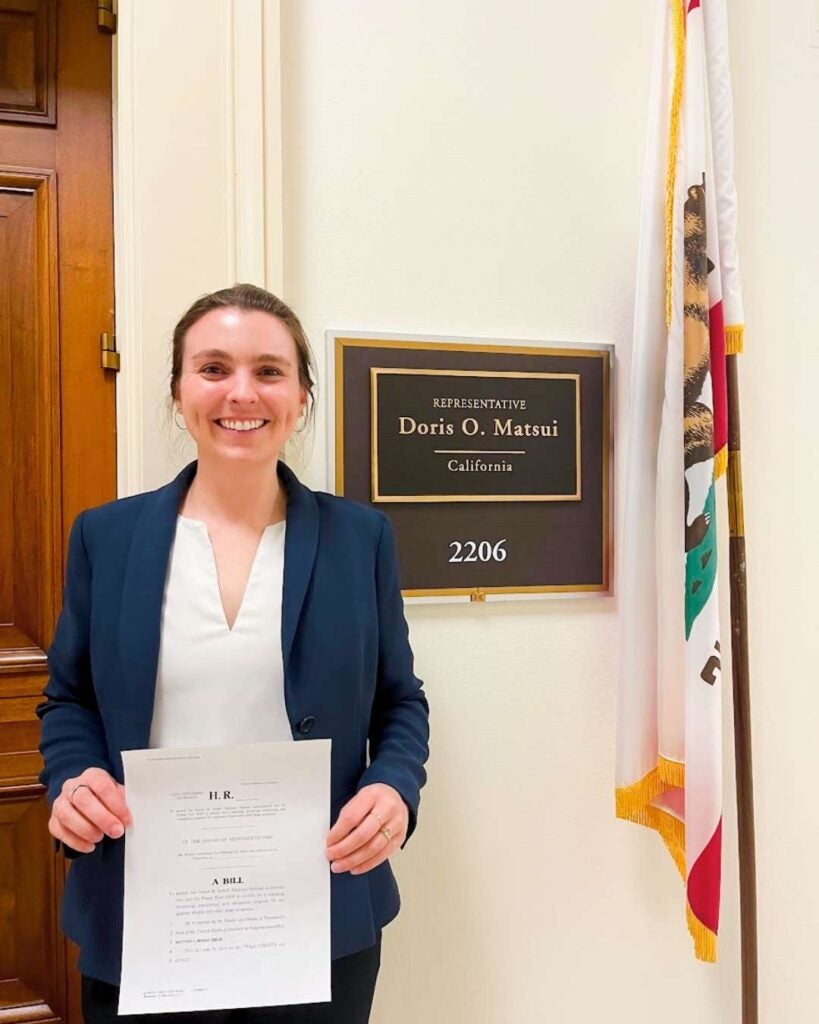
The effort I am most proud of, however, is advancing my boss’s Whale CHARTS Act, a bill that would direct NOAA to improve whale habitat maps and develop near-real time whale detection technologies to help prevent deadly ship strikes. Marine mammal policy addresses complex issues, requiring both scientific understanding and thoughtful collaboration among diverse interests. With the guidance of my fellowship mentor, I engaged sportfishing and boating groups alongside environmental nonprofits in an ongoing, collaborative dialogue. I negotiated language that incorporated key provisions requested by the sportfishing community while maintaining strong conservation language supported by the environmental groups. The final bill text reflected a balance of priorities. My boss introduced the bill in early February with 24 co-sponsors (12 Democrats and 12 Republicans) and 20 supporting groups across the political spectrum, an outcome I am incredibly proud of given the complicated history of whale-related legislation.
Reflections from D.C.
Capitol Hill is nothing like the slow-paced coastal New England town I called home for 6 years while pursuing my doctorate. However, I wouldn’t have changed a thing. Because of the Knauss Fellowship, I learned so much in just a year—not only about the government, but also about myself. For starters, I have a better appreciation for how the legislative branch functions and how easy it is for the public to engage with Congress. Constituents should not be afraid to call their Senators and Representatives to let them know how they feel about issues that matter to them.
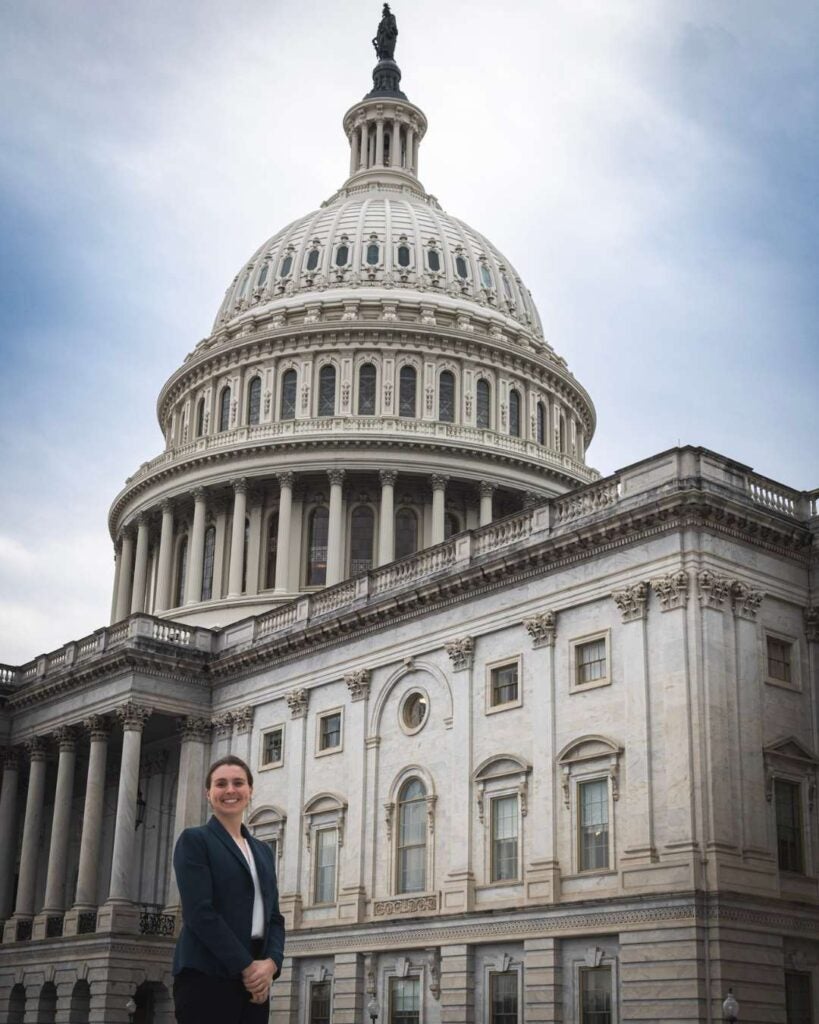
I also learned to be a faster writer and a little bit less of a perfectionist, because although it might not seem like it from the outside, Congress operates at an incredibly fast pace—schedules get upended because of vote changes and deadlines change on a dime. And finally, I learned how to find common ground amidst a hyper-partisan Congress, a feat that surely seemed impossible at the beginning of my fellowship.
2025 was a year of change. It was scary, infuriating, and disappointing. At the same time, it was educational and eye-opening, as well as inspirational to be surrounded by so many hard-working staffers and advocates who fight the good fight every single day. Now, as a policy professional, I get to return to that coastal New England town I call home, starting a new job as the Climate Program Manager for The Nature Conservancy in Rhode Island—and with me, I will bring a deeper understanding of political strategy, a willingness to try something new, and the ability to be resilient during times of uncertainty.
Apply for a Knauss Marine Policy Fellowship
The application period for the 2027 Knauss Marine Policy Fellowship is now open. The fellowship provides a one-year, paid experience for highly qualified early career professionals to work on issues related to coastal, marine, and Great Lakes science and policy in offices within the executive or legislative branches of government in Washington, D.C.
Graduate students at Rhode Island universities interested in marine, coastal, and Great Lakes science and policy should explore the information about the fellowship as soon as possible .
Learn more