
Two new URI studies will decode over a century of coastal change on one of New England’s most treasured islands
May 19, 2026
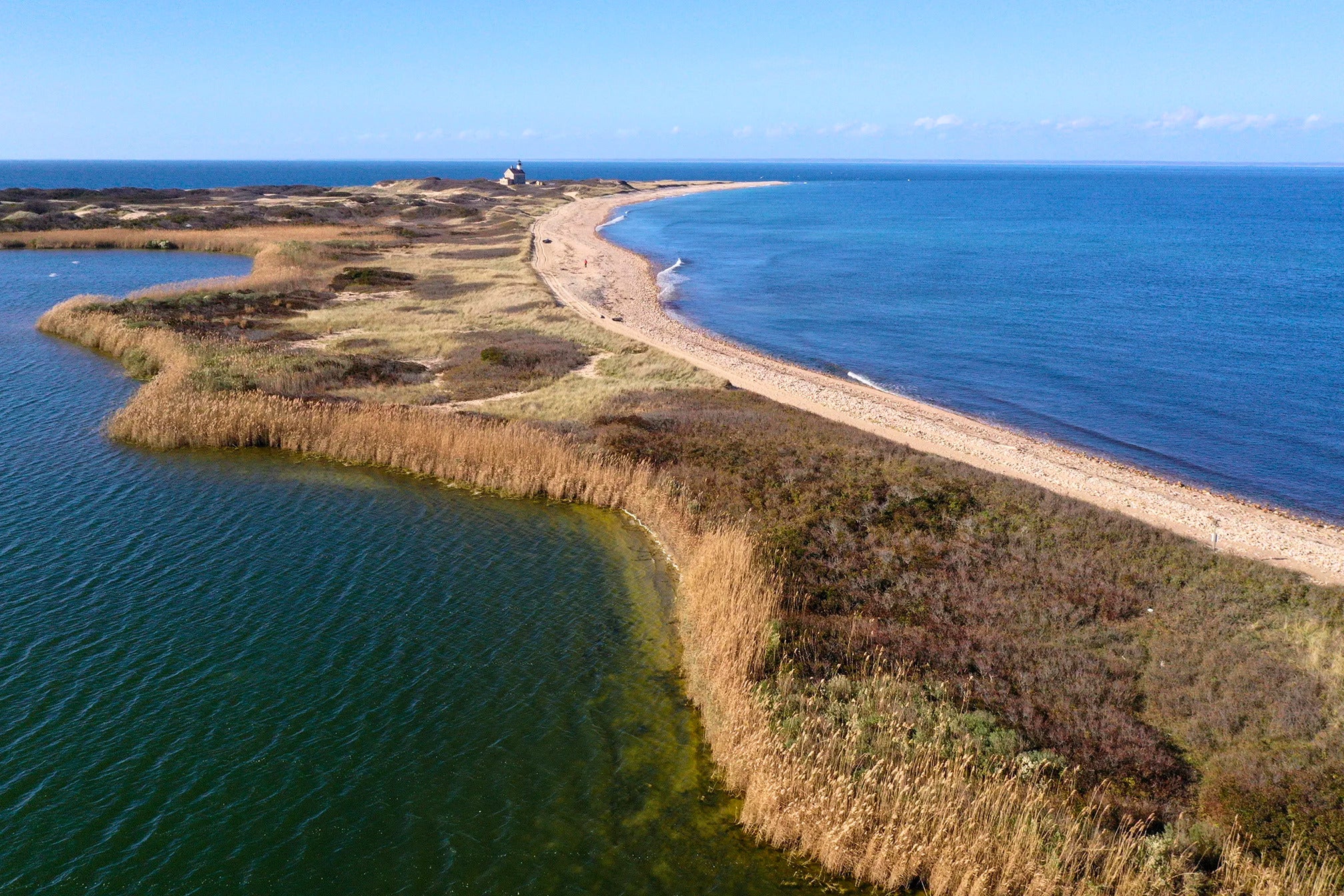
Every summer, the population of Block Island swells to over 15,000 as visitors arrive for its 17 miles of beaches, dramatic glacial bluffs, and quiet ponds. The island has always changed — its bluffs eroding, its shorelines shifting, its marshes responding to the rhythms of tide and season. But the pace of that change is accelerating, and the decisions the community makes in the coming years will shape what the island looks like for generations to come.
The University of Rhode Island is working alongside that community to make those decisions better informed. Two new research projects, supported by more than $800,000 in combined Rhode Island Sea Grant funding and matching funds from URI and Eastern Connecticut State University (ECSU), will produce the most detailed picture yet of how Block Island’s shoreline and salt marshes are changing and what is driving those changes.

(URI Photos / Coastal Institute)
The studies are the latest addition to the URI Coastal Institute’s Block Island Climate Response Demonstration Site, a growing framework that connects URI researchers with regional academic partners, local nonprofits, and community members to monitor coastal change and develop practical planning tools.
Both new projects partner directly with the Town of New Shoreham’s Coastal Resilience Committee, which has been guiding the island’s climate adaptation planning since 2021.
The Bluffs, the beaches, and a century of change
Here is something most visitors to Block Island don’t know: the same forces eroding the island’s Mohegan Bluffs are also keeping its beaches alive. The 150-foot cliffs of glacial till along the southern shore have retreated hundreds of feet over the past century, shedding sand and gravel that travels along the coastline, naturally replenishing the beaches and dunes that protect Corn Neck Road, harbor infrastructure, and coastal habitat. Decisions about how to manage the bluffs — whether to armor them, retreat from them, or leave them alone — have direct consequences for beaches that define the island’s character and economy and translate to coastal communities across Rhode Island and beyond.

Understanding that system fully is the goal of a new URI study led by geologists Nathan Vinhateiro of URI and Bryan Oakley of ECSU. Oakley has been monitoring Block Island’s beaches with community volunteers since 2013, building the longest continuous record of beach profile changes on the island. The new project will expand that record dramatically, combining historic aerial photographs and survey maps going back to 1886 with new drone and LiDAR surveys to develop century-scale shoreline change and bluff retreat rates across the entire island. The team will produce high-resolution erosion maps island-wide, generate estimates of sediment volumes stored in and moving through the bluff system, and assess the consequences of shoreline armoring on the island’s natural sediment supply. That information is directly relevant to homeowners, planners, and resource managers navigating the tension between protecting property and preserving beaches.
Results will be made accessible through two new web platforms: an ArcGIS Hub for shoreline change and bluff retreat data, and an interactive portal for the island’s community beach profile program, giving residents and planners the ability to track coastal change over time.
“The data from this project will be instrumental for planning efforts that bolster the island’s physical and economic resiliency. Understanding coastal dynamics is essential for protecting both the natural systems and the tourism economy that Block Island depends on.”— Nathan Vinhateiro, University of Rhode Island
“This research will help us understand the complex sediment transport processes that naturally provide sediment to Block Island’s beaches. By quantifying how material moves from eroding bluffs to the shoreline, we can better inform sustainable coastal management practices.”— Bryan Oakley, Eastern Connecticut State University
What the marshes are hiding
Block Island’s salt marshes, the focus of the second study, don’t announce themselves. Tucked into the edges of the Great Salt Pond, they quietly buffer storm surge, filter runoff, provide nursery habitat for fish and shellfish, serve as recreation areas for visitors, offer critical stopover refuge for migratory birds along the Atlantic Flyway, and lock away carbon accumulated over centuries. They also hold a record of the past, layered in sediment, that reveals whether these ecosystems are keeping pace with rising seas or quietly falling behind.
URI Graduate School of Oceanography Assistant Professor Erin Peck and Ph.D. student Izzy Rico are working to decode that record. The team has already cored sediment from all six Great Salt Pond marshes, using short-lived radioisotopes and geospatial analysis to build century-scale records of sediment accumulation, revealing whether organic matter built by marsh plants or mineral sediment carried in by tides is driving marsh stability, a distinction that matters for predicting resilience and targeting restoration. A URI Coastal Institute catalyst grant enabled that early field work to begin ahead of federal funding approval, ensuring Rico did not miss a key field season.
The new Rhode Island Sea Grant award will fund the full study. The team will measure changes in sediment accumulation rates and marsh area over the last century across all six marshes, assess vulnerability and stressors including sea level rise and human land-use pressures, and monitor greenhouse gas fluxes to evaluate each marsh’s carbon sequestration value. Shallow groundwater wells installed at each site will allow the team to track porewater carbon fluxes, measuring dissolved greenhouse gases during ebb and flood tide to assess how tidal restrictions and lateral exchange affect carbon dynamics and blue carbon storage potential. The project also includes senior high school capstone partnerships, connecting the next generation of Block Islanders to the science shaping their home.
“This research will improve the resilience of Block Island’s salt marsh environments by providing data that will aid the town in prioritizing marsh restoration projects. Understanding which marshes are most vulnerable and why will allow for strategic, science-based management decisions that maximize conservation outcomes.”— Erin Peck, URI Graduate School of Oceanography
Science grounded in community
At the center of it all is a community that has been engaged from the start. Block Island residents have been walking beaches, taking measurements, and advising on research priorities for years. Judy Gray, a Block Island resident and longtime Coastal Resilience Committee member, has been part of that effort, helping connect researchers to the questions that matter most to the people who live and work on the island year-round.
“Salt marshes and beaches are fundamental to what makes Block Island special — they protect us from storms, support our wildlife, and draw visitors from around the world. Having this scientific foundation will help us make informed decisions to preserve these resources for generations to come.”— Judy Gray, Block Island Coastal Resilience Committee
To learn more about the URI Coastal Institute’s Block Island Climate Response Demonstration Site, visit the Coastal Institute website. To learn more about Rhode Island Sea Grant’s 2026–2028 research portfolio, visit seagrant.gso.uri.edu.
About the URI Coastal Institute
The University of Rhode Island Coastal Institute catalyzes research, fosters partnerships, and stimulates dialogue to support resilient and diverse coastal communities and ecosystems. It connects researchers, decision-makers, and communities to develop solutions to coastal challenges across Rhode Island and beyond.
This press release was written by Amber Neville, URI Coastal Institute (401-874-6513, amneville@uri.edu).