
September 9, 2026
By Veronica M. Berounsky. Ph.D.’90
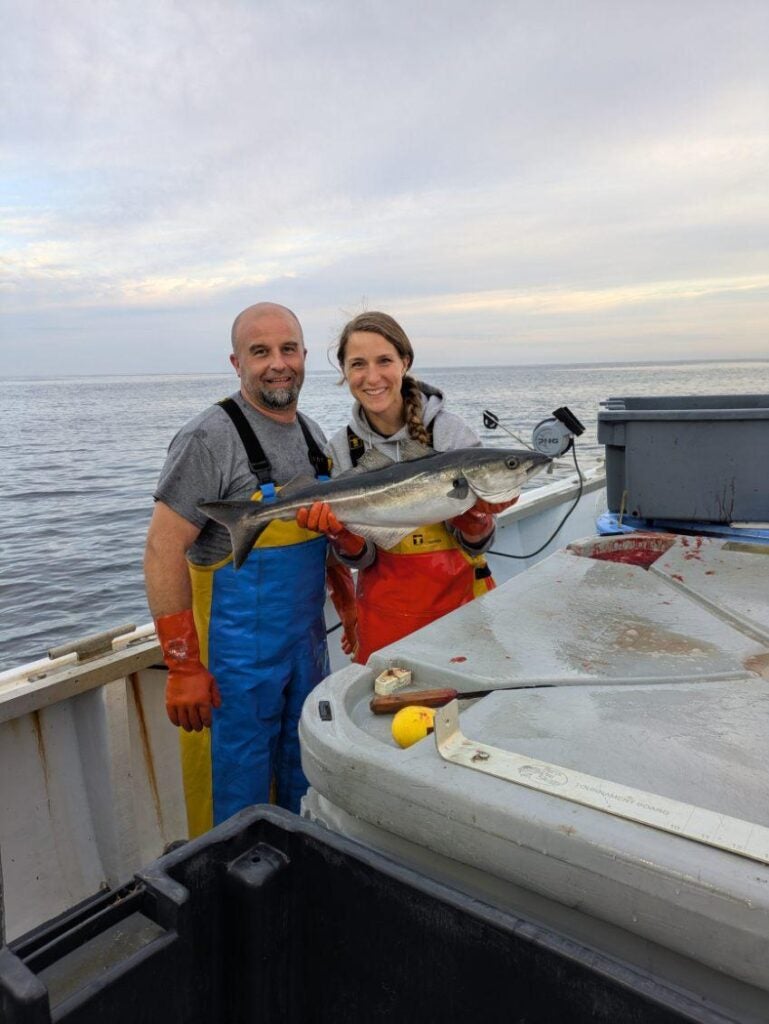
“I spent a lot of time listening earlier in my career, and now whether it’s on the phone or at the dock or in wheelhouse, it’s still important to just listen and learn.” – Anna Mercer, Ph.D.’15
When she started looking at graduate programs all over the country, Anna Mercer, Ph.D. ’15, knew what she wanted: to pursue a career in applied ocean science, and to connect people to science.
Fast forward to 2011. No windfarms had yet been built off the Rhode Island coast, but they were being discussed. Both scientists and fishermen were trying to understand the potential impacts of offshore wind turbines. URI Graduate School of Oceanography Professor Jeremy Collie had just started a project on the topic, and Mercer thought it could be exactly the opportunity she was seeking, “to come in on the front lines and develop those relationships between science and the fishing community to share information.”
And with that, she signed on as a Ph.D. student at GSO.
Studying at the Narragansett Bay Campus helped Mercer find her footing, especially as an early career scientist. “Learning how to make connections and build the trust required to make a difference, ultimately that’s the foundation of cooperative research,” says Mercer.
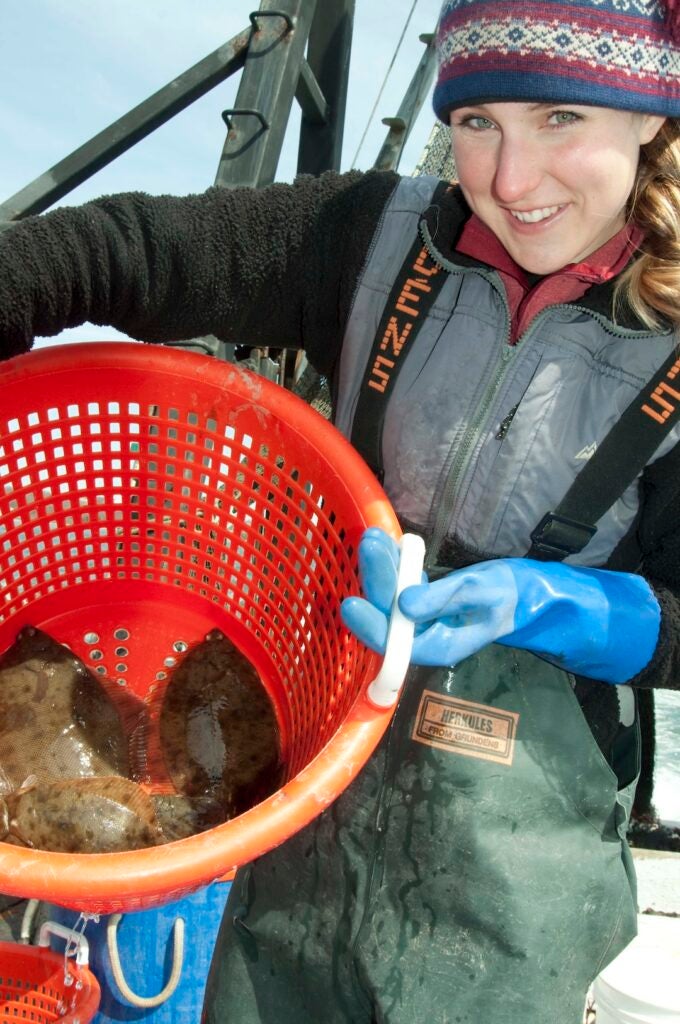
For two years, Mercer was the weekly GSO fish trawl assistant. This gave her valuable experience deploying and retrieving fishing gear on the URI vessel Cap’n Bert. “I can talk to a fisherman about their head rope, the right angle, or the sweep that they’re using, because I’ve been on the boat and done it.”
Conversing with commercial fishermen with confidence about their gear helped Mercer develop trust with them. She also points to listening to others as one of her guiding principles and another way to build trust with both the fishing industry and scientists.
“At GSO I was a 22-year-old female by myself setting foot on a fishing boat, making decisions, and telling the captain where they are going to put their gear,” she says. “It was real life practice for communicating why we are doing it a certain way, and then also listening to them on why we should do it a different way or hearing about what they’re seeing in other areas that we should know about. I’ve learned that if someone, whether fisherman or scientist, says something you speculate about, you don’t disagree, you don’t interrupt them and correct them, you just listen and absorb what they’re saying.”
Mercer was nearing the end of her Ph.D. work when she was offered a part-time job with the Commercial Fisheries Research Foundation (CFRF) supporting one of its new research initiatives. The location was convenient, at East Farm, part of the University of Rhode Island’s main campus. “It was extra work, juggling finishing my degree and working, but well worth it for the work experience I gained,” she says. “I was able to build my network, and my work skills really dovetailed well with my graduate research. Plus, in your professional career you have to know how to time manage and prioritize every single given day, and I learned how to do that.”
Her hard work paid off, because after Mercer received her doctoral degree, she was hired as the executive director of CFRF. She remained there until 2019 when she was selected for her present position.
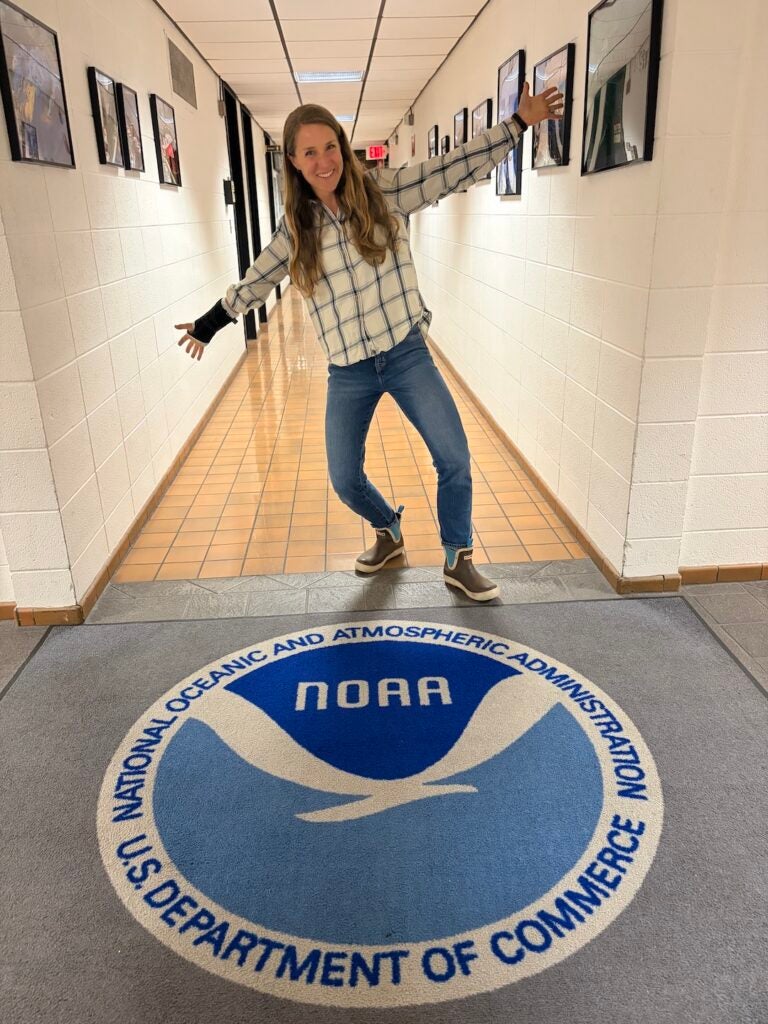
Today, Mercer wears two hats for her work at the National Oceanic & Atmospheric Administration’s (NOAA) Northeast Fisheries Science Center in Narragansett, R.I. She is the chief of the Cooperative Research Branch and director of the Narragansett Laboratory.
Since 2019, Mercer has led the Cooperative Research Branch, a research team of about 20 scientists from Massachusetts to Virginia. She explains that the team “provides tools to fisherman to enable them to contribute quantitatively and meaningfully to the science that ultimately informs their livelihoods. They carry out research that engages the fishing community in either data collection or data application, and then fisheries managers use that data to make decisions about stock and ecosystem assessments.”
To Mercer, the new position “felt like a homecoming from the first time I came to work here at the lab, driving back over the hill on South Ferry Road. Here are a lot of the folks that I really learned a lot from earlier in my career”
When Mercer started at NOAA in 2019, Jon Hare, Ph.D., was director of the Narragansett Lab. Hare, who she first knew when he served on Mercer’s dissertation committee, moved to a new position at the NOAA laboratory in Wood Hole, Mass. And so in early 2020 Mercer took over as director of the Narragansett Lab, one of five in the New England/Mid-Atlantic Region.
Mercer is responsible for overseeing all the research programs which include everything from oceanographic monitoring to fisheries research. Her responsibility also includes making sure the facilities and technologies can support the needed work.
Her philosophy as a leader is straightforward. “I spent a lot of time listening earlier in my career, and now whether it’s on the phone or at the dock or in wheelhouse, it’s still important to just listen and learn. Then the person is more likely to listen to you. It takes time and takes patience, skills that are not taught in a technical education, but it’s really the foundation of research.”
Hare, now acting director of the Office of Science and Technology at NOAA, speaks glowingly about Mercer. “Anna is an inspiration. She is a leader in a scientific approach that prioritizes collaboration and she has advanced collaborative research with the fishing industry regionally, nationally, and internationally. Through her efforts, significant developments have been made in fisheries, oceanography, and habitat resources. She has also increased trust between scientists and fishermen, which is emblematic of her emphasis on collaboration.”
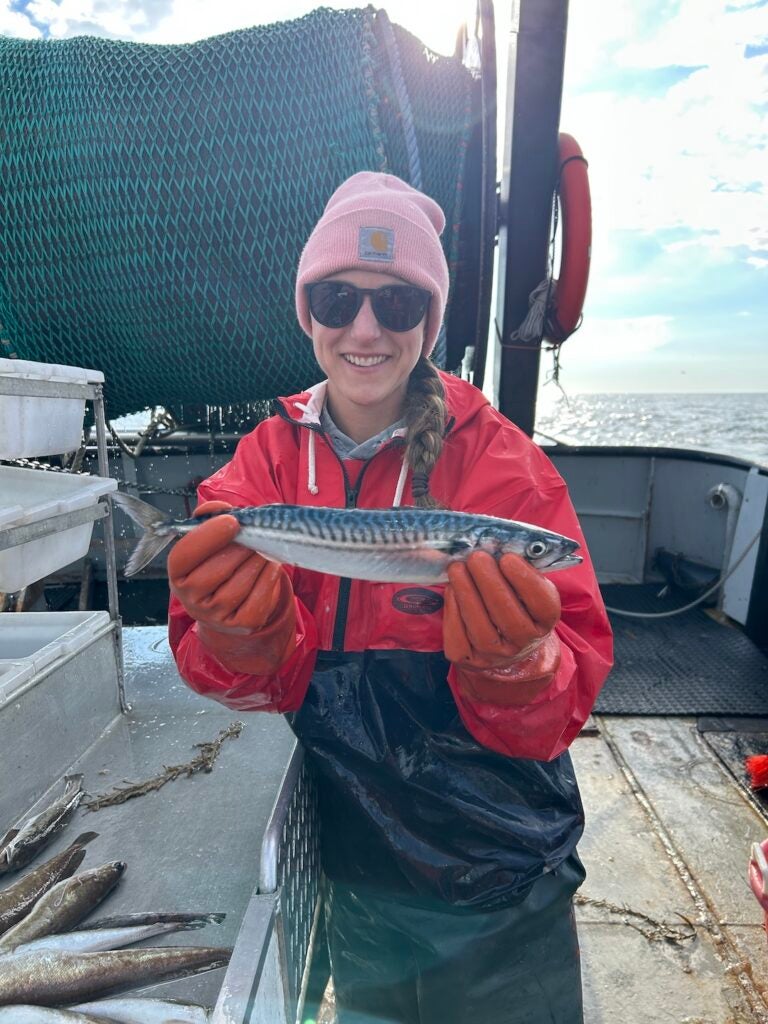
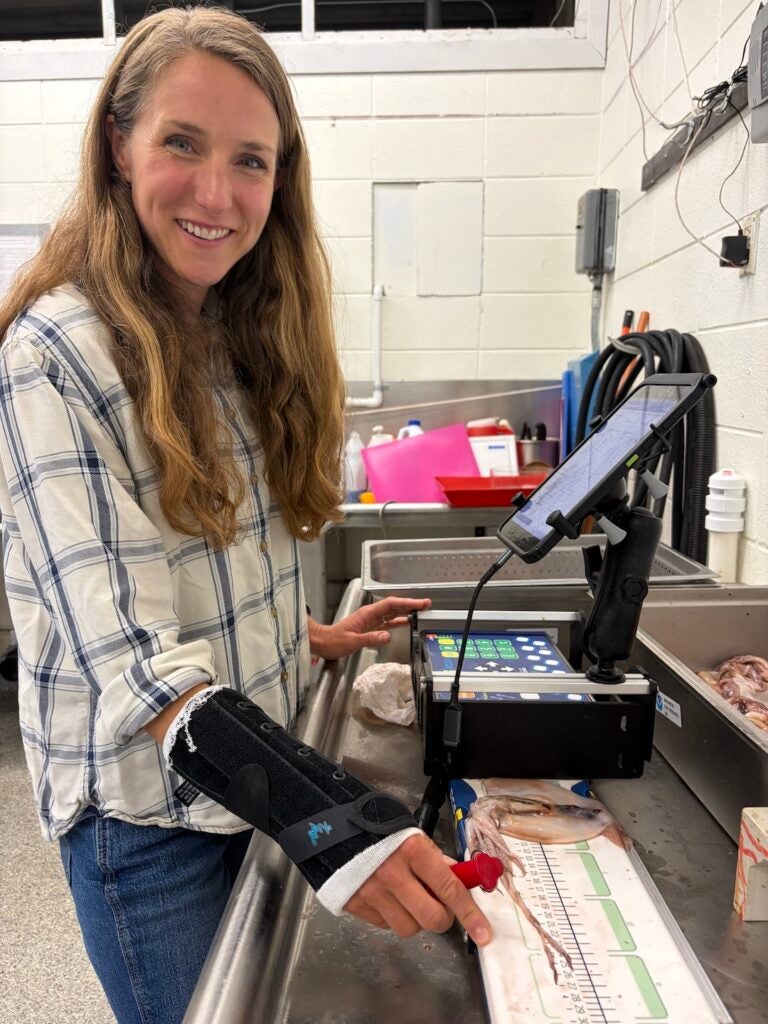
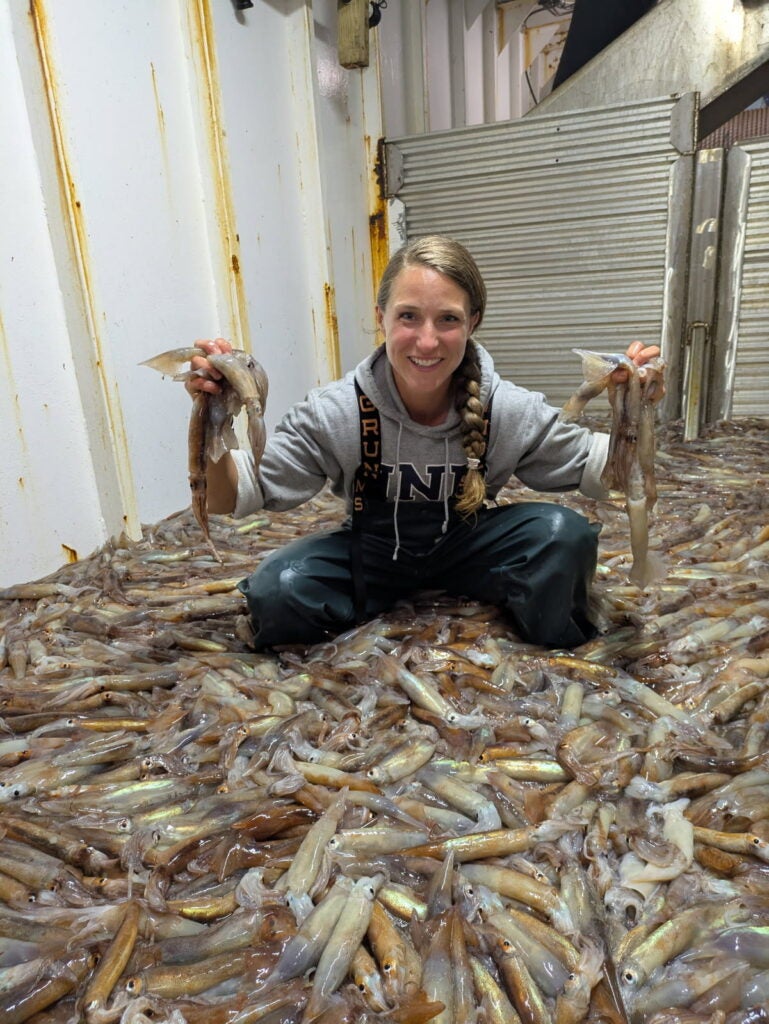
Although most of her time now is spent as a leader, Mercer’s expertise from years of fishery research still shines through. It shows as she discusses the details of research projects such as the recently started “Mack Pack,” a $2.3 million cooperative research project to study the Atlantic mackerel population by both scientists and the northeast fishing community. And it is evident when she demonstrated in the lab how to measure a shortfin squid and remove its a statolith – a tiny calcium carbonate structure at the base of the brain with daily rings used for measuring growth, equivalent to otoliths in fish, even with a cast on a broken wrist due to a soccer accident.
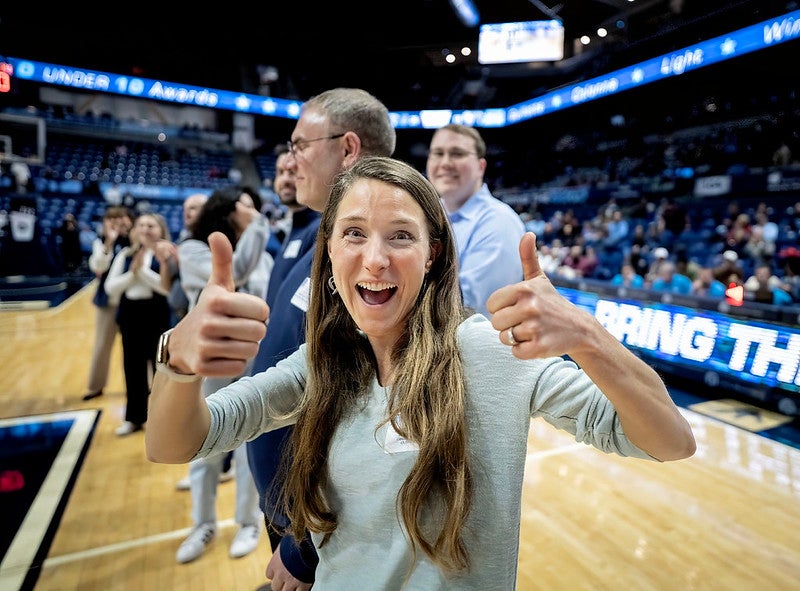
In the spring of 2026, Mercer was honored by URI as the GSO recipient of the “Ten Under Ten” Award. These awards go to graduates who are within ten years of their degree and have shown “outstanding professional achievement, dedication to the URI community and demonstrate excellence in creativity and scholarship; diversity, fairness and respect; engaged learning and civic involvement; and intellectual and ethical leadership.”
On receiving the award, Mercer notes, “the foundational skills and professional connections I gained at GSO have enabled me to pursue cutting edge, interdisciplinary science that matters to the people who rely the most on ocean resources. I am forever grateful for my mentors, collaborators, and family for supporting me over the years – science takes a village!”
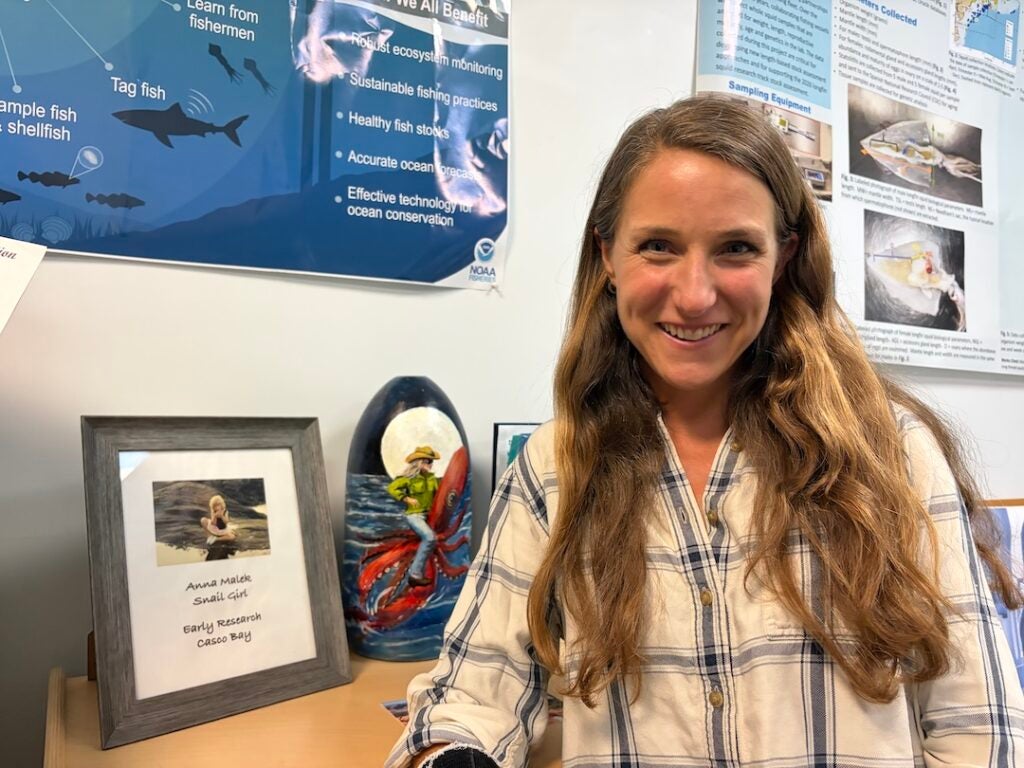
The award is well-deserved recognition for the little girl who spent her summers mesmerized by life in the tidepools of the rocky coast of Maine, and observing the changes as cold ocean waters flowed in and out with the tides. “Those times on the Maine coast where foundational for me and to this day, I love nothing more than going tide pooling with whoever wants to go with me,” Mercer says.
Even during her time away from work, she is still listening and connecting people to marine science