
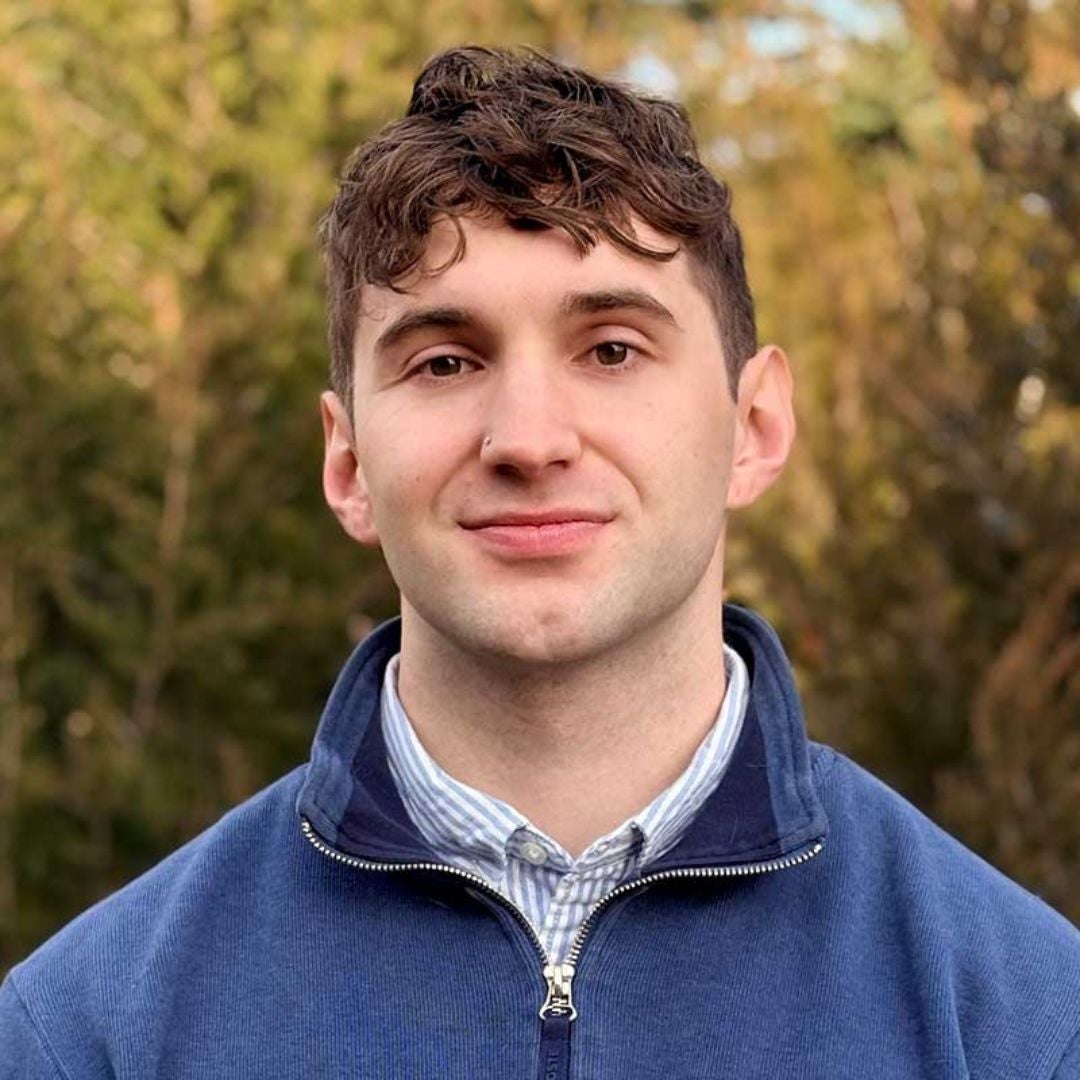
- Ph.D. Candidate
- Advisor: Rainer Lohmann
- Email: justinsankey@uri.edu
Biography
As a Ph.D. Candidate and NIEHS STEEP trainee, Justin’s research centers on PFAS in aquatic environments. From bioaccumulation, bioconcentration, biotransformation, environmental sampling, and sorptive remediation, his research seeks to address the issues of the class of emerging contaminant, per- and polyfluoroalkyl substances (PFAS).
Through a combination of field and laboratory studies he has derived bioaccumulation/concentration factors for kelp, a burgeoning crop in New England aquaculture. Additionally his research focuses on identifying potential biotransformation pathways in phytoplankton, the base of the marine food web, in order to better assess the fate of PFAS precursor compounds in the marine environment.
As a STEEP trainee, he has received many opportunities to engage with the Mashpee Wampanoag Tribe in Cape Cod through outreach events, tabling sessions, and even conducting studies to address concerns of PFAS contamination in culturally significant species such as quahogs, oysters, herring, and deer. Working closely with the tribal leaders, he seeks to develop effective risk communication for species that may be impacted by PFAS contamination on Cape Cod. As part of this work, he is validating methods for testing PFAS in species with limited data and correlating body burdens with factors such as albumin content and membrane lipid content.
In addition to biological work, he also works on validating commercially available activated carbon fiber felts (ACFFs) for use in remediation of PFAS contaminated waters. Through a series of batch partitioning tests, RSSCT column experiments, and limited field deployments, he is comparing the removal efficiencies of ACFFs compared to GAC, the most widely used remediation technique.
Education
B.S. Chemistry, Lawrence University