
From far-away expeditions to research right here on the Bay Campus, your likes, shares, and clicks told us what inspired, educated, and connected you to our changing ocean planet. Check out some of GSO’s most-liked posts and most-read stories of the year!
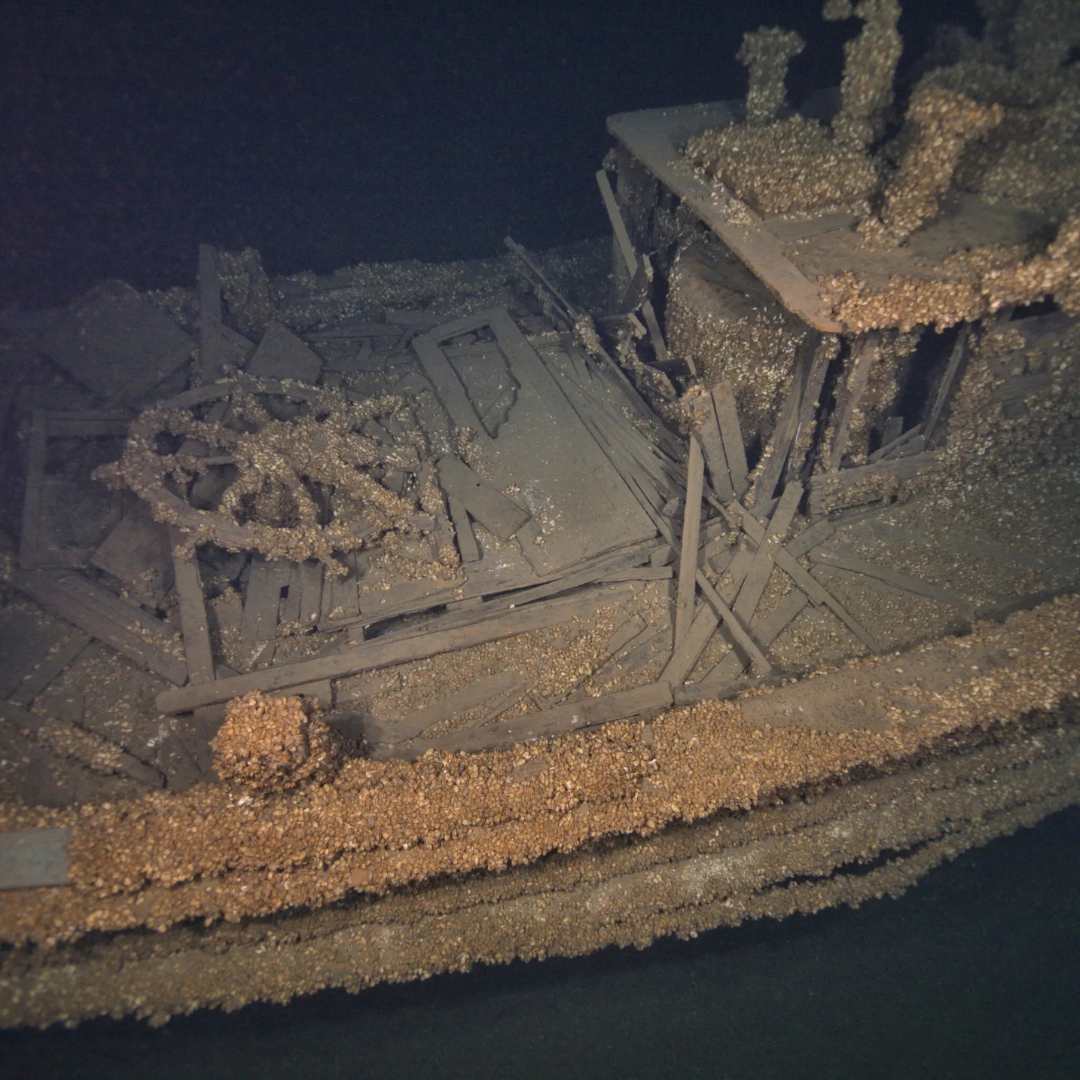
URI students discover historic shipwrecks with NOAA OECI
Using URI’s state-of-the-art ROV Rhody, the OECI-organized team documented 17 historic wrecks (and even discovered several new ones) while mapping the lakebed aboard EPA’s Lake Guardian. These ultra high-res surveys will help NOAA identify and preserve underwater cultural heritage in the Great Lakes.
read the story Read in the new york times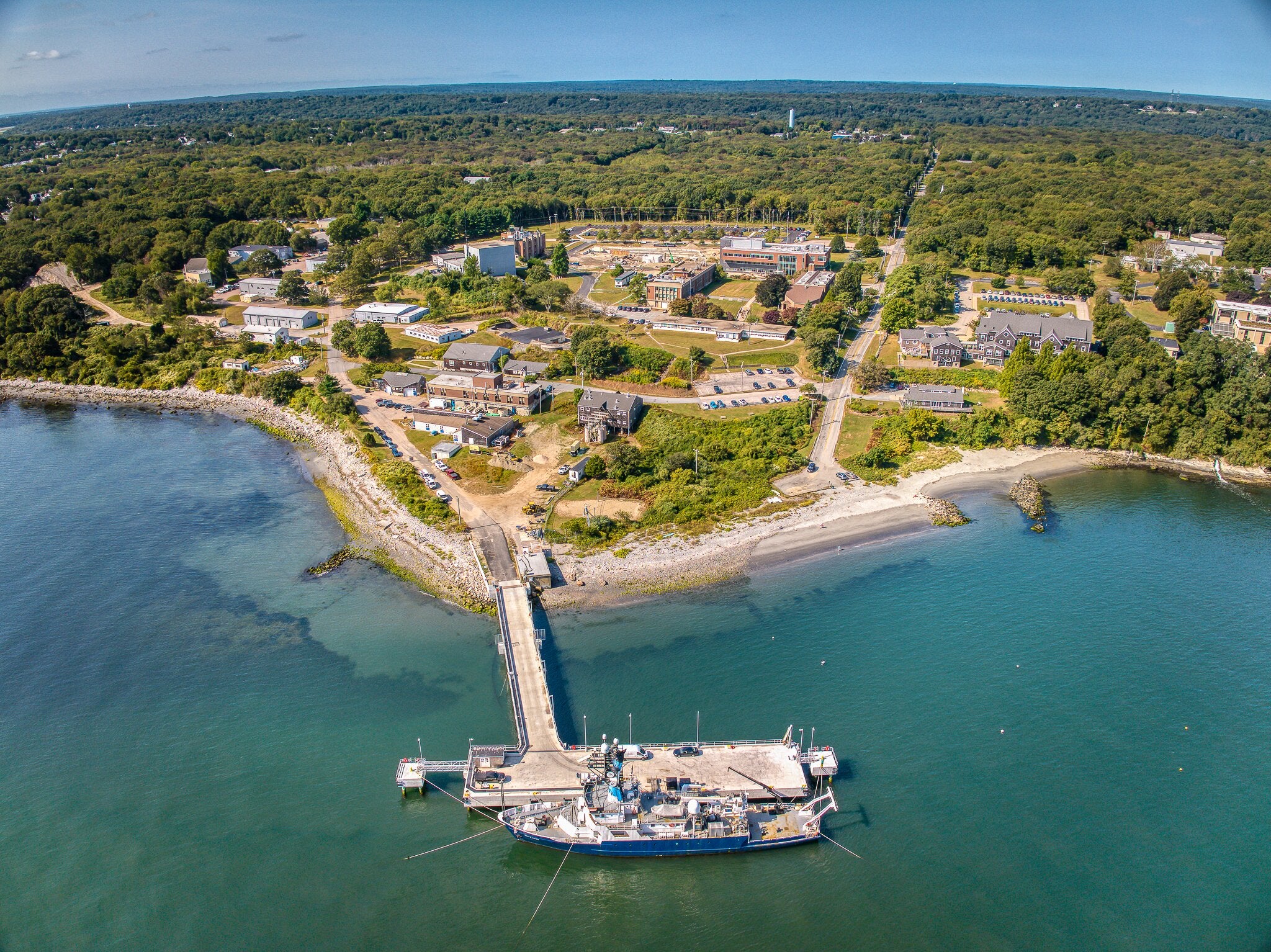
URI achieves the highest designation for research excellence
In February, The University of Rhode Island officially joined the top tier of U.S. research institutions, earning prestigious Carnegie R1 status. This achievement reflected our dedication to exploration, discovery, and innovation!
Read the announcement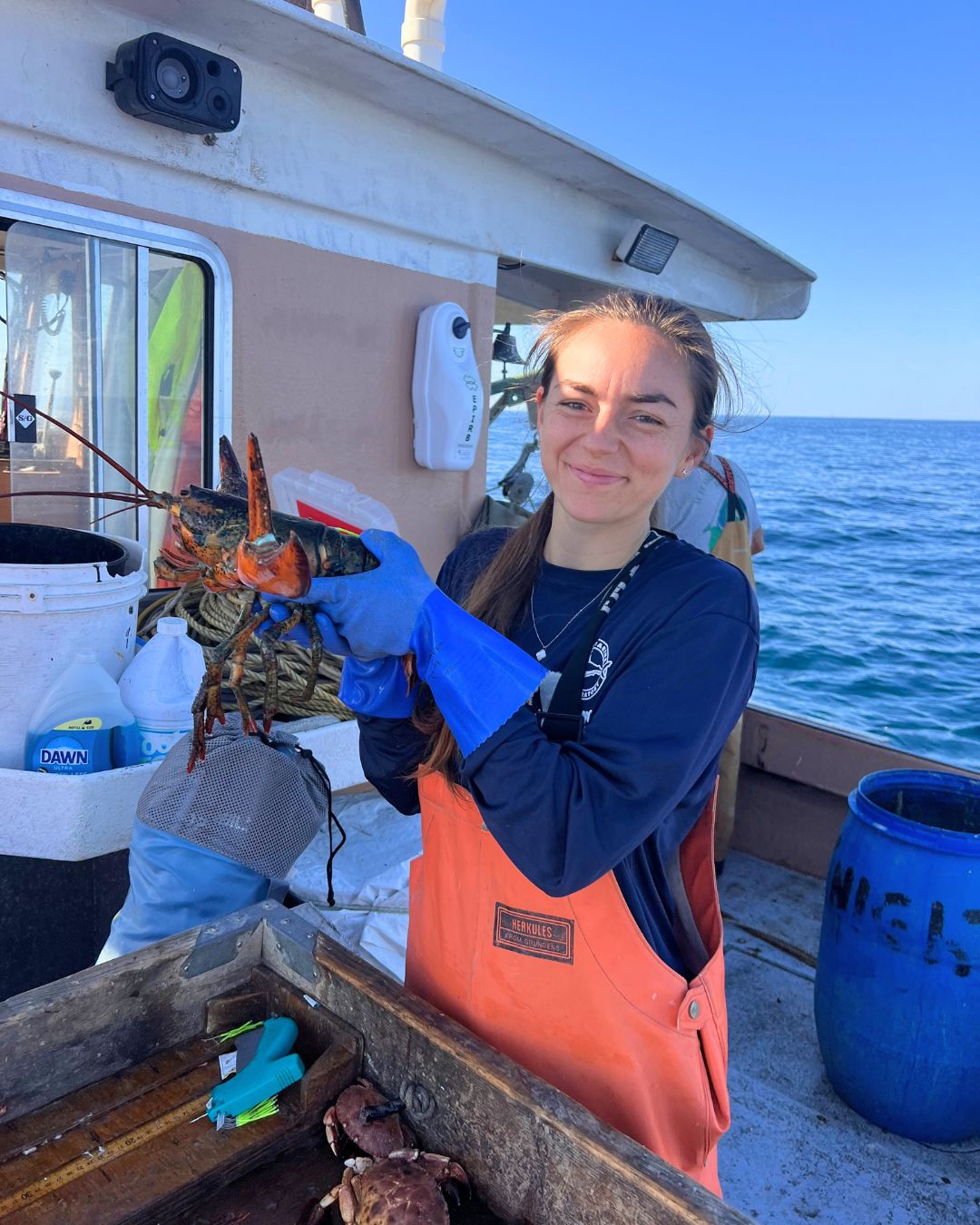
GSO doctoral students support offshore fisheries research at RI wind sites
Twice a month from May to November, GSO’s Reese Kober and Emmanuel Oyewole head to the Revolution and South Fork wind sites to support the Commercial Fisheries Research Foundation. They work alongside the vessel’s crew, collecting biological data on these species that informs stock assessments and sustainable fisheries management.
Read the story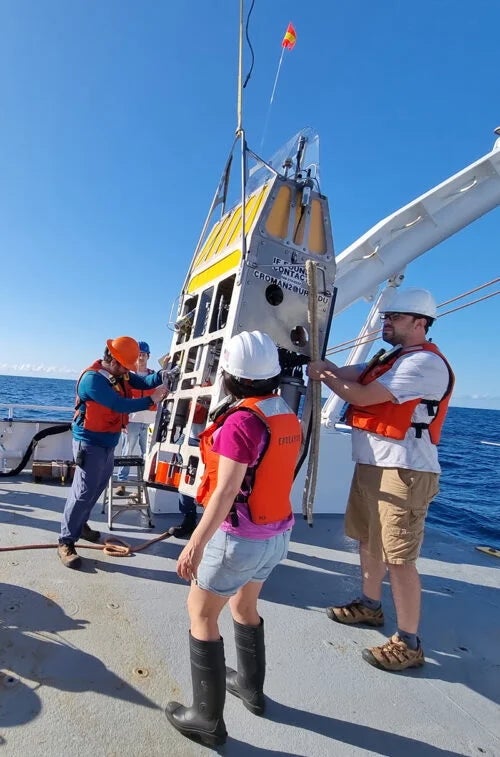
VAMPIRE completes its first deepwater trials
Designed by GSO’s Chris Roman, the Visual Acoustic Mesopelagic Profiler for Interdisciplinary REsearch (VAMPIRE) is an autonomous robotic system built to study the ocean’s twilight zone with minimal disturbance to marine life.
The successful deployment marks the end of VAMPIRE’s five-year development period and its transition into active use for midwater research, offering a quieter alternative to traditional net-based sampling.
Read the story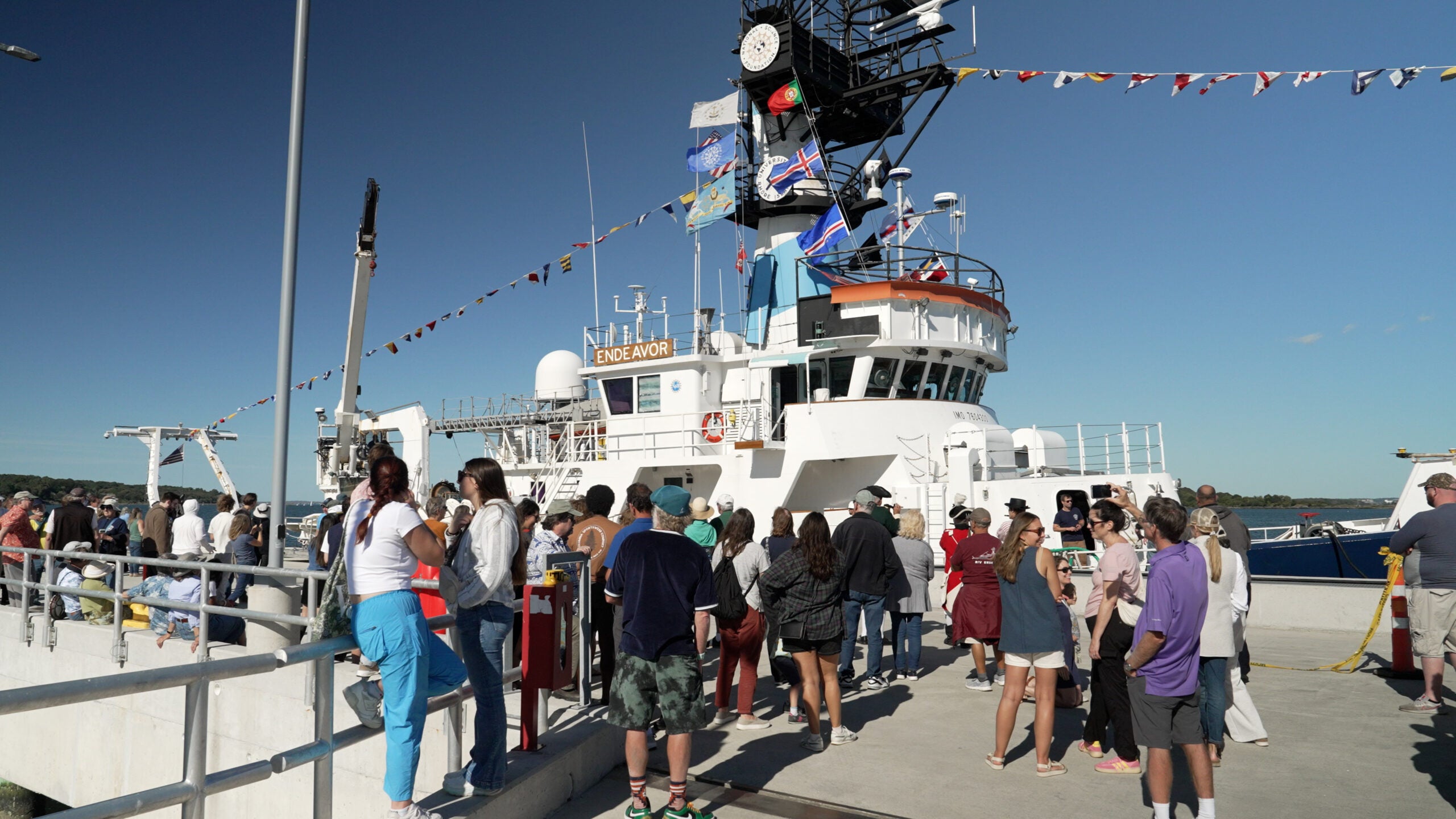
R/V Endeavor’s final cruise
In September, a crowd gathered at the Narragansett Bay Campus Pier to welcome R/V Endeavor home from its final scientific mission. Joined by the URI Sea Shanty Social Club and the Pawtuxet Rangers (with their cannon salute), the celebration marked the retirement of URI’s faithful research vessel after 50 years and more than 700 scientific missions.
Watch the clip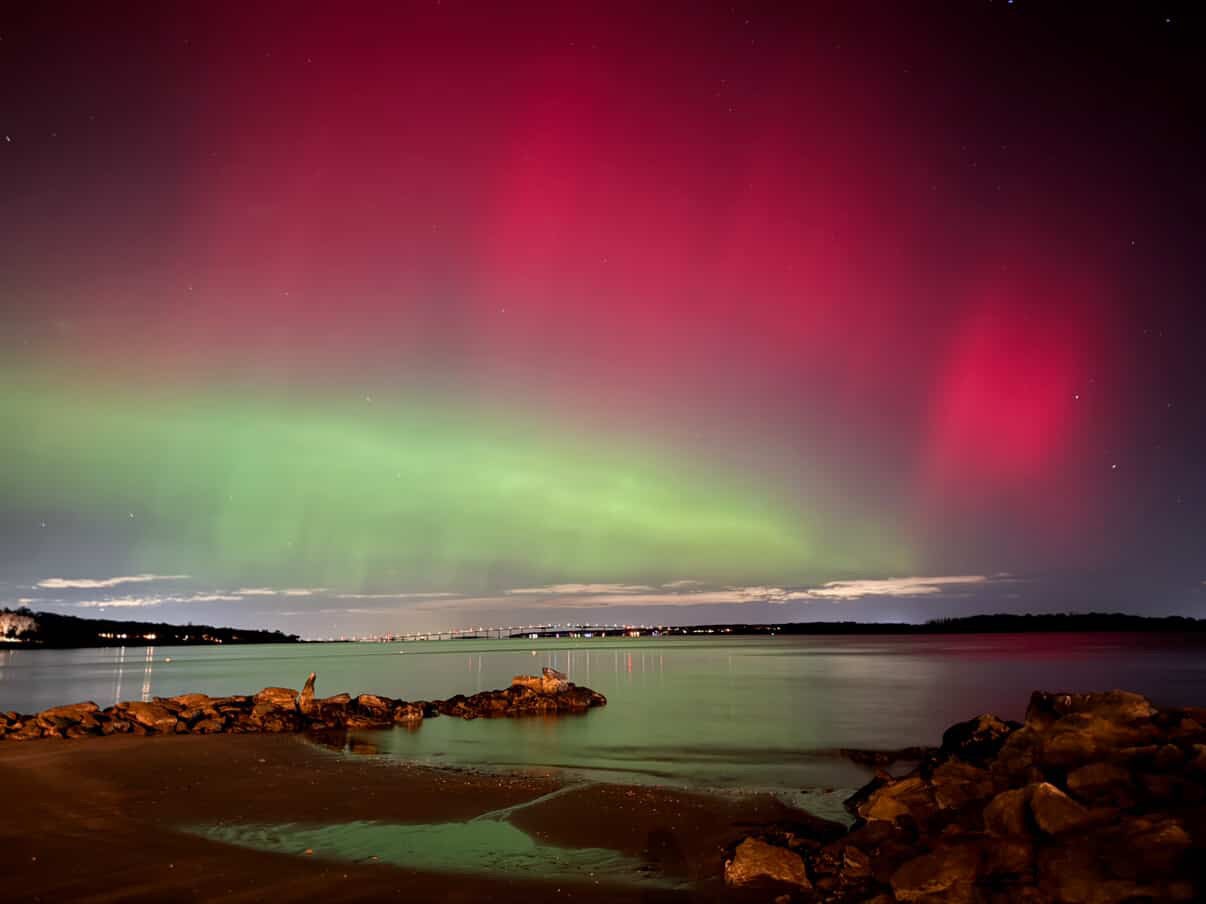
Northern Lights over the Bay Campus
The aurora lit up the skies over Narragansett Bay for two nights in November, drawing spectators to the Bay Campus for the incredible view.
View on instagram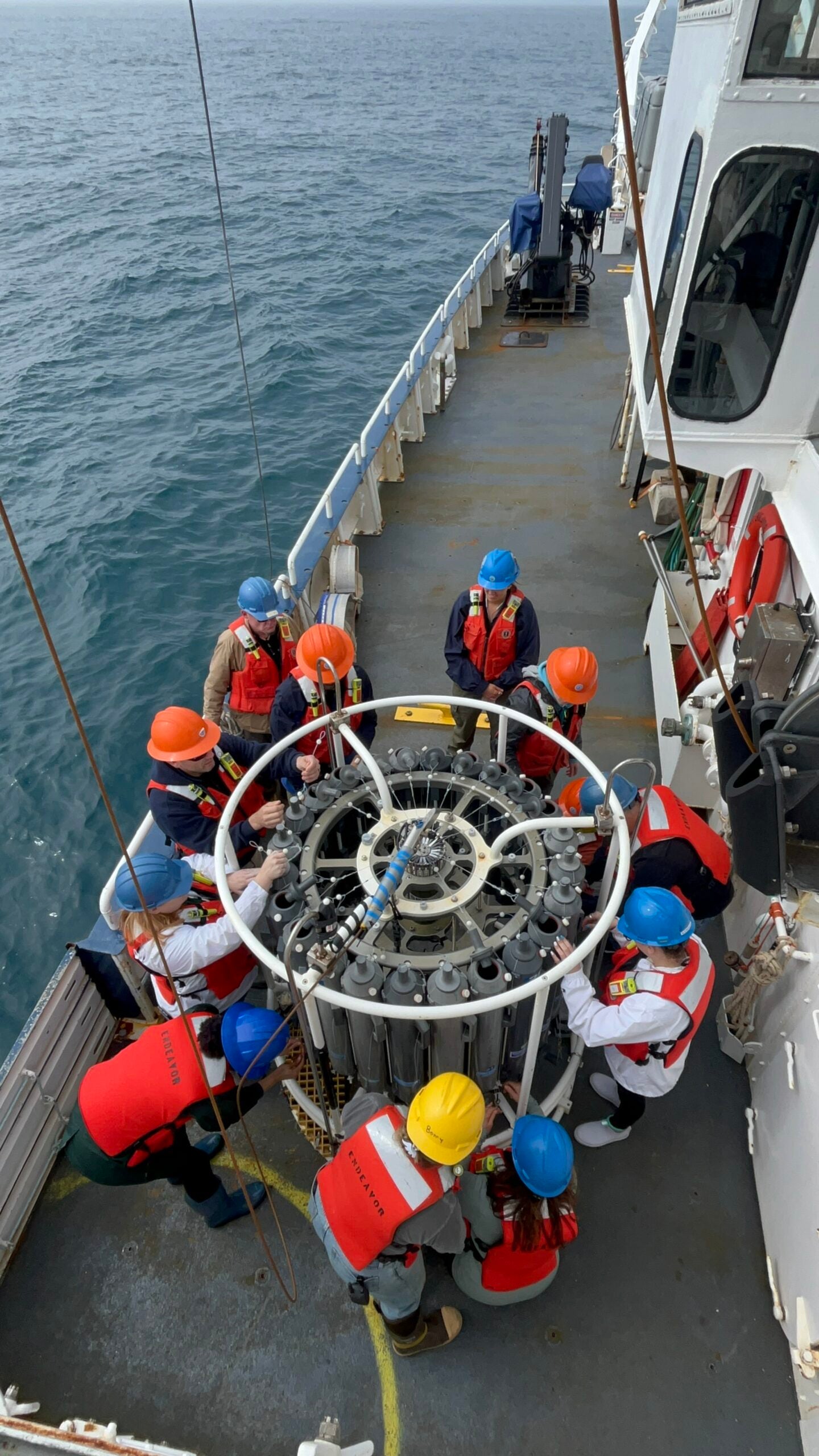
K-12 educators experience ocean science research aboard Endeavor
Twelve local educators stepped into the role of shipboard scientists aboard Endeavor, joining the Rhode Island Teachers at Sea cruise, a unique, hands-on educational experience sponsored by GSO. The three-day expedition is designed to foster partnerships between ocean scientists, researchers, and teachers who live and work in Rhode Island.
Read the story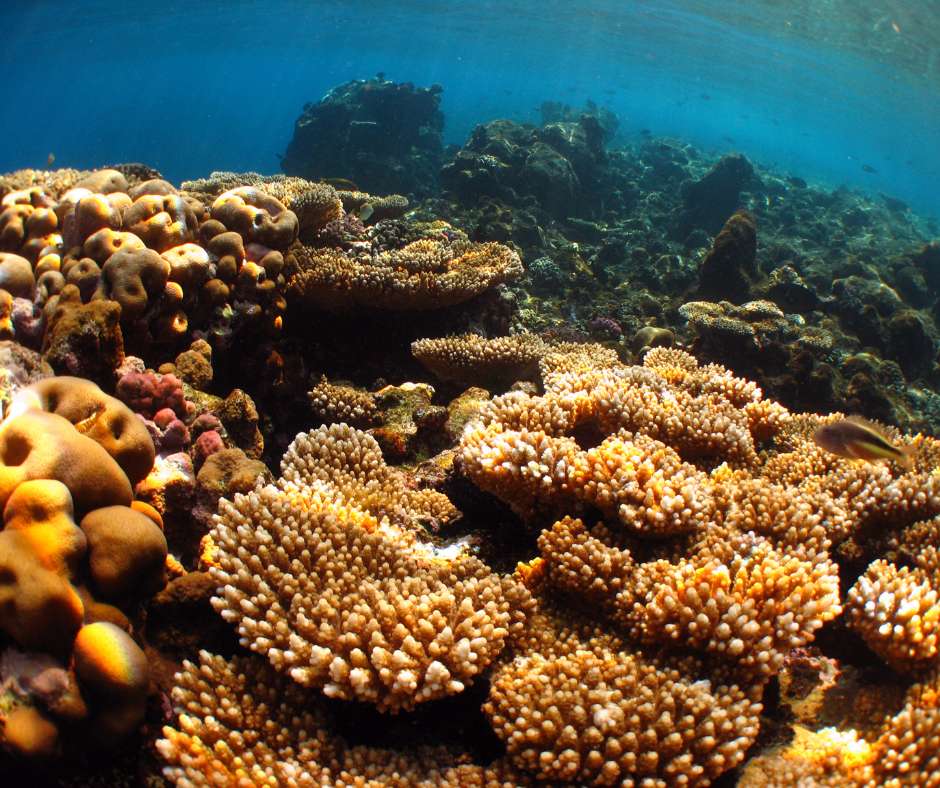
Coral reef food webs are more siloed and vulnerable than previously understood
A study led by GSO’s Kelton McMahon found that food webs on tropical reefs are more fragile than we once thought. Instead of being part of a highly connected system where species can easily switch food sources, many reef creatures in these incredibly biodiverse ecosystems rely on surprisingly narrow, specialized energy pathways that link specific species to distinct sources of primary production.
Read the story Read in ECO RI News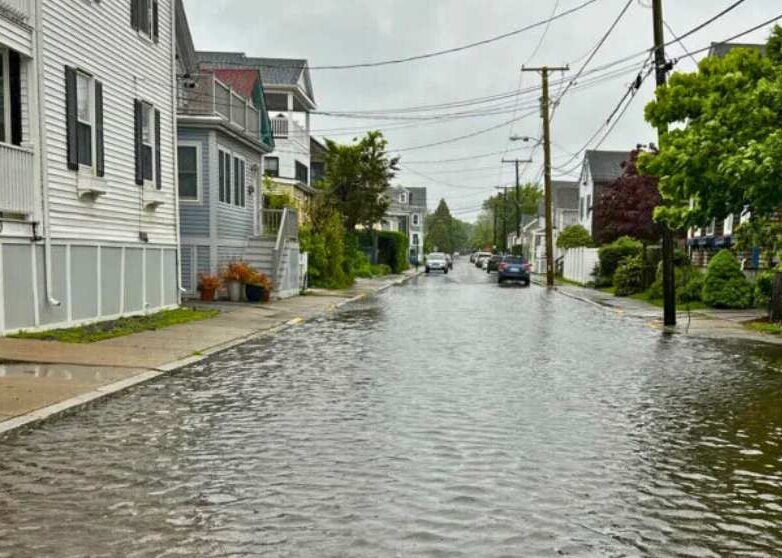
Critical weather-related tools continue with state funding
The URI-developed RI-CHAMP, STORMTOOLS, and MyCoast tools received state funding in July that has enabled the university to continue leading in coastal safety analysis, early warning systems, and resilience.
read the story
Studying sediments to discover how freshened water ended up beneath the seafloor
GSO’s Becky Robinson was one of three chief scientists leading the New England Shelf Hydrogeology expedition, a 74-day mission with 41 researchers from around the world. The team returned in August with an unprecedented collection of samples—718 cores measuring over 871 meters and 50,000 liters of groundwater—to be analyzed in laboratories across the globe, including here at the Bay Campus!
read the storyWow, what a year! Thank you for being part of the journey—here’s to more ocean science, discoveries, and exciting moments in 2026. Stay tuned!