
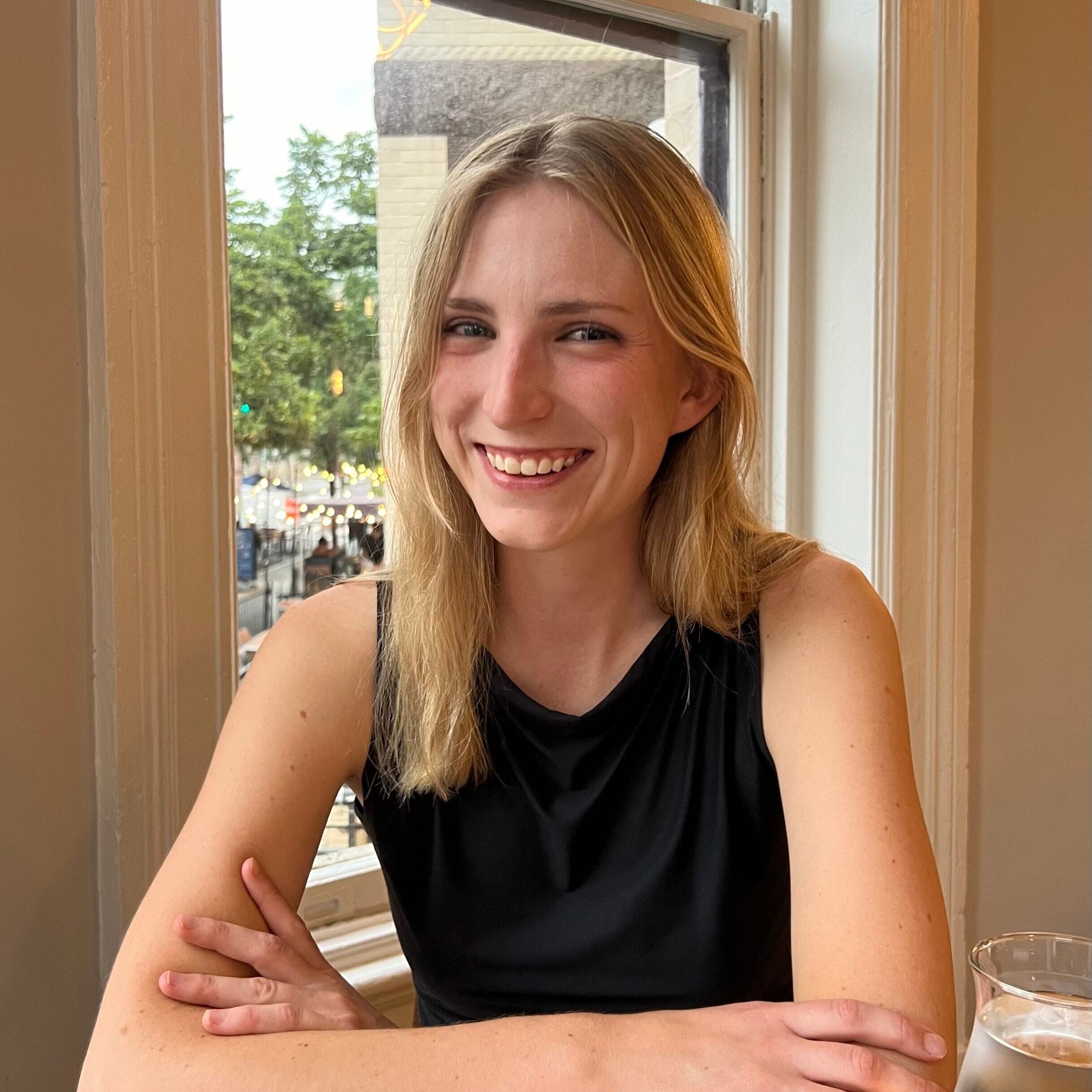
Phytoplankton research provides once-in-a-lifetime opportunity
May 7, 2026
Tiny photosynthetic organisms in the ocean called phytoplankton play a crucial role in the global carbon cycle and influence Earth’s climate. Margaret Bernish is fascinated by them.
“I love phytoplankton because they’re so important to the global cycling of nutrients and energy despite being so small,” said Bernish, who will earn her doctorate in oceanography from the University of Rhode Island’s Graduate School of Oceanography this spring after applying mathematical models to determine how the physiology of phytoplankton is affected by climate change.
“Studying phytoplankton is one of the ways in which we can measure and observe the response of the ocean to different perturbations,” she said. “I used a variety of mathematical models to study phytoplankton physiology and ecology.”

One of Bernish’s proudest achievements at URI was developing a model of phytoplankton global physiology.
“I believe it will be a good tool for climate scientists and microbial ecologists to evaluate and predict how the ocean will respond to different climate scenarios, such as increased surface temperatures, decreased dissolved oxygen concentrations, etc.,” said Bernish.
The Cincinnati, Ohio, native has conducted her research in Assistant Professor Keisuke Inomura’s Quantitative Microbiology Group.
“Maggie has sophisticated coding skills, allowing her to quickly and accurately revise codes and develop mechanistic modeling,” said Inomura. “With her skills and independent thinking, she brought true innovation to the group.”
As much as Bernish thrived in the lab, one reason she pursued her Ph.D. at URI was the opportunities to conduct field work in the ocean.
“I heard about the collaborative spirit of the faculty and students, but I was especially excited by the requirement of participating in a research cruise,” said Bernish.
One of the requirements for doctoral students is to go on a research cruise that is at least five days at sea. Bernish went on two five-day trips, one in 2025 and one earlier in 2024, in which she joined scientists who were working on long-term ecological research on the Northeast U.S. Shelf. Bernish assisted in phytoplankton sampling and incubations, measured phytoplankton fluorescence, and conducted nutrient limitation experiments.
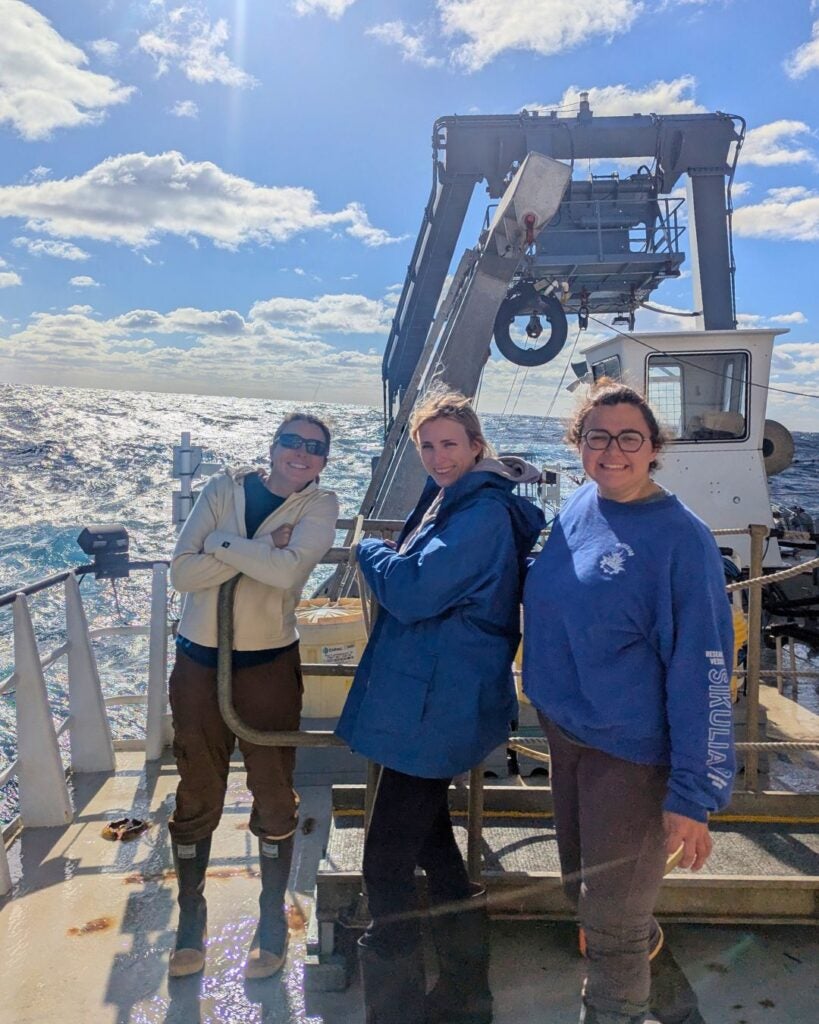
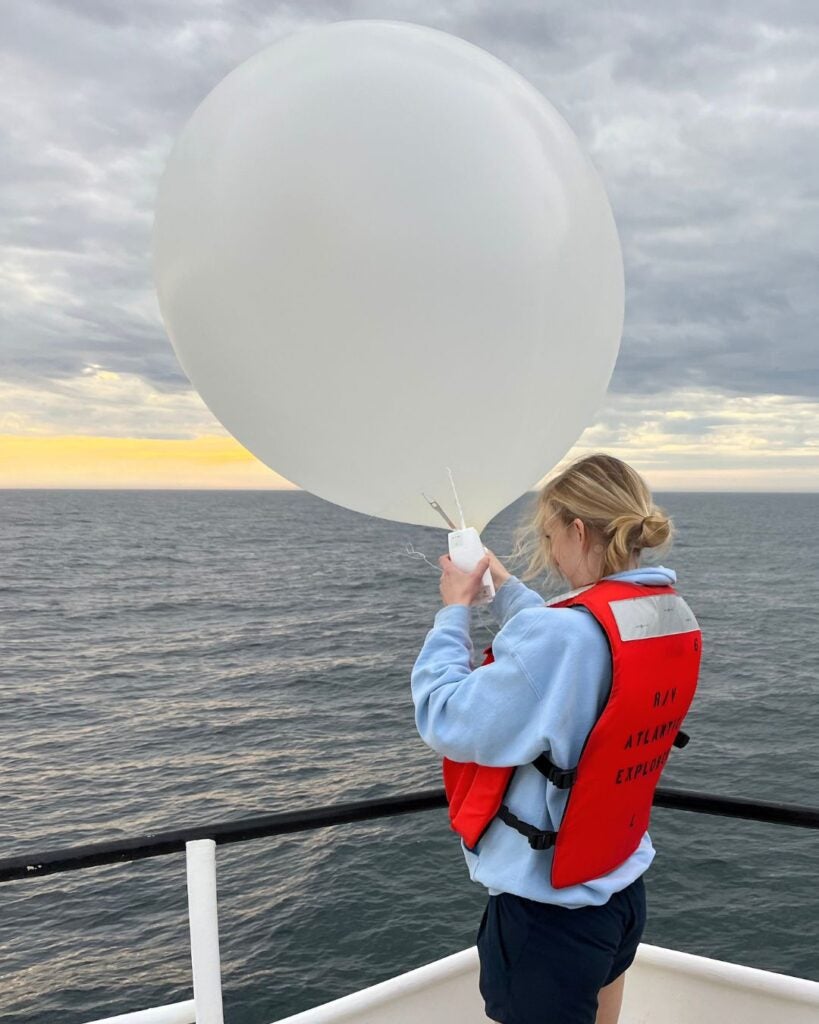
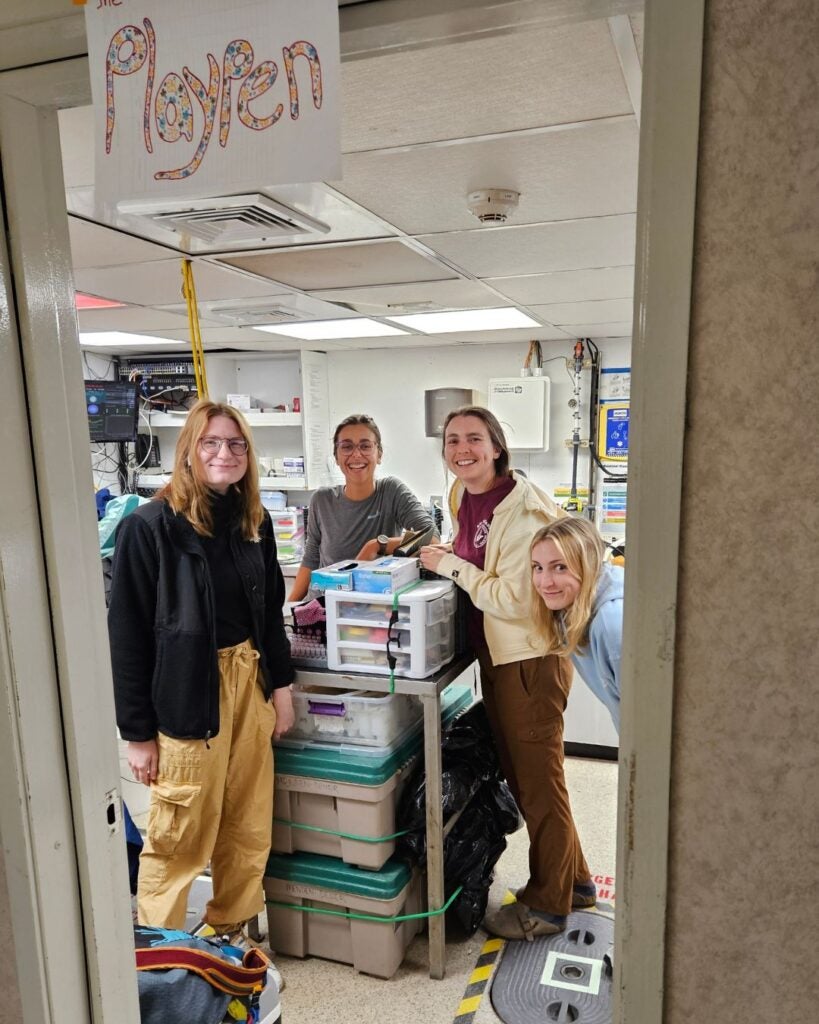
Another highlight of Bernish’s Ph.D. studies was the opportunity to present her research on “Modeling the Coexistence of Two Marine Picocyanobacteria Under Changing Nitrogen Availability” at an oceanography conference in Xiamen, China, in 2025.
“Presenting at that conference was truly a once in a lifetime opportunity,” said Bernish.
While Bernish’s short-term goal is to publish her research on phytoplankton physiology and community composition under different climate scenarios, her long-term objective is to become a professor of biological oceanography.
“I want to develop a lab group that operates at the intersection of modelling and empirical work, and I want my research to be focused on how these two very different facets of phytoplankton research can better supplement each other,” said Bernish.
Another important goal for Bernish is to help young people from underrepresented communities gain skills and access to greater opportunities.
“A large barrier for entry into marine and earth system science is learning how to code,” said Bernish. “I want to develop a program to help lower that barrier where adolescents in underserved communities can learn to use scientific programming and coding to answer questions about the world around them.”
Bernish’s pursuit of scientific discovery has led to many memorable and beneficial experiences. Someday she’ll be able to help others realize their educational and scientific aspirations.