
Across the Narragansett Bay Campus, scientists and artists are building work that reaches people a journal article never will. Along the way, it is changing the scientists, too.
By Amirali Momeni, URI Ph.D. candidate
On a weekday afternoon in Studio Blue, a physical oceanographer stopped in front of an image she could not place. It showed a diatom, one of the single-celled algae that drift through Narragansett Bay by the millions. She is an oceanographer herself, but she had simply never looked at this part of the ocean. “I didn’t know that they looked like that,” she said, and started asking questions.
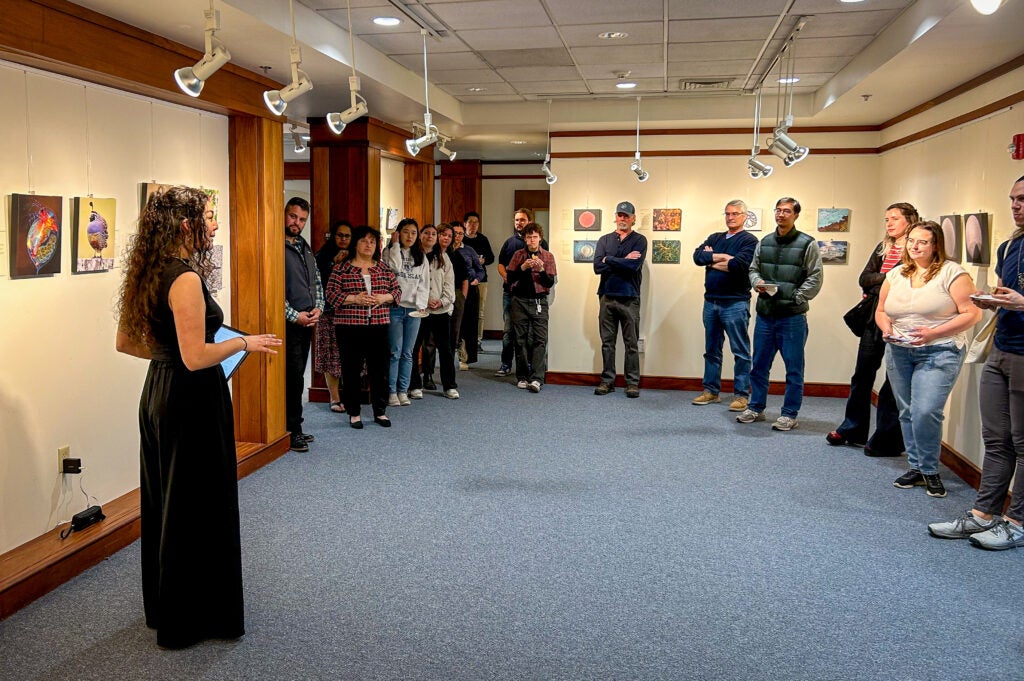
The image was one of dozens curated by Alyssa Tsukada, a Ph.D. student at the Graduate School of Oceanography who spends most days on the water and at a microscope. Her research feeds the Narragansett Bay Plankton Time Series, one of the longest continuous plankton records anywhere, running since 1957. She is also, this season, the artist on the wall. Her exhibition, The Little Things: Exploring Nature’s Mirrored Microscopic Morphologies, is the first at Studio Blue to be curated solo by a student.
That overlap is the point. Tsukada is a scientist who makes art and, separately, a scientist working with an artist. She sits in the middle of something that has been growing quietly on the Bay Campus: a set of collaborations between scientists, students, and artists who are convinced that creative practice can do real work for ocean science. It does two things at once: it pulls in people who would never open a journal, and it quietly changes how the scientists see their own research.
A hand, not a lecture
Tsukada is direct about why a gallery matters. Scientific journals, she points out, are written by scientists for scientists, often without so much as a plain-language summary. The public rarely reads them, and the field can carry an air of exclusivity that quietly tells outsiders this is not for you. An image on a wall says the opposite. She describes it as an invitation, a way of extending a hand to people who assumed the work was closed to them.
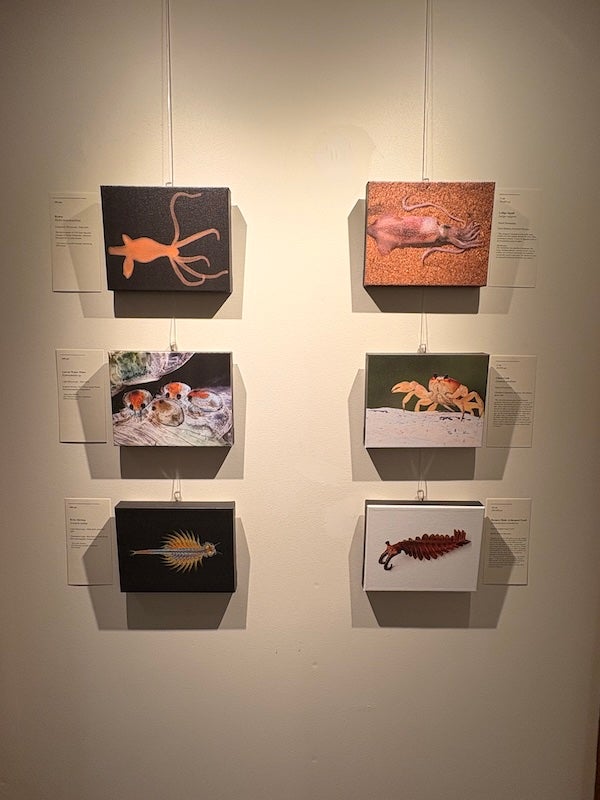
She has watched that invitation land in real time. People stop, and they react. A magnified weevil, set beside an anteater it strangely resembles, makes almost everyone flinch a little. “I have not had a single person not go ‘ooh,'” she says.
That startle is part of the point. Any response, even an uneasy one, means someone is paying attention. Other pairings she chose for pure pleasure. A water flea sits beside a quail because the patterning on the flea’s eggs reminded her of the feathers on the bird’s belly, an image she had loved for years and finally had a reason to use. A fish otolith hangs near a set of tree rings, alike in how they show the physical markings of the passage of time.
The show grew out of a science communication workshop and a coffee-table-book idea Tsukada had shelved. When she saw the empty Studio Blue space, she asked whether she could use it, heard there was no funding, and nearly stopped there. Her advisor and the Studio Blue committee pointed her toward an alumni grant instead. She applied, got it, and the show went up. Her advice to anyone sitting on a creative idea is to ask out loud. “It’s very likely they’ll be just as excited about it as you are.”
Studio Blue, and a network that knows each other
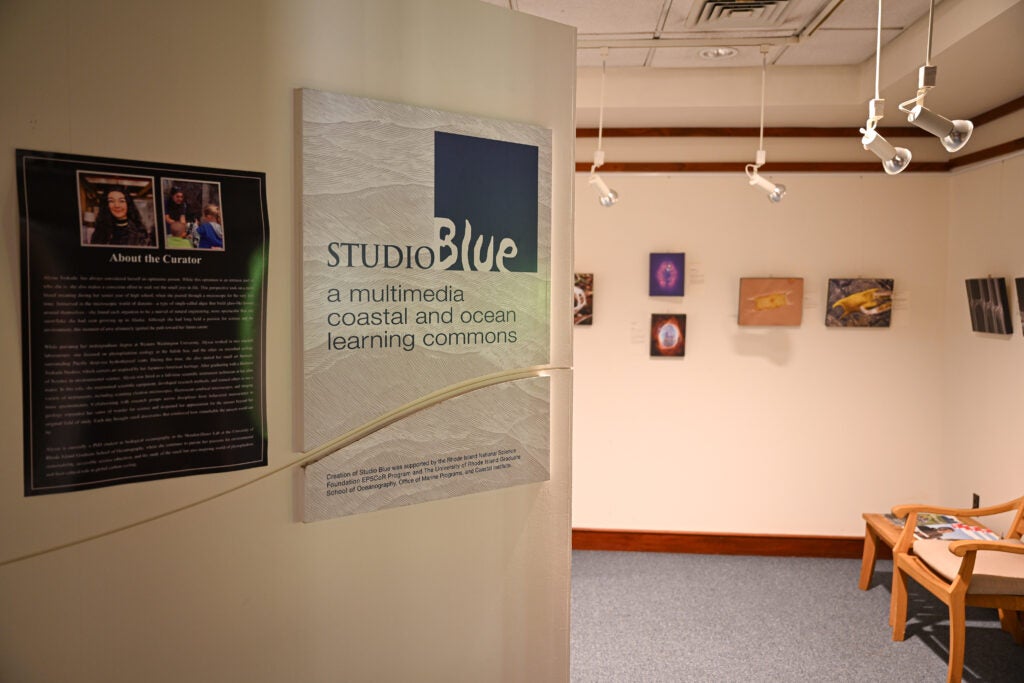
Studio Blue, in the Coastal Institute Building, is run by a committee of volunteers from across URI’s ocean and coastal community. It works both as a gallery and a space people move through on the way to somewhere else: students headed to the labs, faculty on their way to class, visitors in for a lecture, and art lovers who came for the show itself. The Little Things runs through August 25.
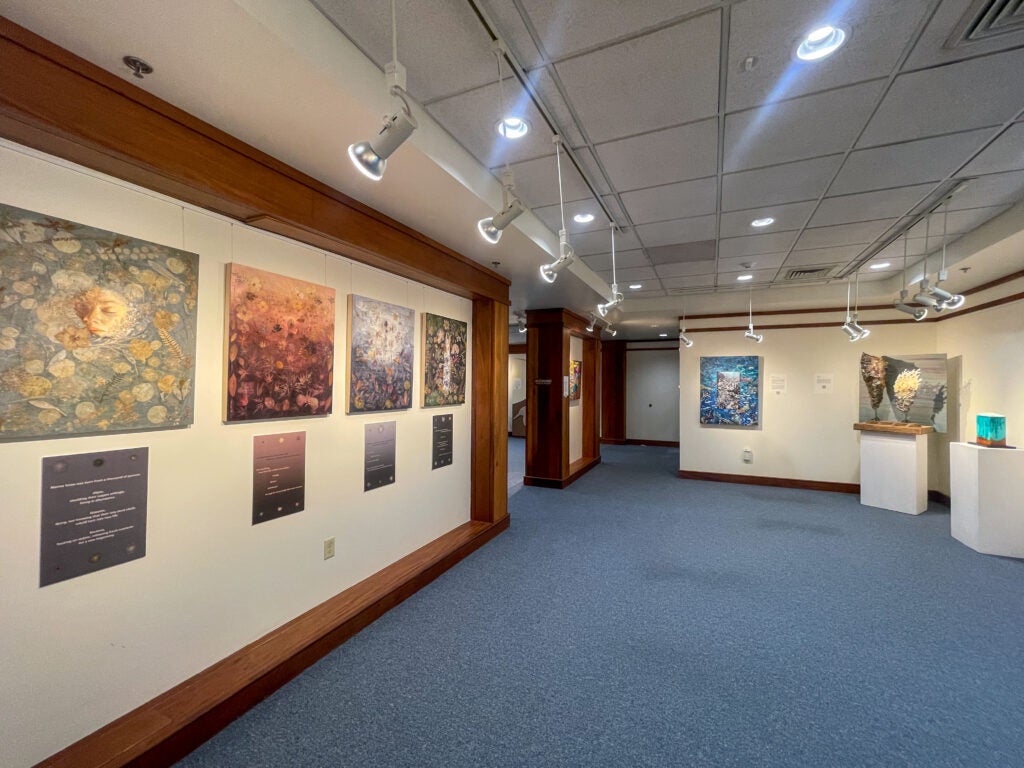
What stands out, talking to the people behind these projects, is how closely they follow one another’s work. Georgia Rhodes, who runs the Vis-a-thon program at the Rhode Island School of Design (RISD), lights up at the mention of Tsukada’s show and says she loves it. Ellen Matesanz, who curates The Synergy Project for Art League Rhode Island, was thrilled by it too, and noted that Tsukada is a Synergy participant this year. “She’s bringing synergy here,” Matesanz says. These are not silos. They are a small community of people who keep turning up at each other’s openings.
Synergy: when the artist changes, too
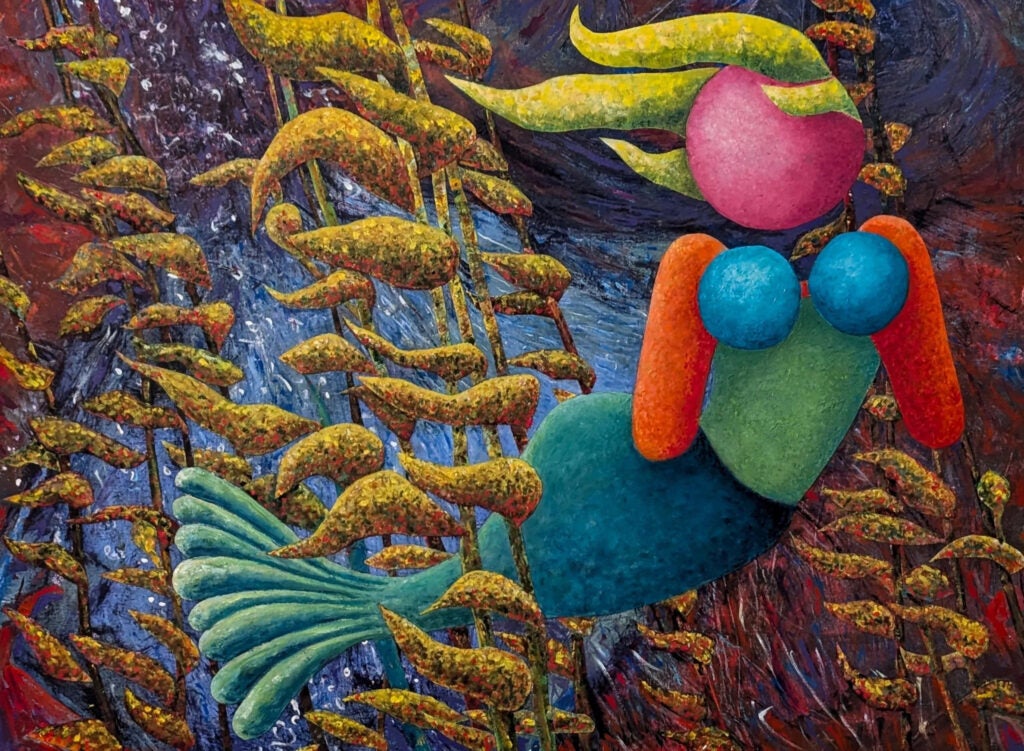
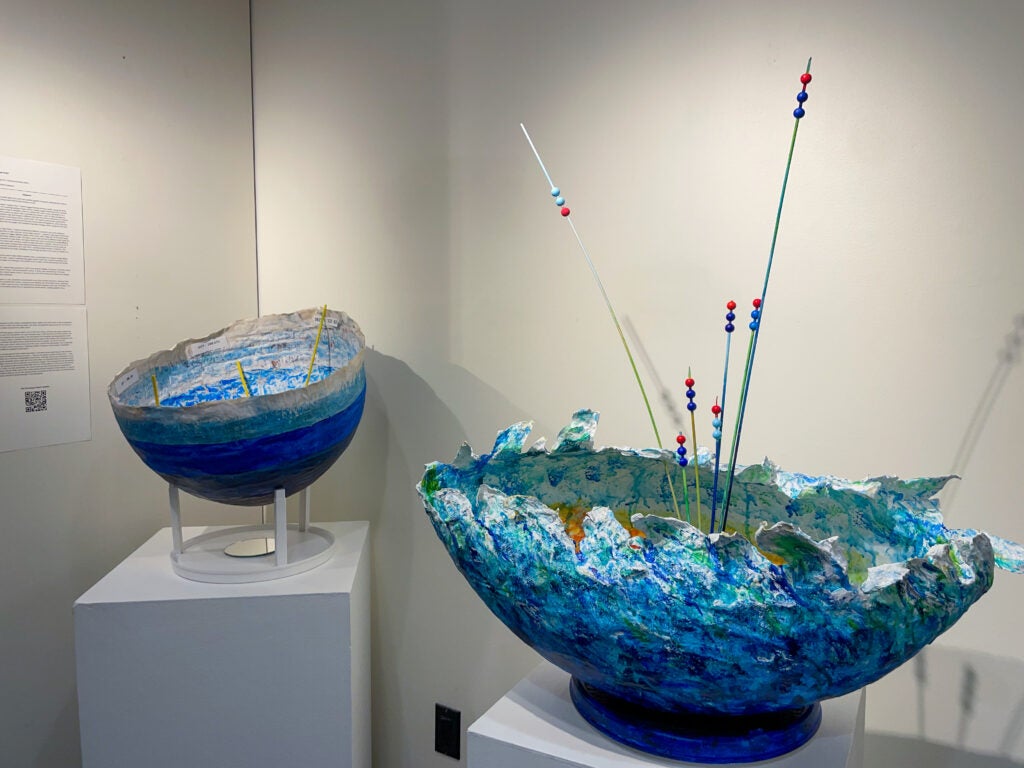
The Synergy Project pairs artists with scientists from URI and the Woods Hole Oceanographic Institution, who collaborate to transform a complex data set or research finding into an engaging art piece for the public, then exhibits the results. It descends from a program started in 2012 and revived by Art League RI in 2020. Matesanz runs it as a volunteer. “This is my passion project,” she says. “I don’t get paid. I just love doing it.”
Her own path explains some of that conviction. She majored in art, then spent years managing basic science labs at Brown and directing a neurosurgery foundation. Eventually she stopped seeing art and science as opposites. A book of stained cellular images, beautiful and unsettling at once, convinced her the two could share a frame. She calls the shift a kind of personal renaissance, the moment she realized, as she says, “this can happen.”
Matesanz is clear-eyed about what art adds. A paper asks you to work. You have to read it, decode it, and care enough to start. A piece of art gets there faster. “It sparks an emotional response,” she says.
People respond to color and shape and form before they understand anything, and that visceral pull is what draws them into the science underneath. The word she keeps returning to is storytelling.
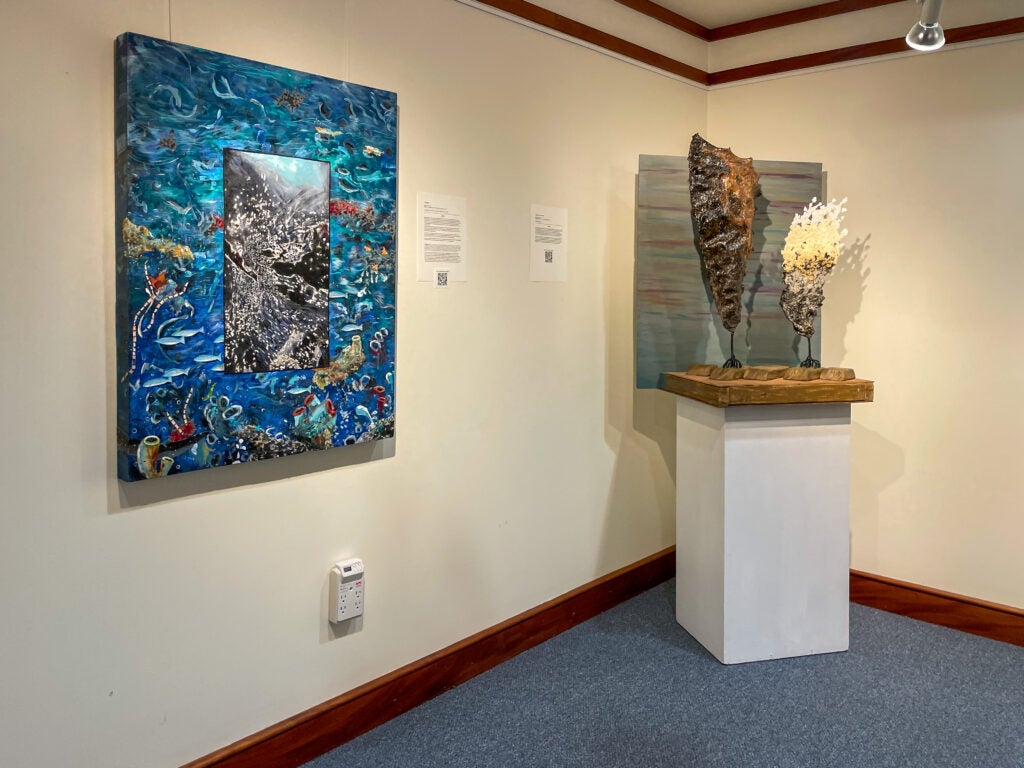
Matesanz tells the story of a professional photographer paired with physical oceanographers who study marine heat waves. The photographer had spent her career shooting flowers and plants against dark backgrounds. To make this work she had to learn the science, then abandon her medium entirely. She built the heat waves out of fabric, suspended on wire, painted with the scientists’ own data and the sea life it described. The piece has since traveled to venues, including the New Bedford Whaling Museum.
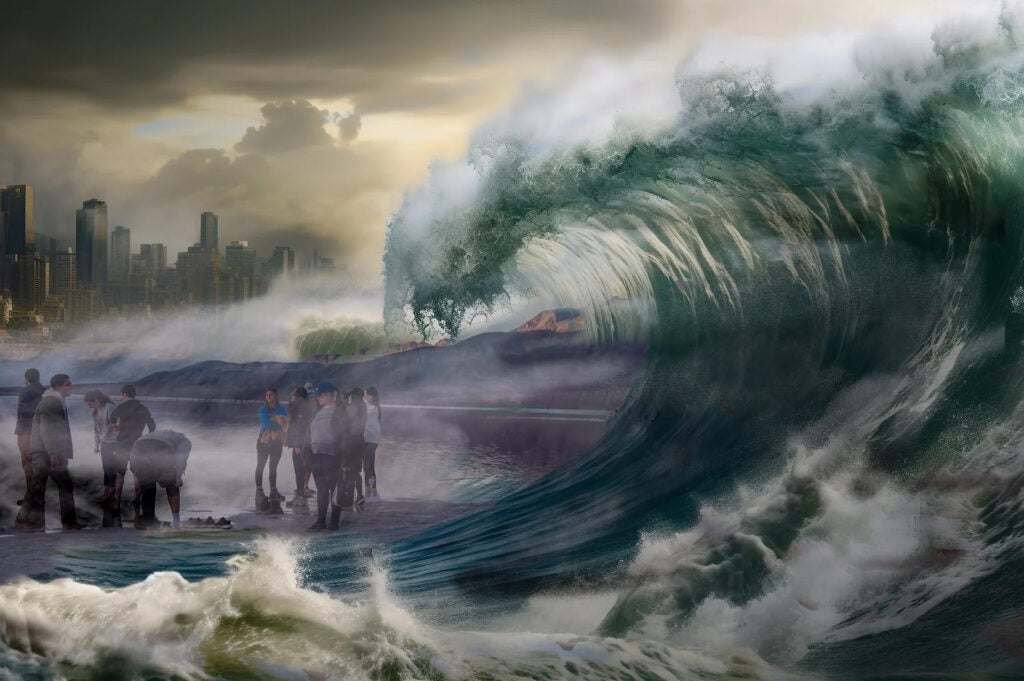
The deeper surprise, though, is what happens to the scientists. One senior researcher told Matesanz that she had not expected much to come of the collaboration, and that afterward her whole approach to her own science had shifted, opening her eyes to things she had not seen before.
Getting the right people together is its own craft. The original program ran on “speed dating,” with artists and scientists rotating through conversations until a spark caught. Now it runs on slide decks and breakout rooms: each side reviews the other’s work, then talks in small groups, then sends Matesanz a list of who they want to work with. When the lists do not align, she works the problem by hand. One unmatched artist found his partner only after she steered him toward two new faculty in the URI College of Pharmacy, and the pair turned out to share personal history with the science. The collaborations outlast the shows. “They’ll be friends forever,” she says.
Vis-a-thon: visualization as a way of thinking
Vis-a-thon takes a faster, more experimental tack. Run out of RISD’s Edna W. Lawrence Nature Lab by Georgia Rhodes and Stewart Skylar Copeland, and supported by National Science Foundation funding through Rhode Island’s RI-NEST initiative, it pairs STEM researchers with RISD graduate artists for a hackathon-style sprint. It has drawn GSO scientists into a building full of microscopes, slow-motion cameras, and 3D scanners.
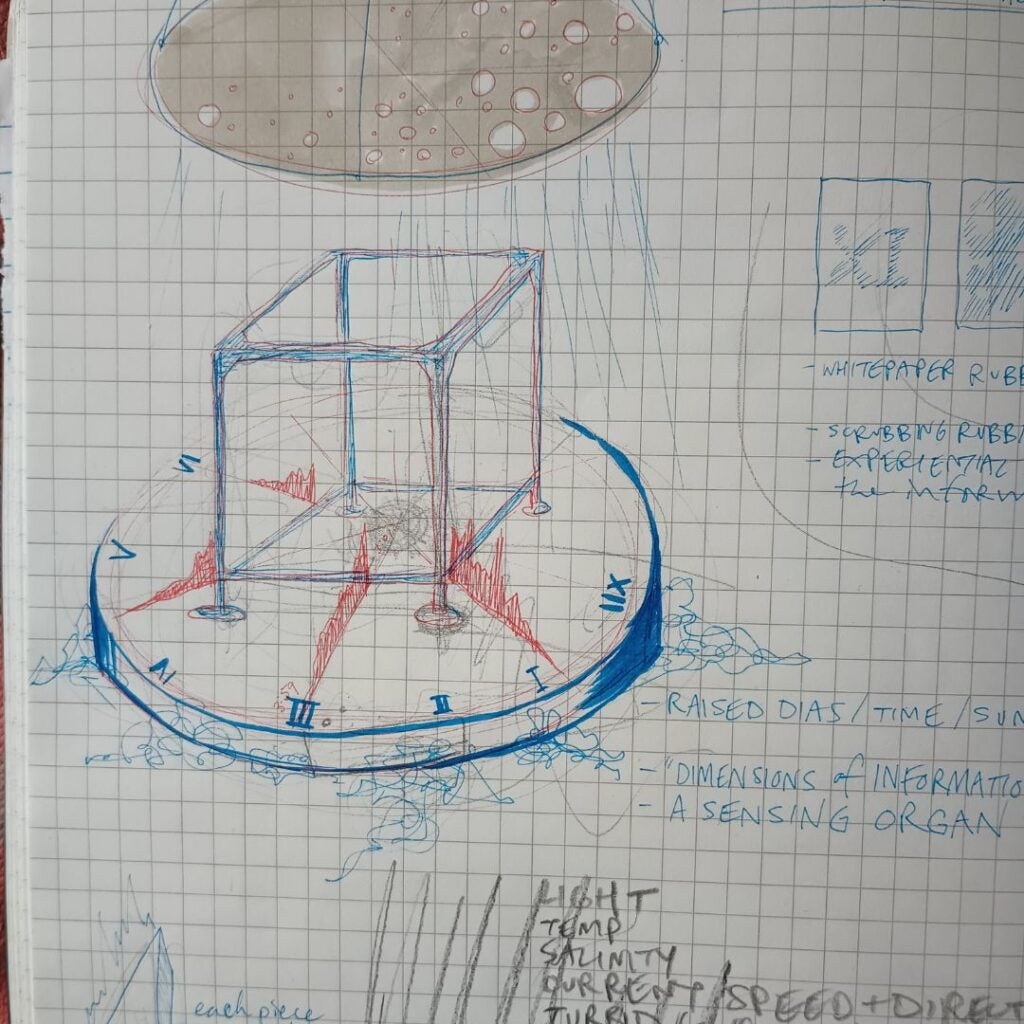
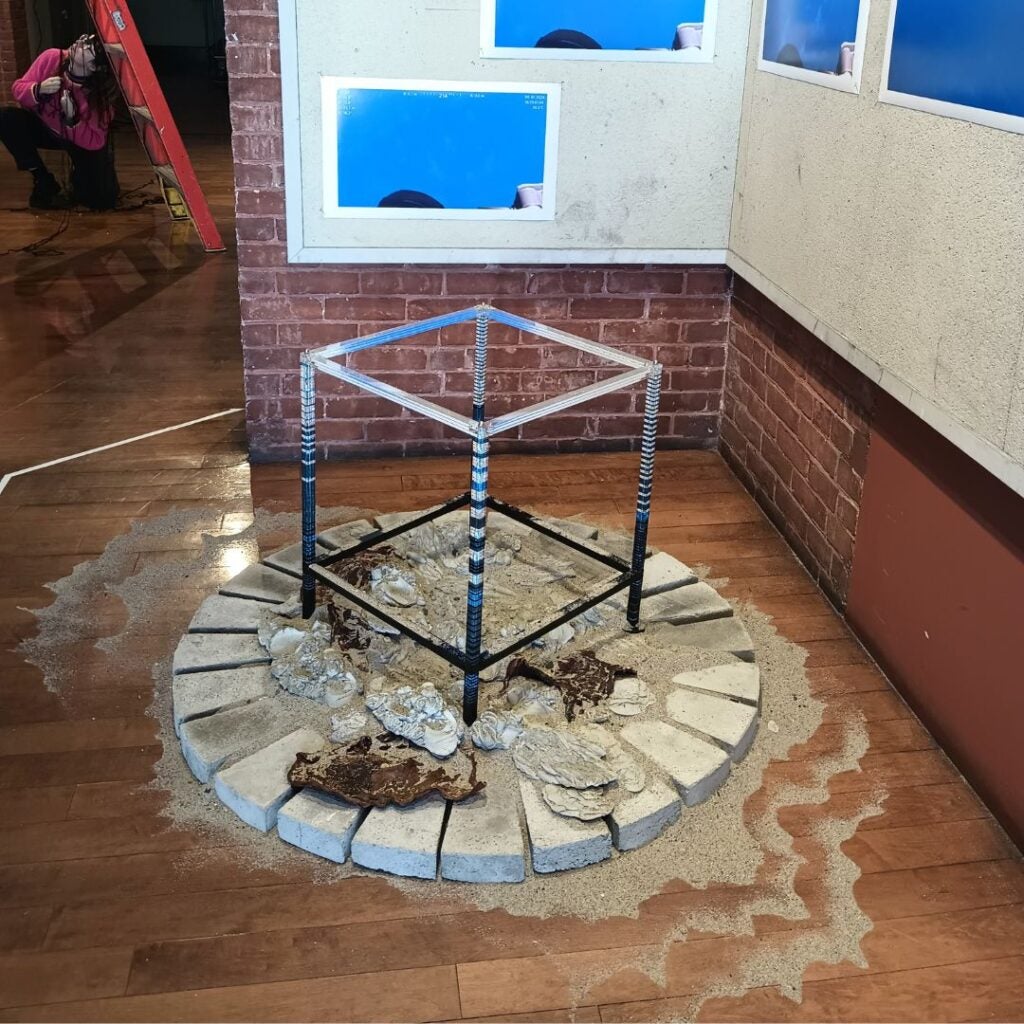
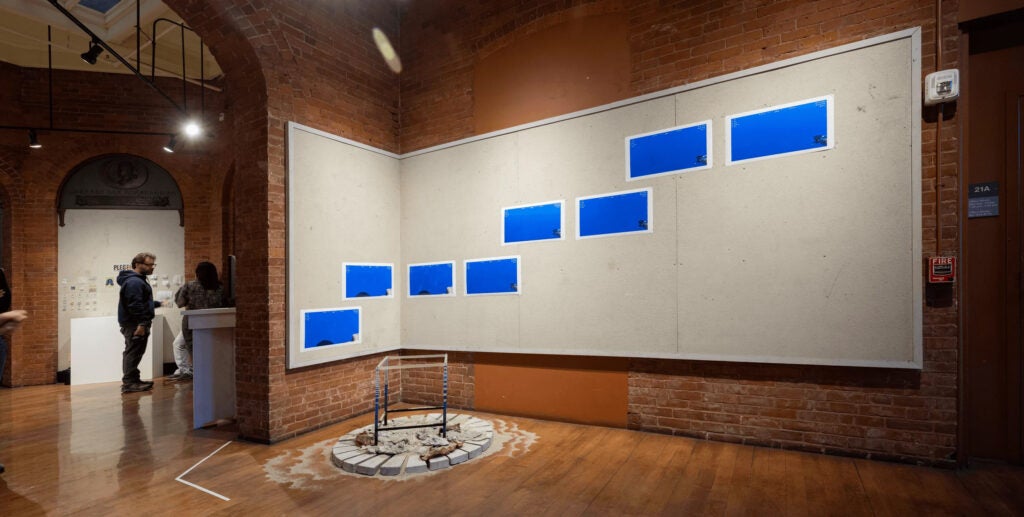
Rhodes frames visualization as more than a final step. It can be, she says, a cultural expression about what science is today and what it means to do research at all. The pairing process she calls “conceptual tetris.” She and Copeland get to know each scientist over a day-long seminar, then slot each one against a graduate artist by matching not just technical needs but ways of thinking. In one early year, a scientist describing circles and food webs landed naturally with an artist already obsessed with large bulbous shapes.
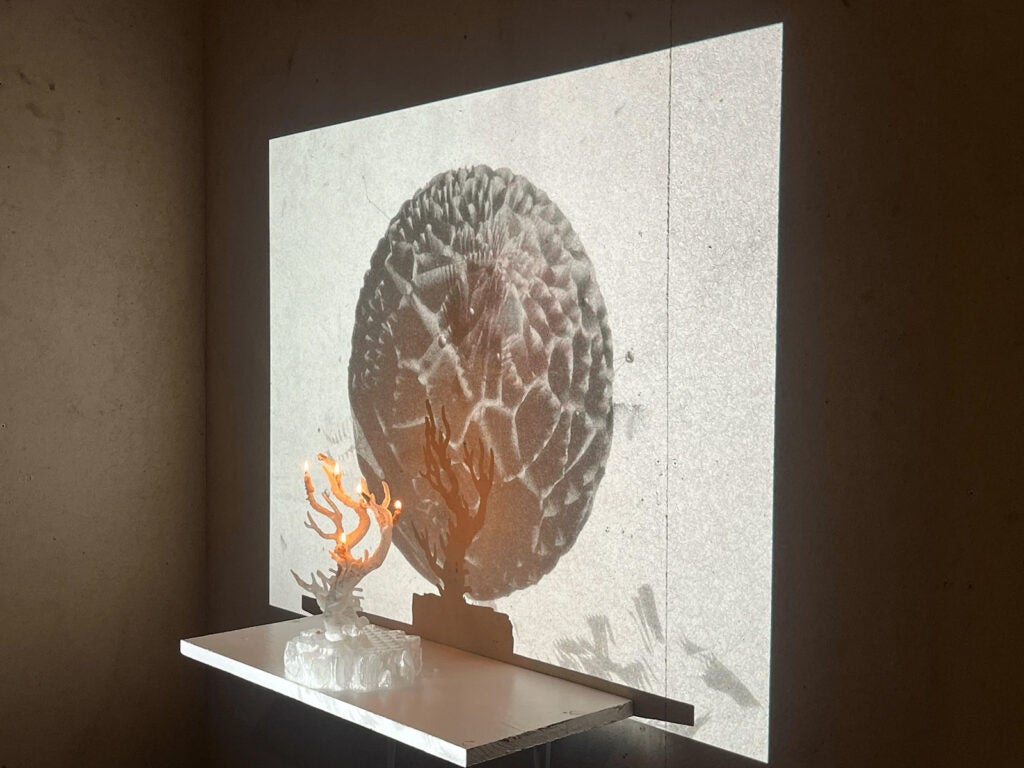
The emotional stakes can run high. Rhodes describes a project by GSO postdoctoral fellow Connor Love, who returned from a research trip to find that the corals he had planned to study were largely gone, killed by a marine heat wave. Working with a RISD student, he turned water-temperature data into sound and projected it onto a burning sculpture. At the program’s closing critique, with everyone exhausted after two days of work, Love lit the piece and spoke about what it feels like when the thing you study changes faster than you ever assumed. For Rhodes, that moment was the real work, “more profound than the creation of the art itself.”
She makes the same point Matesanz and Tsukada do, from a different angle. Art and journals reach different crowds, and the academic system keeps those crowds apart. “You’re not going to show up to your gallery and read from your journal,” she says.
The win is when a piece moves someone enough that they go looking for the science on their own. Other GSO participants felt the sprint reshape their thinking, too. One described how framing a project proposal helped her step back from the narrow chapters of her dissertation and see the whole. Another realized the art process was not so far from the scientific one: both start with a question and push toward an answer.
What comes next
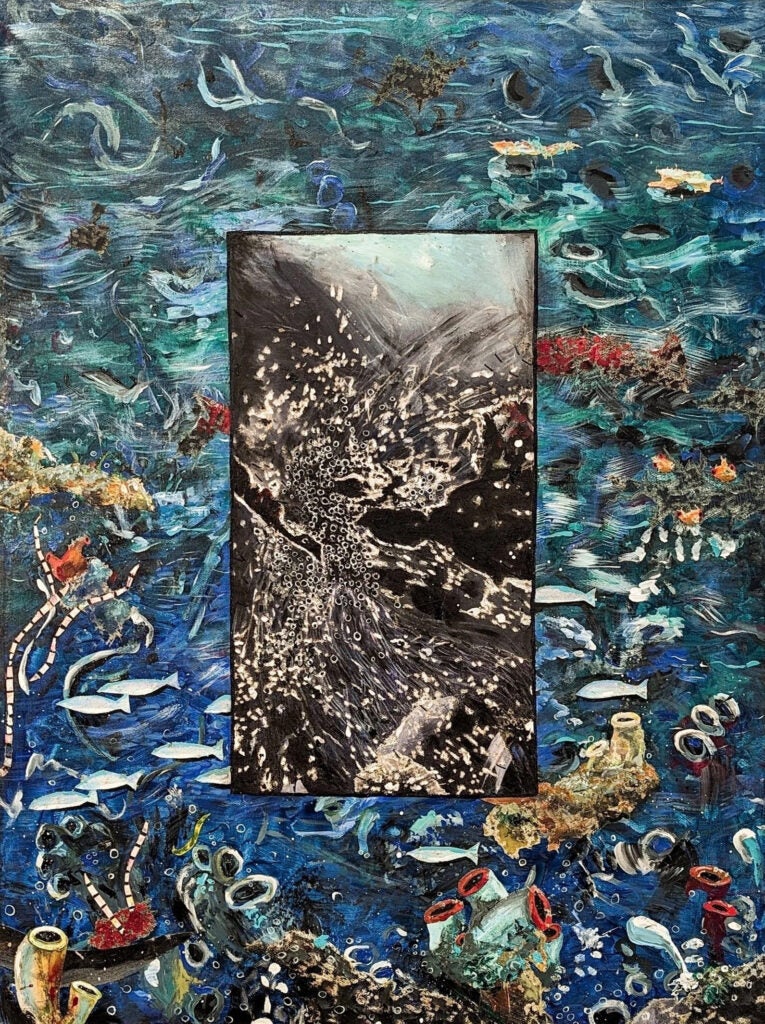
Put the three side by side and a pattern shows up. Studio Blue gives the work a home on campus. Synergy builds partnerships that often turn into friendships and last for years. Vis-a-thon throws people together for a single weekend and sees what comes of it. Different speeds, different shapes, but the same two results: they reach people who were never going to read the paper, and they send the scientist back to the lab seeing differently.
There is more on the way. The next Synergy exhibition opens at the Bay Campus in early September 2026. The Little Things stays up at Studio Blue through August 25. And the people behind these projects keep turning up at one another’s shows, which may be the surest sign that this is no longer a series of one-off experiments. It is becoming part of how science gets done here.
Tsukada, for her part, named her show after a habit of mind. She has always enjoyed the little things, and her work made the phrase literal. Her hope for visitors is simple. On a hard day, or a boring one, she wants them to remember that there is a miraculous, mostly invisible world still humming along all around them, holding everything up.
Ocean View, for the next generation of ocean stewards
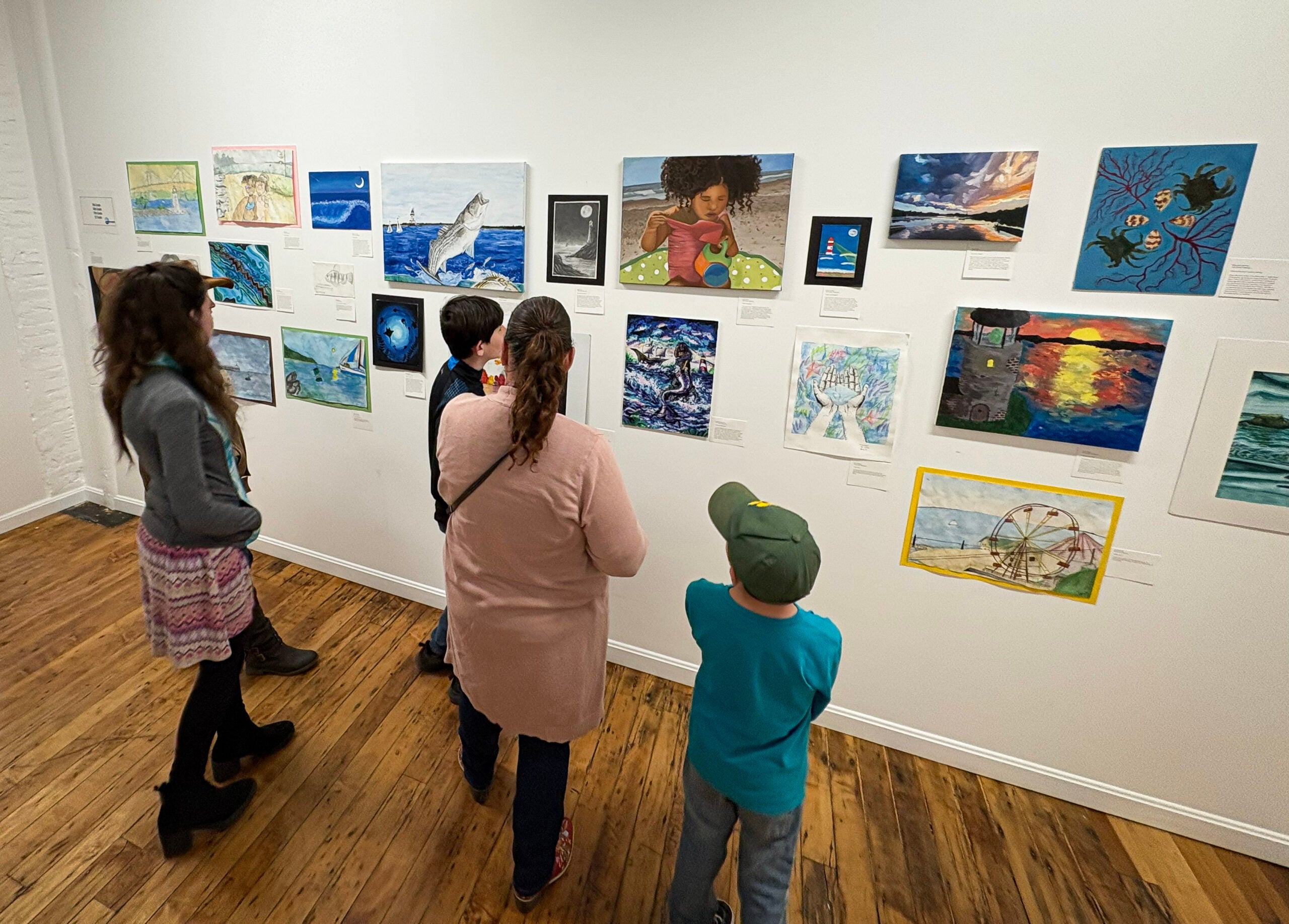
Before a Rhode Island student ever sets foot in a research lab, the GSO Public Engagement team gives them a way in through art. Ocean View is a K-12 competition and exhibition that asks young people to interpret the ocean in their own work. It began in 2021, during the pandemic, as an outlet for students stuck at home and short on hands-on science. It runs every other year, and in 2025 drew close to 300 submissions.
Andrea Gingras, who runs the program, sees it as STEAM in practice: science translated through art, with the art doing real cognitive work rather than just decorating the science. The 2025 theme asked what “The Ocean State” means to each student. Answers ranged from a watercolor jellyfish to a lobster paired—very Rhode Island—with a cup of Del’s lemonade. One high schooler dropped off a painting of a small girl at the beach. Gingras looked at the piece, then at her, and asked if it was a self-portrait. It was.
The twelve winning works hang at GSO for at least a year, where researchers and the campus’s many artists pass them every day. That, Gingras says, is part of the point: a reminder, on a campus full of scientists, that science topics can live just as easily on a gallery wall. The next round is planned for 2027.’