
Partnering with local fishermen to collect data on commercially important American Lobster and Jonah Crab
December 4, 2025
Long before the sun rises, GSO graduate students set out from Point Judith, R.I., bound for the Revolution and South Fork wind sites. Twice a month, from May through November, they haul ventless traps from 10 stations at each site aboard commercial lobster vessels. In doing so, they support the Commercial Fisheries Research Foundation’s (CFRF), helping collect data that strengthens collaboration between scientists and Rhode Island’s commercial fishing community.
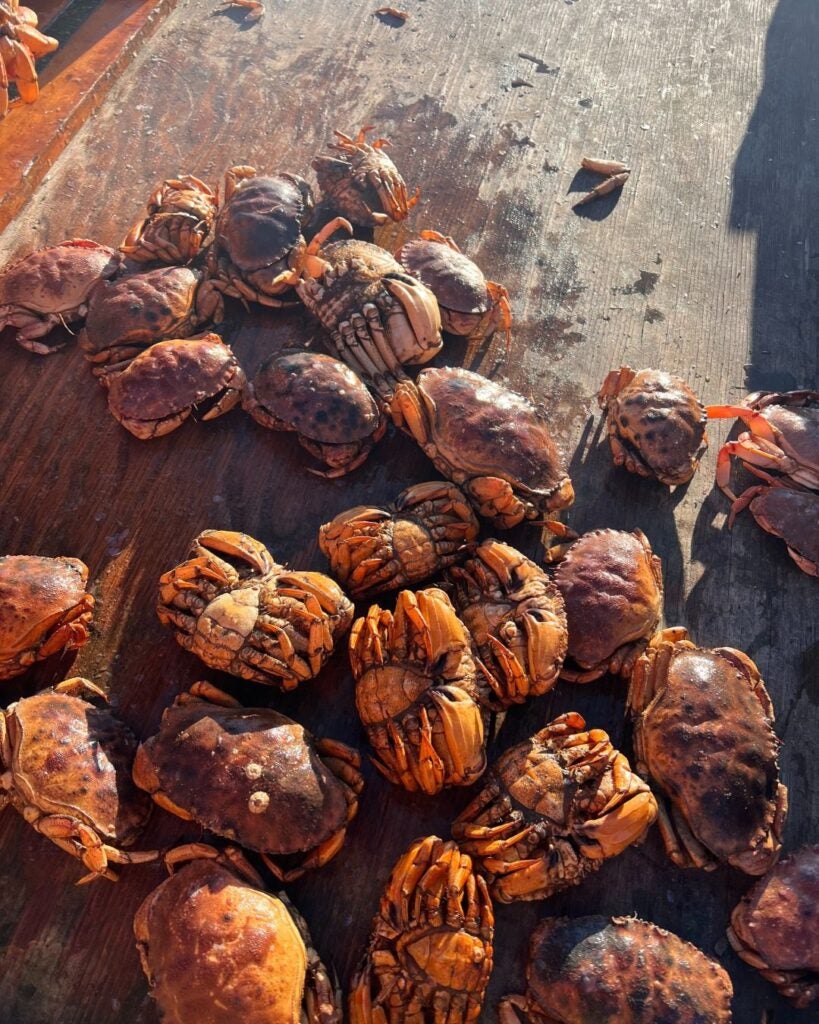
The CFRF, a nonprofit founded by local fishermen, gathers critically needed biological data on two commercially important species: American Lobster and Jonah Crab. While much of the data is collected by commercial fishermen using digital calipers and the On-Deck Data app, graduate students participate as Field Research Assistants, gaining hands-on experience while contributing to the broader dataset. Central to this effort is the Ventless Trap Monitoring Survey, a Before-After Control-Impact (BACI) study designed to assess whether detectable changes occur in the presence, abundance, or demographics of lobsters and crabs during and after offshore wind construction. The resulting data informs stock assessments and sustainable fisheries management plans in Rhode Island waters.
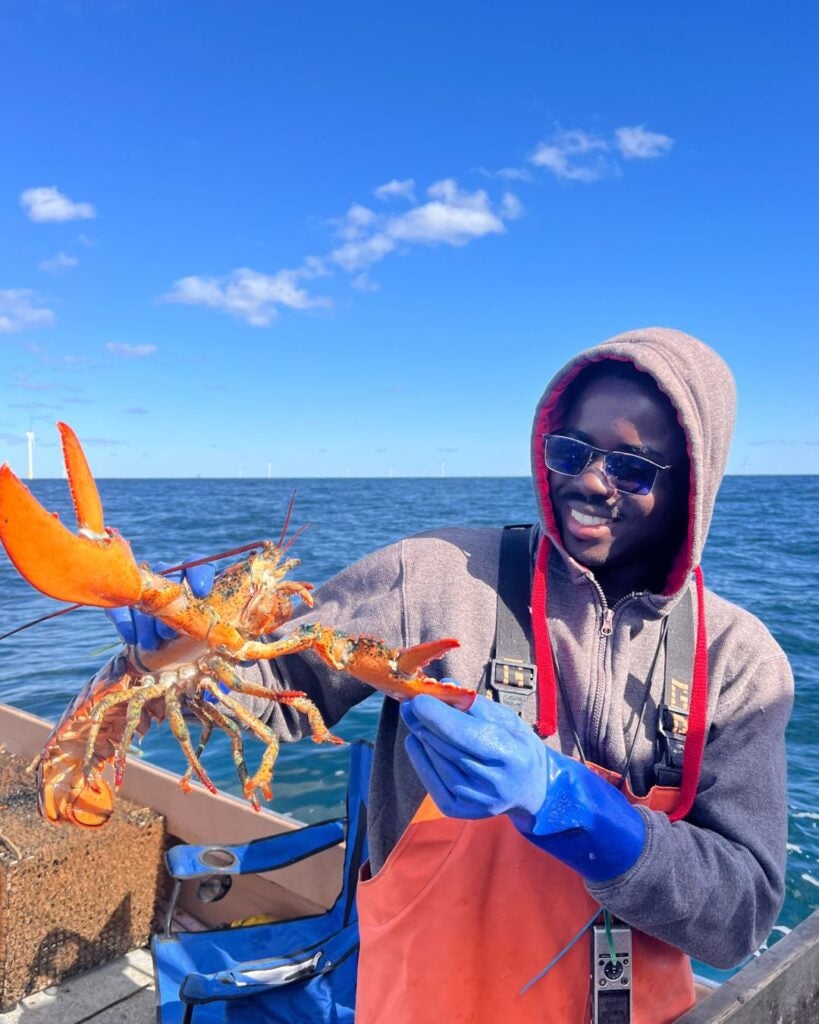
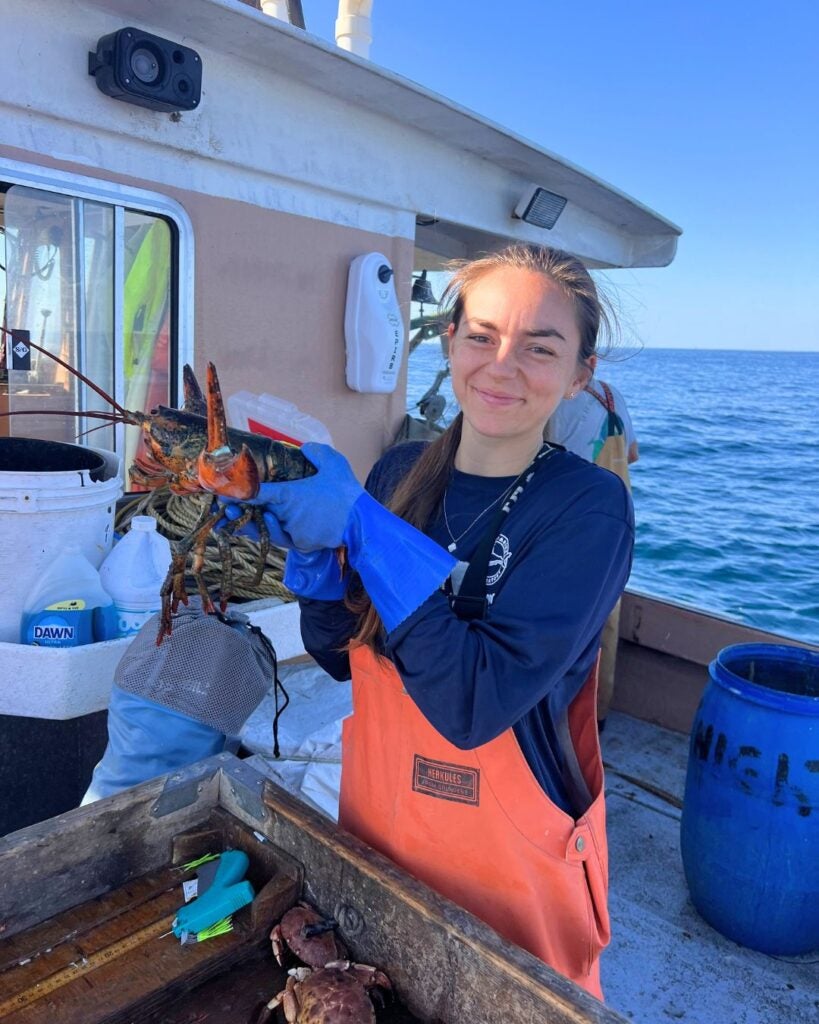
“Field days start as early as 3 a.m., in all types of weather,” said Reese Kober, a Ph.D. student in GSO’s Lewis Lab studying anthropogenic impacts on marine life. “After the typical 2.5-hour haul out to the first station, it’s several hours of sorting and measuring crustaceans and fish.”
Lobsters are tagged and measured, Jonah Crabs are sometimes brought back for further research, and other species, like black sea bass, red hake, and the occasional cod, are recorded for total length. Students work side by side with captains and first mates, who haul traps and manage operations on deck.
Emmanuel Oyewole, a Ph.D. student in GSO’s Ocean Ecogeochemistry Lab, who is supported directly by the CFRF project, also works as a Field Research Assistant. He draws on the long-term survey dataset for his research, with his first dissertation chapter using isotopic methods to study the ontogenetic migration of Jonah Crab, examining how the crabs move and grow within wind development areas and reference sites.
“Science thrives on collaboration,” said Emmanuel, who credits his marine affairs graduate training at URI for introducing him to the power of collaborative science.“I appreciate every opportunity to work closely with commercial fishers, whose knowledge deeply enriches our research.”
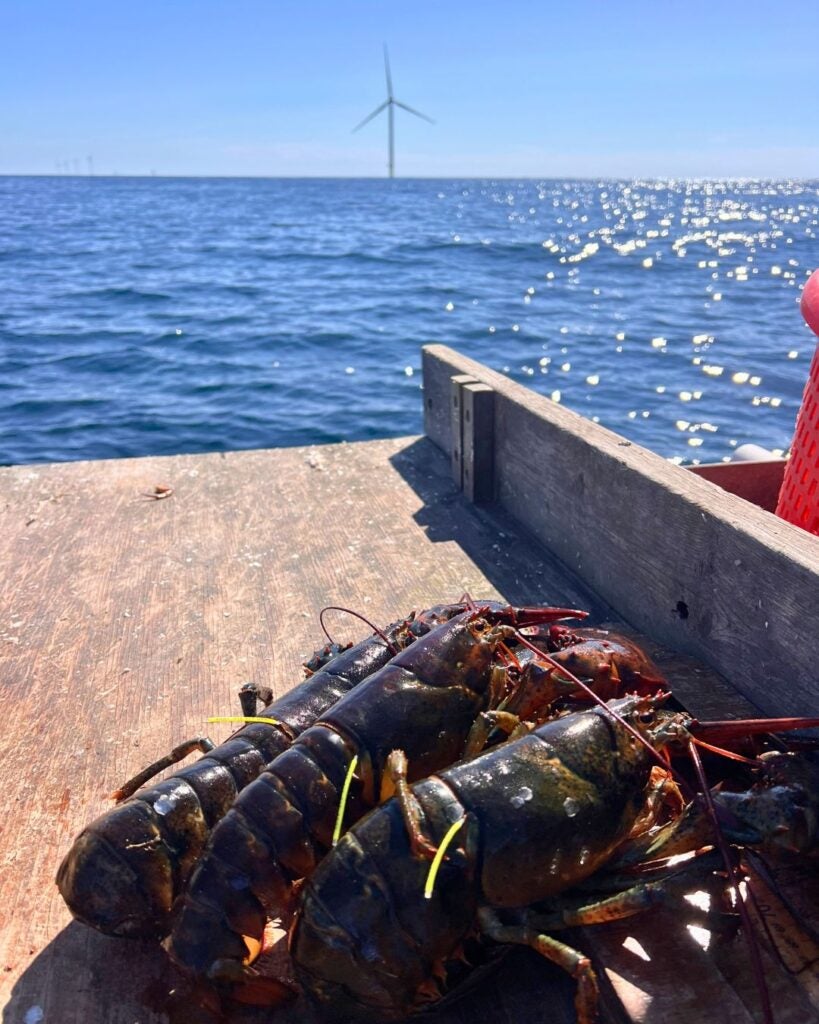
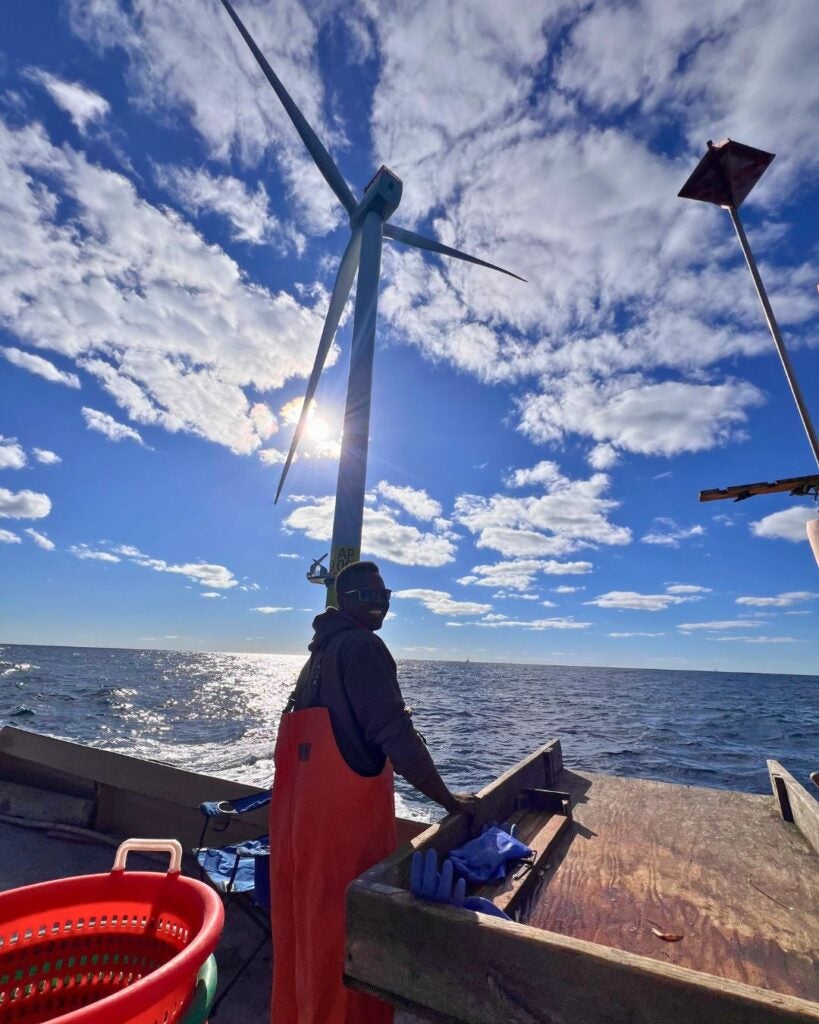
Through these offshore surveys, students gain more than technical skills. By collaborating with commercial fishermen and contributing to rigorous data collection, they help connect academic research to practical fisheries management. “Though the mornings were early and half my workday was done by the time many people are driving to work, I learned a lot about the local fisheries and made some great connections with fellow scientists and commercial fishermen,” said Reese.
Each offshore trip represents a partnership: students, CFRF, and Rhode Island’s fishermen working together to understand and steward key marine resources. For the graduate students involved, it’s an early-morning, hands-on, and often challenging experience, but one that offers a unique perspective on the intersection of science, policy, and industry at sea.