
Provides foundation for decision-making around remediation for sites previously identified by researchers as PFAS ‘hotspots’
January 26, 2025
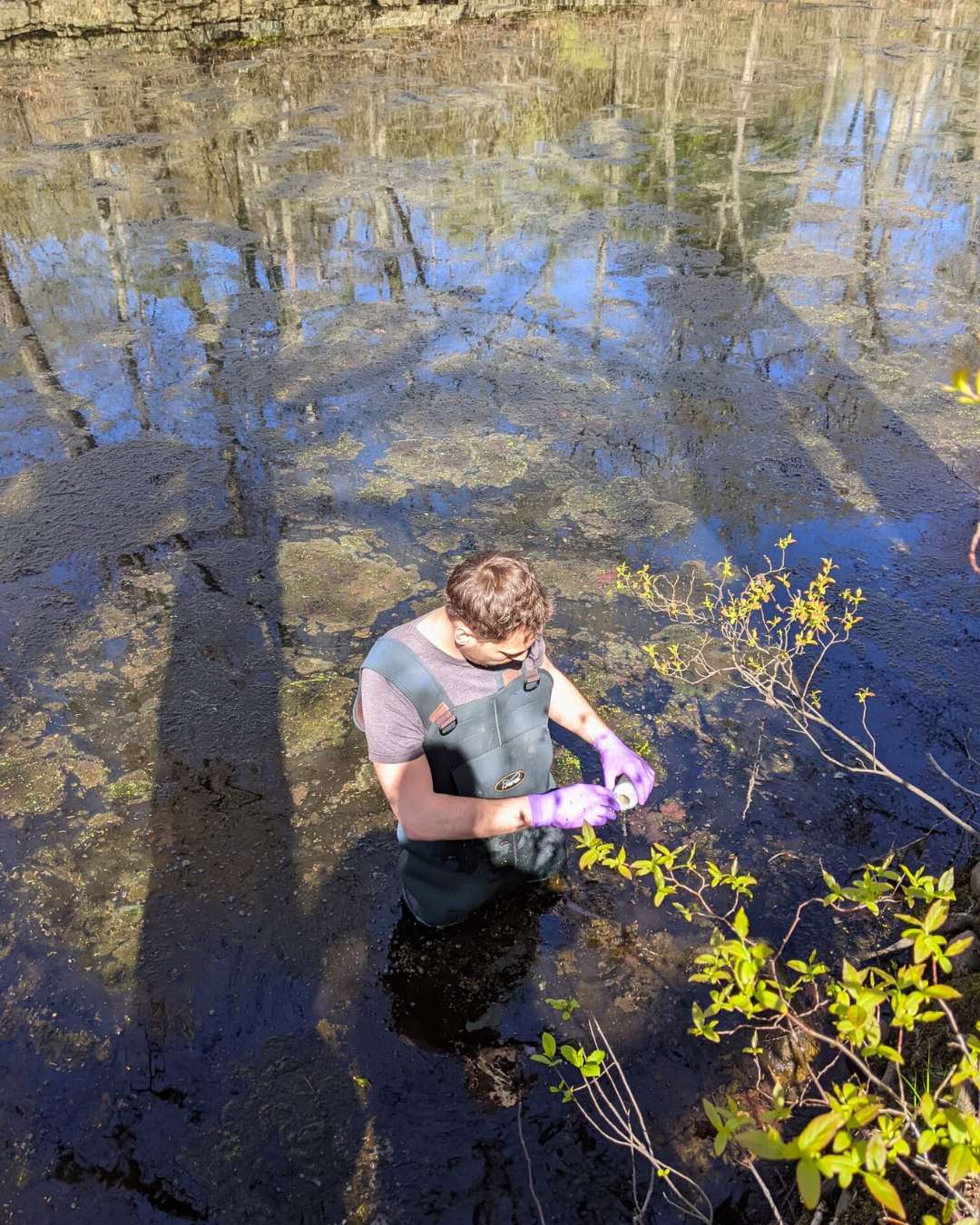
A study led by GSO alum Jarod Snook, Ph.D. ’25, identified a long-term source of PFAS, or “forever chemicals,” entering the Pawcatuck River from two historically contaminated textile mill waste retention ponds located in Bradford and Westerly, Rhode Island.
Published in the scientific journal Environmental Science & Technology Water, the study was co-authored by members of the Lohmann Lab at GSO, including Assistant Professor Jitka Becanova, Marine Research Associate Simon Vojta, and Professor Rainer Lohmann.
Using a combination of environmental sampling techniques and modeling, the team characterized how PFAS stored in pond sediments continue to migrate into, and be deposited within, the river decades after textile operations ceased.
In fact, one of the study’s key findings is that sediment at one of the ponds could continue releasing PFAS into the Pawcatuck River for more than 100 years, highlighting the long-term nature of the contamination and a problem that will persist unless steps are taken to remediate.
Environmental and human impacts
PFAS, a group of manufactured chemicals that have been used in industry and consumer products since the 1940s, do not readily break down and can build up in people, animals, and the environment over time. They can persist for decades and travel long distances, moving from inland rivers like the Pawcatuck to coastal waters and the Atlantic Ocean.
When PFAS enter a river, they can contaminate water and sediments, accumulate in aquatic organisms, disrupt local ecosystems, and pose risks to humans and wildlife through drinking water and seafood consumption. The Pawcatuck River is widely used for recreation and fishing, creating potential exposure pathways for Rhode Island residents and raising concerns about long-term health impacts.
“Rhode Islanders value their aquatic environment,” said Snook. “Keeping it free from pollution is part of that value. We hope this study sheds light on the PFAS issue affecting the Pawcatuck River so that action can be taken to remediate contamination at its source.”
Investigating the sites
The two sites were previously identified by the Lohmann Lab as PFAS “hotspots,” where concentrations in the Pawcatuck River increased sharply downstream of the retention ponds. Those findings prompted a closer investigation into how much contamination remained in the sediments and how long it might continue affecting the river.
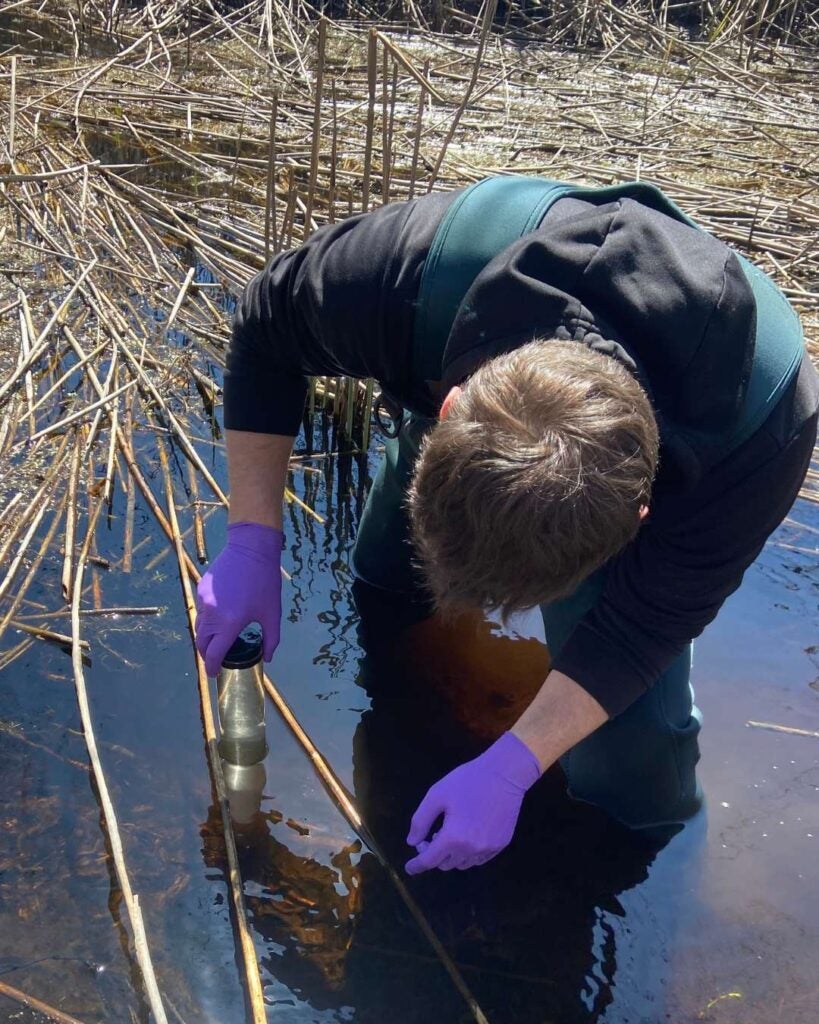
Central to the study was a passive sampling device designed by Snook during his doctoral research at the Graduate School of Oceanography, while he concurrently served as a trainee in URI’s STEEP (Sources, Transport, Exposure & Effects of PFAS) Program. The device allowed researchers to measure PFAS in the water and calculate the movement from contaminated sediments into surrounding waters over time.
By studying these well-defined and accessible freshwater sites, the team aimed not only to better understand local contamination and demonstrate a transferable approach to PFAS site characterization. With clear boundaries and well-documented histories, the sites serve as valuable case studies for PFAS-contaminated freshwater systems elsewhere in the U.S. and globally, helping inform similar investigations beyond Rhode Island.
“My hope is the results will be useful for Rhode Islanders as well as the scientific community,” said Snook. “Our method of assessing the site can be an example for many other PFAS-contaminated sites around the world.”
Supporting remediation and regulatory decision-making
Decisions about environmental remediation depend on multiple factors, but they are grounded in an understanding of both the magnitude and persistence of contamination. With that in mind, the research team prioritized producing actionable, scientifically grounded insights for regulators.
“We wanted regulators to have a foundation to start planning effective solutions,” Snook said. Additional data on contamination depth, concentration, and transport pathways could further inform future remediation planning.
As concerns about PFAS contamination grow across Rhode Island and the nation, this research provides a detailed case study in how persistent contaminants can continue to affect freshwater systems over decades. By documenting a persistent source of PFAS to the Pawcatuck River, the study offers Rhode Island regulators and communities valuable insight into potential exposure pathways and long-term remediation needs.
This story was written by Mackensie duPont Crowley, digital communications coordinator in URI’s Graduate School of Oceanography