
Required Syllabus Statements
These statements detail students’ legal rights and the university’s legal and procedural obligations. They are expected to appear on all syllabi. The language reflects legal and procedural requirements and should not be altered.
Viral Illness Precautions Statement
The University is committed to delivering its educational mission while protecting the health and safety of our community. Students who are experiencing symptoms of viral illness should NOT go to class/work. The Centers for Disease Control and Prevention (CDC) recommends that all people who are experiencing viral illness should stay home and away from others until symptoms improve and they are fever free (without medications) for 24 hours. They should take added precautions for the next 5 days.
Excused Absences
Absences due to serious illness or traumatic loss, religious observances, military service, or participation in a university sanctioned event are considered excused absences. Students are responsible for work missed during an excused absence but will not be penalized by grading or assignment/exam make-up policies. Students should notify faculty in advance of absences due to religious observance or university-sanction events, and as soon as possible for other absences See University Manual sections 8.51.11-8.51.16 for details.
Anti-Bias Syllabus Statement
We respect the rights and dignity of each individual and group. We reject prejudice and intolerance, and we work to understand differences. We believe that equity and inclusion are critical components for campus community members to thrive. If you are a target or a witness of a bias incident, you are encouraged to submit a report to the URI Bias Resource Team at www.uri.edu/brt. There you will also find people and resources to help.
Disability, Access, and Inclusion Services for Students Statement
Your access in this course is important. Please send me your Disability, Access, and Inclusion (DAI) accommodation letter early in the semester so that we have adequate time to discuss and arrange your approved academic accommodations. If you have not yet established services through DAI, please contact them to engage in a confidential conversation about the process for requesting reasonable accommodations in the classroom. DAI can be reached by calling: 401-874-2098, visiting: web.uri.edu/disability, or emailing: dai@uri.edu.
Anti-Discrimination Resources
Several offices provide support to help faculty comply with the University’s commitment to maintain an educational and working environment free from discrimination, and to uphold our collective obligation as a community to foster an inclusive, people-centered culture.
Bias, Discrimination, Harassment, and Retaliation Reporting and Resources
Several teams and offices provide support to help faculty comply with the University’s commitment to maintain an educational and working environment free from bias, discrimination, harassment, and retaliation, with the ultimate goal of upholding our collective obligation as a community to foster an inclusive, people-centered culture. Those include (1) the Bias Resource Team, which accepts and reviews bias reports for support and referral purposes; it does not function as an investigatory body; (2) the Office of Equal Opportunity accepts complaints of discrimination, harassment, and retaliation, which are investigated in accordance with the Policy on Nondiscrimination and (3) the Title IX Office accepts complaints of sex-based discrimination and harassment, which are reviewed for triaging or investigation in accordance with the Policy on Sexual Misconduct. University community members may use the University’s Rhody Report It tool to identify reporting options available to those raising allegations of bias, discrimination, harassment, and retaliation.
Office of Equal Opportunity (OEO)
The Office of Equal Opportunity (OEO) leads institutional civil rights compliance efforts and supports the belief that all individuals have a right to enjoy equal opportunity in employment and equal access to all university programs, services, and activities, without regard to their protected status. OEO’s primary focus areas include: anti-discrimination, permissible affirmative action, equal opportunity, appeals of accommodation denials, Americans with Disabilities Act (ADA) and Rehabilitation Act Compliance, education & training, and language access. OEO accepts discrimination, harassment, and retaliation complaints from faculty, staff, students, and service recipients and is available to work with departments to promote compliance with the university’s Policy on Nondiscrimination, Policy on Language Access, the University’s Language Access Plan, and applicable civil rights laws and regulations.
Title IX Office
Any student, faculty, or staff member with questions or concerns about the Policy on Sexual Misconduct or who believes that they have been the victim of sex discrimination, sexual harassment, or sexual violence, as defined under Title IX, is encouraged to contact the University’s Title IX Coordinator. Matters involving employees that do not meet the burden of proof under Title IX are forwarded to the Office of Equal Opportunity and the Office of Human Resources. The Title IX Office, in collaboration with the Dean of Students and the Office of Human Resources, provides support for and ensures enforcement of the University’s Policy on Sexual Misconduct. The Title IX Office also provides support to pregnant and parenting students, in collaboration with the Dean of Students, and to pregnant and parenting employees, in collaboration with the Office of Human Resources. Faculty with questions or concerns about potential sex-based discrimination or sex-based harassment violations, or departments seeking training, should contact the Title IX Coordinator at tixc@etal.uri.edu. More information is available at: Know Your Title IX – Sexual Violence Prevention and Response.
Providing equal access for students with disabilities
Every qualified student with a disability has the right to equal access to educational programs, services, activities, and facilities. Documentation-supported accommodations are communicated to faculty through a letter from Disability, Access and Inclusion (DAI), delivered by the student. Faculty are required by law to provide these accommodations and are encouraged to review the information on the DAI website. The Academic Testing Center is available to support testing accommodation needs. Students seeking accommodations in their roles as internal payroll employees should contact the Office of Human Resources. This includes Graduate Assistants and Graduate Research Assistants. Testing accommodations are administered by the Academic Testing Center and must be coordinated by the faculty. Visit ADA Compliance – Office of Equal Opportunity for a list of ADA Liaisons at the University of Rhode Island or to appeal the denial of an accommodation.
Disability, Access, and Inclusion Drop-In Hours
Questions about student DAI accommodations? DAI staff are available each weekday from 2-4 PM in their webex room, or call 874-2098. DAI leadership also provides special Faculty WebEx Drop-in Hours, for the first month of the Fall and Spring semesters on Mondays from 11AM-1PM and Wednesdays from 8-10AM. Please also reach out to us at dai@uri.edu if you would like to discuss a Workshop for your department or colleagues, we can work with you to tailor this to your individual needs and interests.
Digital Accessibility in Course Design
As you prepare for the start of the fall term it is important to review the accessibility of your course content, regardless of whether you are creating new content or if you are reusing previous materials. For accessibility resources including upcoming workshops, tutorials, and support visit the Course Accessibility and ADA Compliance module in the Provost’s Office: Faculty Resource Brightspace site or the Accessibility in Ed Tech website.
To include this content in your syllabus, copy and paste the QR code below or download the graphic, or download a PDF of the statements.
BACK to Top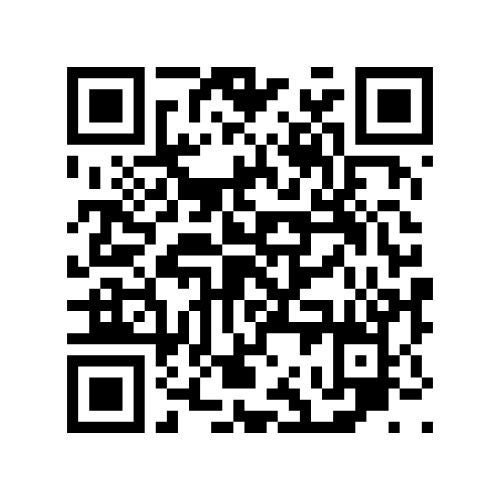
Optional Syllabus Statements
These statements detail academic support services available to students. Adding them to your syllabus is strongly encouraged and gives a student a ready place to find the support they need. Please consider including the following information in your syllabus or course site to highlight these important student resources and acknowledgements.
Copyright Notice
Approved by the Faculty Senate Executive Committee (02.23.2026) – This statement is intended for explicit use in course syllabi. Because the language is tailored to instructional settings and classroom activities, revisions or additional framing may be appropriate when adapting it for broader use with course materials or other educational resources.
Unless otherwise specified in this syllabus, the content and materials in this course are available to you as an enrolled student in this course as an integral part of the instructional activities taking place both online and when you are on campus. This content and material, online and in-class, may be protected by United States copyright law.
Unauthorized audio- or video-recording of classroom or other academic activities, including advising sessions and office hours, is prohibited. Except as permitted through an approved accommodation, students who wish to record classroom or other activities, such as advising sessions and office hours, must ask the faculty member in advance. Students with disabilities requesting permission to record classroom or other academic activities, including through the use of assistive technology, as a reasonable accommodation should contact the Disability, Access, and Inclusion (DAI) office. Any faculty-approved recording is subject to limitations on use and sharing.
Any authorized recordings or instructional material are for personal educational use only. Unauthorized duplication or further dissemination to others of any classroom materials and content, including recordings, is prohibited. This prohibition includes unauthorized uploading of any class materials into an AI/Chat-GPT-type engine online or any other external platform or database. Disseminating information and/or recordings that include the images, voices, or participation of other students without their express prior consent is specifically prohibited.
Students who engage in unauthorized recording, unauthorized use of a recording, and/or unauthorized distribution of instructional materials and/or recordings will be referred to the University Office of Community Standards.
Academic Honesty
Students are expected to be honest in all academic work. A student’s name on any written work, quiz or exam shall be regarded as assurance that the work is the result of the student’s own independent thought and study. Work should be stated in the student’s own words, and properly attributed to its source. Students have an obligation to know how to quote, paraphrase, summarize, cite, and reference the work of others with integrity. Instructors shall have the responsibility of informing students about their expectations regarding the preparation of all assignments with academic integrity…[and] shall have the explicit duty to take action in known cases of cheating or plagiarism.
Land Acknowledgement
The University of Rhode Island land acknowledgment is a statement written by members of the University community in close partnership with members of the Narragansett Tribe. The statement recognizes and pays tribute to the people who lived on and stewarded the land on which the University now resides. The statement seeks to show gratitude and respect to Indigenous people and cultures and build community with the Narragansett Nation and other Native American tribes.
University of Rhode Island Land Acknowledgment
The University of Rhode Island occupies the traditional stomping ground of the Narragansett Nation and the Niantic People. We honor and respect the enduring and continuing relationship between the Indigenous people and this land by teaching and learning more about their history and present-day communities, and by becoming stewards of the land we, too, inhabit.
Resources for Mental Health and Well-being
Your mental health and well-being is very important to us. We all experience emotional distress and personal difficulties as a normal part of life. Sometimes, these struggles can interfere with our day-to-day functioning. As your instructor, I want to support your well-being and success and encourage you to reach out if you are having difficulty with this course. However, as I am not qualified to serve as your counselor, I want to share resources available should you be experiencing mental health distress and/or personal difficulties. URI Counseling Center offers free and confidential mental health services that are not connected to your academic record in any way. For more information, please visit the Counseling Center website at https://web.uri.edu/counseling/. Counseling Services, located in Roosevelt Hall, is open Monday-Friday 8:30 am-4:30 pm. To schedule an appointment, visit us at Roosevelt Hall, Room 217.
Additional resources for you or one of your peers:
- In the event of an emergency, call 911 or Campus Police at 401-874-4910
- For non-emergency mental health appointments with the URI Counseling Center call 401-874-2288
- Health Services, 6 Butterfield Rd, 401-874-2246
- Psychological Consultation Center, located in Chafee, 401-874-4263
- Couple and Family Therapy Clinic, 2 Lower College Road, 401-874-5956
- 24/7 Support Line: TELUS, 1-844-584-1027
- For students in or seeking recovery from substance use: URI Collegiate Recovery Center , Memorial Union 1st Floor
- Call or text 988, National Suicide and Crisis Hotline
- URI Report It Page for concerns with friends or yourself: https://web.uri.edu/deanofstudents/report-it/
- Student Bereavement Guidelines: https://web.uri.edu/student-support/students/support/bereavement/bereavement-policy/
Recommended Syllabus Language for Artificial Intelligence (AI) use in Classes
Preamble for Faculty: Faculty are urged to provide students with a clear generative AI acceptable-use statement for all courses, including whether use is permitted, and how students should reference their use of this technology. To provide support and clear guidance to all URI instructors, the following information is provided to URI instructors as recommended syllabus language for AI use in classes.
As generative artificial intelligence (AI) tools like ChatGPT, ChatGPT Atlas, Claude, Gemini, and Copilot become more integrated into academic and professional work, it is increasingly important for instructors to define how and when these tools may be used in their courses. While AI can support creativity, revision, and problem-solving, it also raises important pedagogical questions about authorship, accuracy, and academic honesty.
As of July 2025, the University of Rhode Island does not have a university-wide policy governing the use of generative AI in coursework. Therefore, it is the responsibility of faculty to clearly articulate expectations for appropriate use within their courses, and to do so in a way that aligns with URI’s existing policies.
Two key references provide guidance:
- Academic Requirements – University Manual – See chapter 8, Academic Regulations, sections 8.27.10 – 8.27.22
- Student-Handbook-2025.pdf – See Appendix I – Academic Misconduct in the 2025 URI Student Handbook, subheader “Academic Honesty” section, beginning on pages 46-47
Faculty are strongly encouraged to include a clear statement on AI use in their syllabi, reinforce expectations in class, and consider varying their policies by assignment type. Below are three model syllabus statements that can be adopted as is, or adapted to reflect specific goals, assignment designs, or instructional approaches.
URI Recommended Syllabus Statements (3 options)
AI Use Not Permitted
In this class, it is essential that all submitted work reflects your own understanding and skills. The use of AI tools such as ChatGPT, Claude, or similar technologies is not permitted. This ensures that your submitted work genuinely represents your personal knowledge and capabilities. Any use of AI tools on submitted work in this course will be considered a violation of the university’s Academic Requirements in the University Manual (see 8.27.10 – 8.27.22).
AI Use Optional
For certain assignments, you can choose to utilize AI tools to assist you. When you do, it is crucial to clearly document which tool you used, the prompts or questions you provided, and how you used the AI-generated output. This is similar to collaborating with a peer, where it’s important to communicate each contribution to the project. However, you must also critically review and refine the AI’s output to ensure the final work accurately reflects your own understanding and meets the academic standards expected by the university. Failure to properly document or cite use of AI will be considered a violation of the university’s Academic Requirements in the University Manual (see 8.27.10 – 8.27.22).
AI Use Required
In parts of this course, you will be asked by your instructor to use AI tools as a resource to enhance your learning experience. You can use these tools to explore ideas, draft projects, and get feedback. It’s important to acknowledge your use of AI by mentioning the tool, your prompts, and any edits you made based on its suggestions. Think of AI like a creative partner that can offer new perspectives, while you remain the one responsible for ensuring the originality and quality of your work.
Guidance for Creating a Custom AI Policy for Your Course
If you choose to draft your own statement, consider these questions to help you develop a tailored AI statement for your class.
- What is the learning objective of the assignment or course?
Is the focus on independent writing, problem-solving, or critical thinking that could be undermined by AI?
- If you are considering supporting AI use in your class, which assignments could benefit from AI tools without compromising student learning?
For example, could AI be used for ideation, editing, code debugging, or summarizing?
- How will students be expected to disclose or cite AI use?
Do you want students to include a note or appendix describing how and where they used AI?
- How will you, as the instructor, support effective AI use throughout the assignment or semester?
Will you have discussions with your students about their use of AI, or provide written guidance or clear expectations if challenges to effective use arise?
- How will you assess student understanding?
Will you include in-class reflections, oral exams, or annotations to ensure students can explain their work?
Additional AI Syllabus Resources
In the spirit of providing additional support, as well as added examples of AI syllabus statements at other universities, the following digital resources are provided for your optional consideration.
- Syllabus Repository (available through ATL and URI Library) – Syllabi Policies for AI Generative Tools – Google Docs
- Teaching With ChatGPT & Other AI – Office for the Advancement of Teaching and Learning
Campus Partners
Academic Enhancement Center (AEC)
All Academic Enhancement Center support services for Fall 2026 begin on September 14th and are offered at no added cost to undergraduate students. Visit uri.edu/aecfor more information about our programs: Appointments can be scheduled in the AEC TutorTrac app located in Microsoft 365.
STEM & Business Tutoring
Get peer tutoring for many 100- and 200-level STEM, Business, Nursing, and Engineering courses. Choose weekly or occasional sessions through TracCloud or visit the Drop-In Center in Carothers Library LL004. Learn more about tutoring.
Academic Coaching / Courses
Meet one-on-one with a peer academic coach to develop strategies related to studying, time management, goal setting, and more! Students can also reinforce accountability through weekly check-ins or body doubling (parallel work time alongside a coach). Schedule in AEC TutorTrac or visit AEC Lower Level reception in Roosevelt 20. Learn more about academic coaching.
UCS 160 and UCS 161 are graded 1-credit courses open to any undergraduate student who wants to improve their planning, studying, and other academic skills. Contact David Hayes (davidhayes@uri.edu) with any questions or to schedule a professional, 1-1 academic skills consultation. Click here for more details.
The Writing & Speaking Studio
Strengthen your writing and public speaking for any course. Writing consultants assist with understanding assignments, generating ideas, and developing, organizing, and revising written work across disciplines. Speaking consultants help students prepare and practice presentations, speeches, and interviewing skills to build clarity, confidence, and effective delivery. Schedule in AEC TutorTrac or visit AEC Lower Level reception in Roosevelt 20. Learn more about writing and speaking support. for more info.
Center for Career and Experiential Education
The Center for Career and Experiential Education (CCEE) supports undergraduate students with career education and preparation through one-on-one advising, 24/7 online resources, career events, year-round career education, community engagement, recognition of prior learning, the ITR internship program, and pre-health career pathways.
The Handshake platform connects students to on- and off-campus jobs as well as internships. Our Career Education Specialists (CES) are available to meet with students all year long, as early as their first year, both in-person and virtually. They assist with career exploration, resume and cover letter development, interview preparation, job and internship search, and more. Through active reciprocal relationships with employer and community partners, we develop an impressive workforce talent pipeline that contributes to the Rhode Island economy, community, and beyond. For more information, visit us on the first floor of Roosevelt Hall, at the Center for Career and Experiential Education or call 401.874.2311.
University Libraries
The University Libraries connect students and researchers at all levels with the information they need. Contact the Research Help Desk for assistance locating sources, and visit the Interlibrary Loan page to access additional books, articles, and other materials outside of our collection.
Rhody Outpost Basic Needs Pantry
Food insecurity affects up to 30% of college students. That means you might not have enough food to get through a day or week, you don’t have money to purchase groceries or personal products, or you are primarily eating foods that don’t provide a lot of nutrition because they’re all you can afford. This can all impact your academic success.
Rhody Outpost provides URI students who are food insecure with emergency food and personal care items. The Outpost is housed at the Dining Services Warehouse at 10 Tootell Road, between Flagg Road and West Alumni Avenue. We are open every Monday and Wednesday from 3-5 pm during the semester, with mobile ordering available for pickup on Thursdays. If you need the Outpost, please fill out this intake form. You will be contacted once you are approved to visit.
If you have questions about food or housing insecurity, contact Barbara Sweeney, Coordinator of Food Security Outreach, at barbara_sweeney@uri.edu, or 401-874-5633.
Graduate Writing and Presenting Lab (for graduate courses)
The Graduate Writing and Presenting Lab provides academic and professional writing support as well as presentation preparation support for posters, conference/class presentations to all URI doctoral, master’s, and certificate students. GWPL programs and individual appointments foster continuing development of academic and professional writing and presentation skills necessary to succeed in graduate programs and in academic or professional careers. Contact the GWPL to come to your class/lab/seminar to speak on citation style or management, publishing research, abstract writing, graduate writing and AI, writing with confidence, poster preparation, and more.
Graduate Academic Support (for graduate students)
Graduate Academic Support resources help graduate students overcome learning, time management, and planning obstacles and succeed in graduate school through individual appointments and programs. This office also provides guidance on working with advisors and committees.
Graduate Professional and Community Development (for graduate students)
The Graduate School’s Office of Graduate Professional and Community Development provides career and professional skill building services, workshops, and 1:1 appointments, badge programs, weekly newsletters, job resources for international students, as well as Graduate Teaching Assistant Training. The office oversees the Grad Writing and Presenting Lab and Graduate Academic Support. To schedule a tailored career or professional development program for your graduate class/ lab/seminar, email Cara Mitnick, Director, Graduate Career and Professional Development.
BACK to TopSyllabus Templates
Use our syllabus templates as a starting point. The syllabus template will download to your computer as a .docx file.
Check over your syllabus
Activities to encourage your students to read and absorb your syllabus
Why do a reciprocal interview?
The reciprocal interview helps students envision themselves in your class by prompting them to articulated their goals and aligning them with the course syllabus. The reciprocal helps to make the course (and syllabus) feel relevant to students.
Why do a scavenger hunt?
The scavenger hunt is a time-efficient way to help students sift through your syllabus and focus on the parts that will be crucial for their success. Depending on the size of the class it can also be a great way to show that you are interested in their success and to get them working as a team.
Syllabus Quick Tips
Please visit web.uri.edu/atl/design/syllabus/ for syllabus resources.
Set students up for success:
- Get to know your students: use a survey to ask them to share something about themselves that they would like you to know.
- Clearly articulate what it takes to be successful in your course (how much time outside of class, how to approach the material, how to “study”, etc).
- Encourage students to complete the AEC Academic Success modules to set themselves up for success in their courses.
- Clearly indicate which software/technology platforms students will need to use in your course and where to find them.
- Establish class conduct and communication expectations in collaboration with your students, including expectations regarding academic integrity, eating/drinking in class, and use of electronic devices in class.
- Be explicit, in writing, about what constitutes academic integrity in your course – common sources of confusion for example, are whether they can collaborate on homework/take-home tests, or look at (or share) exams from prior semesters, and what is considered acceptable use of AI tools like ChatGPT.
- Be explicit, in writing, about your policies regarding use/sharing of your course materials (e.g. posting course materials to a third party site like Chegg).
- Be explicit, in writing, about acceptable use of generative AI, including how to reference use.
- Clearly communicate class attendance/participation expectations.
- Students should communicate illness-related absence in advance of missed class/assignment/assessment.
- Explicitly communicate options for accommodating illness-related absences, including missed work/exams.
- If appropriate for your course, consider recording your class for later viewing. Students report that they find class recordings to be a helpful study resource, and this can also be helpful in the event of absences.
- See Grading for Equitable Learning from ATL for resources on Grading and Student Assessment
Note on Finals: students cannot be required to take three final exams on the same day – See 8.51.27 for details.
BACK to Top
Connect with ATL
For syllabus design support and questions. Our staff is available for 1:1 consultations to consider how these strategies, techniques, recommended language, and best practices can be incorporated into your syllabus.
Request a Consultation